Cornel Wilczek scored Talk to Me like a party that will not let you leave
The score pushes forward with the momentum of a YouTube video you cannot close, and that restlessness is the whole engine.
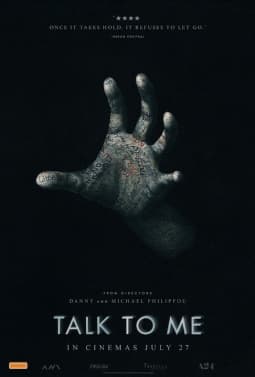
The first thing the score does is move. Before any melody arrives, before any harmonic identity is established, there is motion: a pulse, low and synthetic, sitting just below the dialogue, pushing the picture forward with the insistence of a notification you have not yet checked. Cornel Wilczek’s score for Talk to Me does not announce itself. It infiltrates. It enters the film’s sonic space the way bass enters a room at a party, not through the door but through the walls, through the floor, through the architecture itself, until you realise you have been feeling it longer than you have been hearing it. This is the score’s primary strategy and it never abandons it. Presence before identification. Pulse before pitch. The attack is continuous. The decay is deferred.
Wilczek is a Melbourne-based composer whose previous credits include short films and independent features, none of which prepared audiences for the scale of what he achieves here. The score for Talk to Me is not large in the orchestral sense; there are no string sections, no brass, no acoustic instruments of any meaningful presence. The palette is almost entirely electronic: synthesisers, processed textures, sub-bass frequencies that register in the chest before they register in the ear, percussive elements that land with the compressed thud of a drum machine pushed past its intended range. The sound is contemporary in a way that most horror scores avoid. It does not reference Carpenter or Goblin or the analogue-synth tradition that has become horror’s default sonic furniture. It references the sonic environment of social media: the short, looped, bass-heavy tracks that score TikTok and Instagram content, the music designed to hold attention for fifteen seconds and then restart.
The party sequences and their frequencies
The film’s party scenes are where Wilczek’s approach is most visible, or rather most audible, because the score and the diegetic music occupy nearly the same register. The parties in Talk to Me are scored with a sub-bass presence that sits beneath the dialogue and the ambient sound and the music the characters are actually listening to, and the effect is a kind of sonic doubling: you hear the party and you hear the score’s commentary on the party simultaneously, and the two are so close in frequency that they blur. This is deliberate. The Philippou brothers’ film is about the collapse of boundaries, between the living and the dead, between the self and the possessed, between the real and the performed, and Wilczek’s score enacts that collapse at the level of sound design.
The sub-bass in the party sequences is tuned low enough that it operates as physical sensation rather than musical information. In a cinema with adequate speaker capacity, you feel the score before you parse it. This is a choice that links Wilczek’s work to the tradition of electronic music production, where sub-bass is understood as a tactile element rather than a harmonic one, something that moves bodies rather than conveys melody. The possession sequences are scored in this same register: the moment a character grasps the hand and says “I let you in,” the sub-bass drops, the pulse accelerates, and the score becomes indistinguishable from the physical experience of the possession itself. The music does not underscore the horror. The music is the horror’s frequency.
The silence around the hand
The counterpoint to the party sequences is what happens when the score withdraws. The scenes involving the ceramic hand in isolation, the moments before it is used, the aftermath of a possession gone wrong, are marked by a near-total absence of score. Wilczek pulls back to silence, or close to silence: a sustained high tone, barely audible, sitting at the upper edge of hearing like tinnitus. The effect is jarring precisely because the score has been so present everywhere else. The withdrawal creates a vacuum, and the vacuum creates dread, because the audience has been trained by the previous thirty minutes to expect the pulse, the bass, the forward motion, and when it disappears the stillness feels wrong. The hand sits in this wrongness. It is an object that exists in a pocket of silence inside a film made of noise, and the contrast is more unsettling than any musical cue could be.
YouTube pacing as compositional logic
The Philippou brothers built their careers on RackaRacka, a YouTube channel whose videos are edited with a speed and density that mirrors the platform’s attention economy. Wilczek’s score maps this rhythm precisely. The cues are short. The transitions are abrupt. A texture will establish itself for fifteen or twenty seconds and then cut to something entirely different, with no bridge, no crossfade, no harmonic preparation. This is not sloppy composition; it is a deliberate translation of digital-native editing instincts into musical form. The score moves the way a feed moves: fast, discontinuous, each new element arriving with the confidence of something that assumes you are already watching.
The result is a score that feels young in a way that horror scores rarely do. Most horror music carries the weight of its lineage: the minor keys, the dissonant intervals, the slow builds, the genre’s accumulated vocabulary of menace. Wilczek’s score acknowledges none of this. It operates in a sonic present tense, built from the sounds and rhythms of the moment it was made, and this contemporaneity is part of why the film connected with an audience that does not typically seek out Australian cinema. The score sounds like their world. The bass sounds like their speakers. The pacing sounds like their attention span, and I do not mean that as a slight; I mean that Wilczek understood, correctly, that the most frightening thing a horror score can do in 2023 is sound familiar.
What the score knows
There is a passage in the film’s second half, after the consequences of the possessions have begun to accumulate and the tone has shifted from reckless to desperate, where Wilczek introduces something the score has not previously contained: a melodic line. It is simple, almost fragile, played on a synthesiser with a warm, rounded tone that sits in stark contrast to the abrasive textures that surround it. The melody appears during a scene of genuine emotional vulnerability, and it lasts perhaps thirty seconds before the pulse reasserts itself and the melody is consumed. It does not return. It was the score’s single concession to tenderness, offered once and then taken away, and its absence for the remainder of the film is felt as a loss. The party keeps going. The bass keeps pushing. The score will not let you leave, and by the end you understand that this is not a stylistic choice but a thematic one: the momentum is the trap, the forward motion is the possession, and the only way out is to stop, which is the one thing the score refuses to do.
Kieran writes about what films sound like. Played in a band that nearly got signed in 2012 and has been thinking about attack and decay ever since. Devoted to Warren Ellis, Amanda Brown, and the quiet work of sound editors nobody interviews.
MORE BY KIERAN BOUSTANY →
The score for Godless drags the exorcism through the dirt and leaves it there
The score treats the possession not as spectacle but as a domestic accident, and the flatness is where the horror lives.
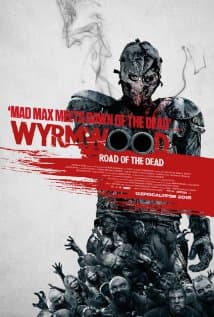
The score for Wyrmwood: Apocalypse treats the end of the world like a pub brawl
The scoring budget was nothing, the energy was everything, and the result sounds like a garage band surviving the apocalypse.
Shine and the score hiding under the Rachmaninoff
David Hirschfelder had to write original music that lives under the loudest warhorse in the piano repertoire, and the quiet writing is what carries the film.