The score for Godless drags the exorcism through the dirt and leaves it there
The score treats the possession not as spectacle but as a domestic accident, and the flatness is where the horror lives.
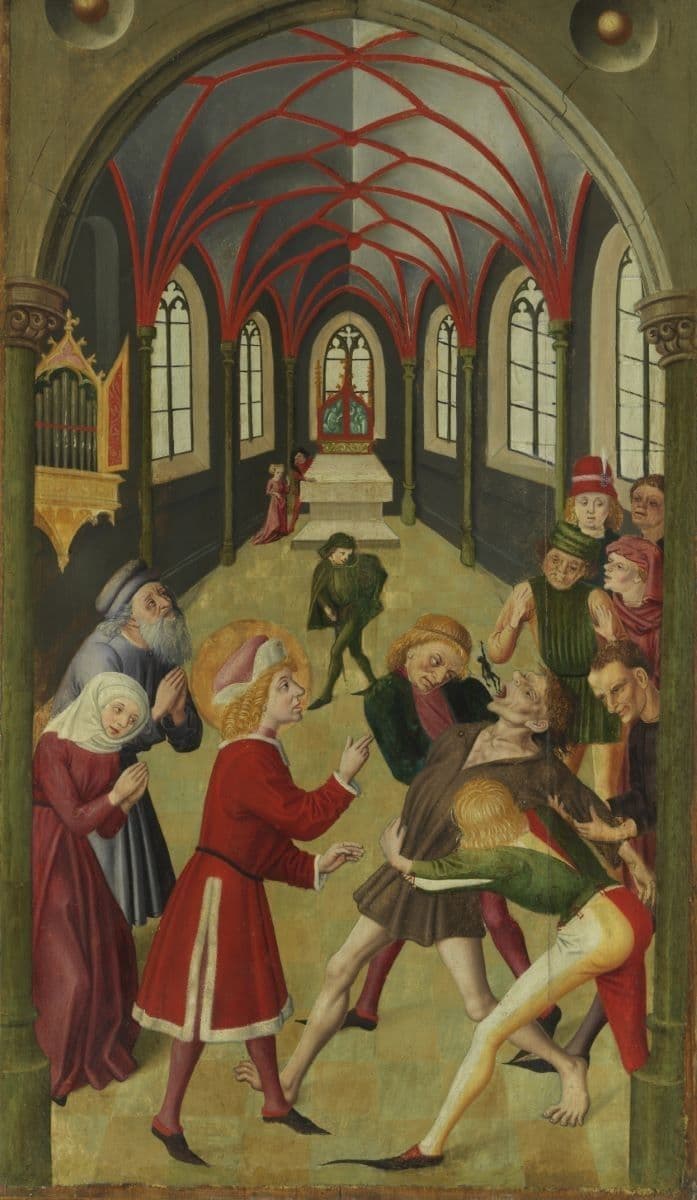
The exorcism film has a sound. You know it before you see the title card. Low brass. Dissonant strings. A choir that enters in the second act and builds to a wall of voices in the third. Latin chanting, or something that sounds enough like Latin chanting to trigger the association. The template was set by The Exorcist in 1973 and has been followed, with minor variations, for fifty years. The template works. It is also exhausted, and what makes the score for Godless: The Eastfield Exorcism interesting is its refusal to use it.
Nick Kozakis’s film is set in rural Victoria, in the kind of flat, dry, fenced-off country that exists between towns, where the sky is too large and the houses are too far apart and the silence is not peaceful but structural. A young woman, Lara (Georgia Eyers), begins exhibiting symptoms that her evangelical community interprets as demonic possession. Her husband and their pastor arrange an exorcism. What follows is domestic, claustrophobic and deeply uncomfortable, not because of supernatural spectacle but because of the ordinariness of the violence that the ritual produces.
The sound of flat country
The score, composed by Michael Lira, begins where many horror scores end: at ground level. There is no orchestral swell in the opening. There is no theme. There is a low drone, barely audible, that sits beneath the first act like the hum of an electrical fence or the vibration of a road heard through the floor of a house. The drone is continuous. It does not develop. It does not rise. It holds its pitch with a flatness that matches the landscape, and this is not an accident. The music is describing the country before the country has been shown, and the description is accurate: this is flat land, and the score is flat music, and the horror is going to come from the fact that nothing rises above the surface.
Lira uses field recordings throughout the score, and the boundary between composed music and environmental sound is often impossible to locate. Wind becomes a sustained note. The creak of a gate becomes a rhythmic pulse. Insects provide a high-frequency texture that sits above the drone like static. The effect is that the landscape itself appears to be scoring the film, and Lira is merely organising what the country already produces. This is a smart approach for an Australian horror film because it anchors the dread in a place rather than in a genre. The fear is not of demons. The fear is of the paddock, the house, the distance to the nearest neighbour, the particular vulnerability of being unwell in a place where help is a long drive away.
What silence does
There are long passages in Godless where the score drops out entirely, and these silences are not pauses but active compositional choices. The exorcism scenes, which in another film would be the most heavily scored sequences, are frequently presented without music. You hear breathing. You hear the creak of a chair. You hear hands on skin. You hear prayers spoken in a conversational register rather than performed for the camera. The absence of score in these moments strips the ritual of its cinematic authority and reduces it to what it is: people in a room doing something to another person’s body. The horror is not in the content of the possession. The horror is in the practice of the cure.
This use of silence recalls the approach Natalie Erika James and her sound team took with Relic (2020), another Australian horror film set in a domestic space, another film that understood that the scariest sound in a house is the sound the house makes when nobody is speaking. Relic’s sound design built dread from groaning timbers, dripping water and the mechanical rhythm of a boiler. Godless builds dread from the absence of even those sounds. The farmhouse is quiet in the way that only rural houses are quiet, with a completeness that makes any interruption feel like an intrusion, and Lira’s decision to leave these spaces empty is braver than filling them would have been.
Refusing the crescendo
The conventional horror score operates on a logic of escalation. Tension builds. Dynamics increase. Dissonance intensifies. The crescendo arrives at the moment of maximum fear, and the release, when it comes, is both musical and emotional. Lira does none of this. The score for Godless operates at a consistent dynamic level throughout. The loud passages are not much louder than the quiet ones. The dissonance does not intensify because it was present from the first frame and has nowhere further to go. The effect is suffocating. There is no release because there is no build, and the audience is denied the rhythmic cycle of tension and relief that horror scores typically provide.
This refusal to escalate is the score’s most radical gesture, and it is also its most honest one. The events of the film do not escalate in the conventional sense either. The exorcism is not a battle between good and evil that reaches a climax. It is a sustained act of pressure applied to a body, and the pressure does not increase because it was already at its maximum when it began. Lira’s music understands this. It sits with the pressure rather than dramatising it, and the sitting is what makes the score genuinely disturbing rather than merely effective.
The dirt stays
I keep returning to the film’s setting, and I keep returning to it because the score keeps returning to it. The music in Godless sounds like the ground. It sounds like dry earth and wire fencing and the particular quality of air in a place where rain is infrequent and the vegetation is low. Lira has composed a score that belongs to this landscape so completely that removing it from the film and listening to it in isolation produces an odd effect: you hear the country. Not a dramatised version of it. Not a cinematic idea of it. The actual acoustic character of flat, dry, rural Victorian land, transcribed into musical notation and played back at a volume that is just above silence.
This is what happens when a composer takes the setting seriously as a compositional parameter rather than treating it as a backdrop for genre conventions. The score for Godless does not sound like a horror score. It sounds like a place, and the place is where the horror was already living, long before the cameras arrived, long before anyone thought to call it a film.
Kieran writes about what films sound like. Played in a band that nearly got signed in 2012 and has been thinking about attack and decay ever since. Devoted to Warren Ellis, Amanda Brown, and the quiet work of sound editors nobody interviews.
MORE BY KIERAN BOUSTANY →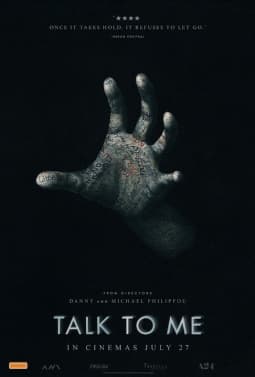
Cornel Wilczek scored Talk to Me like a party that will not let you leave
The score pushes forward with the momentum of a YouTube video you cannot close, and that restlessness is the whole engine.
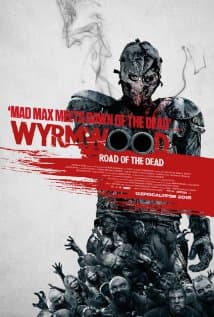
The score for Wyrmwood: Apocalypse treats the end of the world like a pub brawl
The scoring budget was nothing, the energy was everything, and the result sounds like a garage band surviving the apocalypse.
Shine and the score hiding under the Rachmaninoff
David Hirschfelder had to write original music that lives under the loudest warhorse in the piano repertoire, and the quiet writing is what carries the film.