The wellness industry became content and nobody noticed the transaction
Retreats became series, gurus became characters, and the audience who buys both did not notice the overlap.
I want to say that I noticed the overlap between wellness culture and prestige television before Nine Perfect Strangers made it obvious. I did not. I was watching the show, watching Nicole Kidman dispense psychedelics in a kaftan on a property that looked like every retreat advertised in the back of a Qantas inflight magazine, and it took me three episodes to realise that I was watching a show about an industry that had already sold me the experience of watching that show. The pipeline was complete. The content was eating itself, and I had paid for both ends of the transaction.
The transaction is this: the wellness industry sells transformation. Prestige television sells the experience of watching other people attempt transformation. The audience for both is largely the same demographic, women between thirty and fifty-five with disposable income and a subscription to something, and the experience of consuming both is structurally identical. You arrive. You are promised a journey. The journey involves discomfort that is carefully managed. At the end, you feel something, and the feeling is the product, and you pay again.
The Moriarty supply chain
Liane Moriarty is the key figure here, not because she invented the overlap but because she industrialised it. Her novels are set in the spaces where wellness culture and upper-middle-class Australian anxiety intersect. The yoga retreat. The weight-loss challenge. The school community where every parent is performing a version of health and balance while quietly falling apart. Moriarty understood, earlier than most writers, that wellness is not a backdrop for drama. It is the drama. The promise of self-improvement is inherently dramatic because it requires the admission that the self, as currently configured, is insufficient.
Nine Perfect Strangers is the purest expression of this. The novel takes nine people and puts them in a wellness retreat run by a woman, Masha, whose methods are unorthodox and whose credentials are suspect. The television adaptation, produced by Hulu and starring Kidman as Masha, preserves the structure and amplifies the production values. The retreat is beautiful. The grounds are immaculate. The guests wear linen. The lighting is golden. Everything looks exactly like the wellness retreats that advertise on Instagram, which look exactly like the set of a prestige television show about a wellness retreat.
I kept pausing the show to look at the interiors. The timber. The stone. The enormous windows that frame nature as if nature were a design choice. I knew what I was doing. I was shopping. The show was a catalogue, and I was browsing, and the fact that I was simultaneously watching a story about how the wellness industry exploits people’s desire for transformation did not slow me down at all. This is the trick. Critique and advertisement occupy the same frame.
Kidman as the recurring face
Nicole Kidman is the throughline. She produced and starred in Big Little Lies. She produced and starred in Nine Perfect Strangers. She exists at the precise intersection of Australian literary adaptation, American streaming money, and the kind of celebrity that the wellness industry uses as proof of concept. Kidman looks the way the wellness industry promises you could look. She moves through these shows with the calm authority of someone who has been doing hot yoga since before you knew what hot yoga was. She is the brand ambassador for a product that the show is simultaneously selling and interrogating, and she seems entirely comfortable with the contradiction.
This is not a criticism. Or maybe it is. I honestly cannot tell anymore. I watch Kidman in these roles and I admire the performances and I also feel that I am being sold something, and the something is not the show. It is a lifestyle that the show depicts, critiques, and makes look extremely appealing all at once.
The Australian connection is not incidental
It matters that this pipeline runs through Australia. Moriarty is Australian. The settings are Australian. The particular flavour of wellness culture that these shows depict is specifically Australian in its combination of outdoor beauty, casual affluence, and a certain anxiety about whether any of this comfort is deserved. Australian wellness culture has a character that distinguishes it from the American version. It is less overtly spiritual, more focused on the body, more connected to landscape. The retreat is always near the ocean or in the hinterland. The food is always clean. The assumption is always that the natural environment is itself therapeutic, that proximity to nature is a form of medicine, that the problem with your life is that you spend too much time inside.
Wellmania (2023) makes this explicit. Celeste Barber plays a woman whose health crisis forces her to confront her relationship with wellness culture, and the show is set in a Sydney that is equal parts beautiful and punishing. The city is a wellness obstacle course. Every cafe serves something with turmeric. Every conversation includes someone’s dietary restriction. The show is a comedy, but the comedy is built on recognition. You laugh because you have been to that cafe. You have had that conversation. You have been that person ordering the smoothie while wondering whether the smoothie is doing anything.
The White Lotus is not Australian but it completes the pattern
The White Lotus (2021) belongs in this conversation even though it is set in Hawaii and Sicily and has no Australian creators. It belongs because it completes the commercial circuit. The luxury resort as setting. The service economy as subtext. The wealthy guests who arrive seeking transformation and leave having revealed themselves. Mike White’s show does something that the Moriarty adaptations do not quite manage, which is to make the critique structural rather than thematic. The White Lotus is not a show about wellness. It is a show about the economy that produces the desire for wellness, and the distinction matters.
But the audience is the same. The same people who watched Nine Perfect Strangers watched The White Lotus. The same people who booked a retreat in Byron Bay watched both. The content pipeline does not require the shows to agree with each other or even to be about the same thing. It requires them to share an audience, and the audience is defined not by what it believes but by what it consumes.
I watch anyway
I want to be honest about my position in this. I am the audience. I have been to a wellness retreat. It was in the Yarra Valley. There was yoga at dawn and silence during breakfast and by the second day I felt genuinely calmer and I could not tell whether the calm was real or whether I had simply paid enough money that I felt obligated to feel calm. This is the central question that none of these shows can answer, because answering it would collapse the market for both the shows and the retreats.
I watched Nine Perfect Strangers and I thought the show was mediocre and I also booked a massage afterwards. I watched Wellmania and I laughed at the turmeric jokes and then I made a turmeric latte. I watched The White Lotus and I felt superior to the characters and then I looked up hotel prices in Sicily. The pipeline does not require my approval. It does not require my awareness. It only requires my attention, and I keep giving it, and the shows keep coming, and the retreats keep advertising, and the audience who buys both does not notice the overlap because the overlap is the product.
I want to say I find this troubling. I find it mostly funny. The wellness industry became content and the content industry became wellness and somewhere in the middle there is a woman in linen standing on a deck overlooking the ocean, and she might be a character or she might be a host or she might be a brand ambassador, and the distinction has stopped mattering, and I am watching, and I am calm, and I cannot tell whether the calm is real.

Mara writes essays. She came to film writing from a decade of literary criticism and still reaches, sometimes, for a novel before she reaches for a shot list. She lives in the inner north of Melbourne and does not explain which city that is.
MORE BY MARA DENG →
The cinema is not dying but it is learning to share the room
The argument between cinema and streaming was never about screens; it was about who gets to decide what watching means.
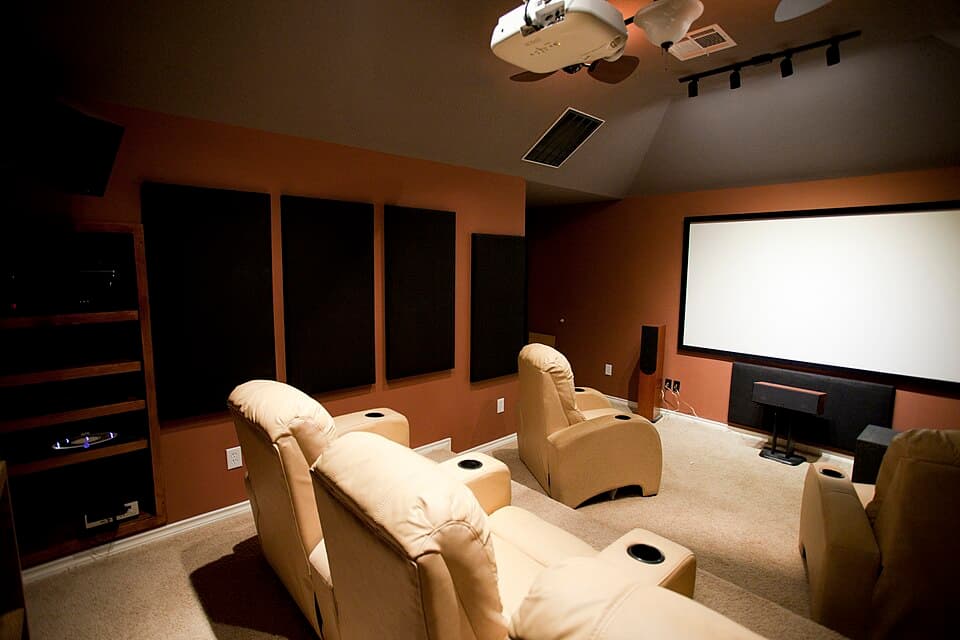
The couch became the cinema and I am not sure it gave it back
Lockdown taught me to watch films on a laptop, and the cinemas reopened, and the laptop stayed where it was.
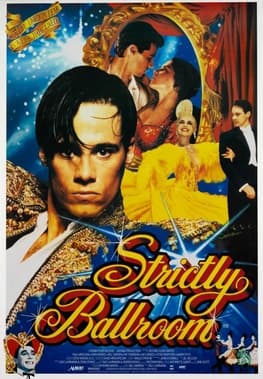
Strictly Ballroom is a film about who is allowed to teach the steps
Baz Luhrmann's 1992 comedy is sold as a story about dance. It is also a story about an Australian champion who has to be taught his own steps by a Spanish-Australian family in their own house.