The cinema is not dying but it is learning to share the room
The argument between cinema and streaming was never about screens; it was about who gets to decide what watching means.
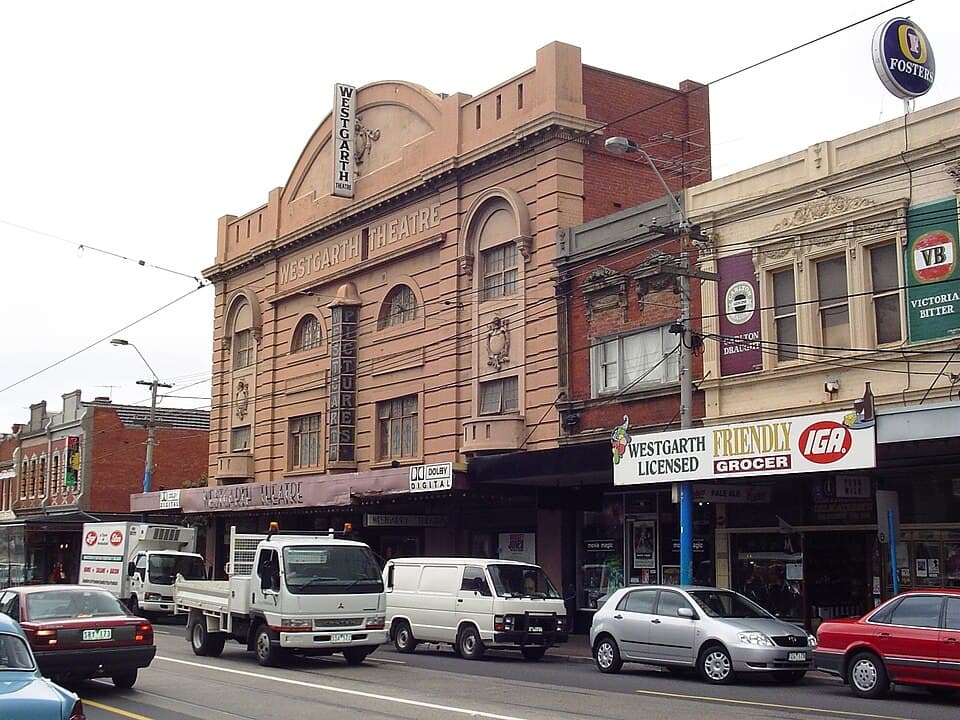
I go to the cinema alone. I have always gone to the cinema alone. This is not a personality trait I am proud of or ashamed of; it is just the way I watch films, the same way some people read on the train and some people read in bed. I buy a ticket, I sit in the dark, I do not share my popcorn because there is nobody to share it with, and for two hours I am in a room full of strangers who are all looking at the same wall. There is something about that arrangement that I cannot replicate at home, though I have tried, and though I also watch a great deal of film at home, on a couch, under a blanket, with the pause button available and my phone within reach.
I say this because I think the argument about cinema versus streaming, which has been running for about a decade now and shows no sign of resolving, is mostly conducted by people who have already picked a side. The cinema purists talk about shared darkness and communal experience and the sacred geometry of projection. The streaming defenders talk about access and convenience and the democratic potential of a platform that puts a Zambian film and a Marvel film on the same menu. Both sides are correct. Both sides are also, in the way of all culture-war participants, describing their own preferences as universal truths.
I want to try something different. I want to sit with both positions at the same time, here, in Australia, where the conversation has its own particular texture.
The rooms that closed
COVID closed cinemas. This is not news. But the specific pattern of closures in Australia tells you something about the fragility of the exhibition sector that the pre-pandemic conversation tended to gloss over. The large chains, Palace and Event and Hoyts, survived. They had the capital reserves, the lease negotiations, the government support. Some of them emerged stronger, with renovated auditoriums and better food and the kind of premium-seating strategy that turns a cinema visit into something closer to a restaurant experience.
The independents were less fortunate. Some survived through community fundraising, or local government intervention, or the sheer stubbornness of an owner who refused to let the building go. Some did not. The Regal in Marrickville closed before the pandemic and became a Woolworths Metro. The Chauvel in Paddington, which had been Sydney’s art-house anchor for decades, shut its doors in 2021 and has not reopened. Every city has its version of this story: a cinema that was there and then was not, replaced by something useful and forgettable.
What the closures revealed is that the independent cinema sector in Australia was never financially robust. It survived on thin margins, cheap rent, and the loyalty of a particular kind of audience, the audience that wants to see the film the week it opens, in a room designed for the purpose, with other people who chose to be there. That audience is real, but it is not large, and it was not growing.
What people actually choose
Here is the part that is difficult to say if you love cinemas, which I do. When Australians can choose how to watch a film, most of them choose the couch. The numbers are not ambiguous. Streaming subscriptions in Australia have grown every year since Netflix launched here in 2015. Cinema admissions have not recovered to pre-pandemic levels and, if you look at the longer trend, were declining before 2020. The pandemic accelerated a shift that was already underway.
This does not mean the cinema is dying. It means the cinema is becoming a specific kind of experience rather than the default way of seeing a film. You go to the cinema now for the event, for the scale, for the social ritual. You go for the Imax screening of a Christopher Nolan film or the opening weekend of a franchise picture or the special session of a restored classic. You go because you want to, not because you have to, and that distinction changes the economics of the entire sector.
For Australian films, this shift is particularly acute. An Australian drama, the kind of film that might screen at Sydney or Melbourne film festivals and then open in twenty or thirty cinemas nationally, was never going to compete with a Marvel release for screen space. But it could, in the old model, find its audience through word of mouth over a few weeks of theatrical release. In the new model, that film goes to a streaming platform after a very short theatrical window, or skips theatrical entirely, and finds its audience there. Is that worse? For the filmmaker who dreamed of seeing their work on a big screen, yes. For the audience in Toowoomba or Devonport who never had access to that theatrical run anyway, no.
The venue and the feeling
I want to be honest about what I think I am actually defending when I defend the cinema. It is not the projection technology, though that matters. It is not the sound system, though good cinema sound is a physical experience that home systems approximate but do not match. It is the room. The room full of strangers. The fact that you cannot pause. The fact that you are, for the duration of the film, committed to the experience in a way that the home environment does not require of you.
There is a quality of attention that a cinema demands and that a living room does not. I notice it in myself. At home, I check my phone. I get up to make tea. I watch the first twenty minutes, decide I am not in the mood, and switch to something else. At the cinema, I stay. I watch things I might otherwise abandon. I give films the time they are asking for, because the room insists on it, because leaving would mean standing up in front of strangers and walking past their knees.
This is not a trivial difference. Some films need that captive attention to work. They are built for it. They assume a viewer who cannot leave, who must sit with the slow passage and the difficult scene and the long silence. Streaming does not destroy these films, but it changes the conditions under which they are received, and the conditions of reception are part of the work.
Sharing the room
But here is the thing I keep coming back to, the thing that stops me from becoming one of those people who tweets about the death of cinema every time a streaming platform acquires an Australian film. The cinema was never available to everyone. It was a metropolitan experience, concentrated in the inner suburbs of the capital cities, accessible to people who had the time and transport and disposable income to get there. Regional Australia has been losing cinemas for decades, long before streaming existed. The single-screen cinema in a country town, the one that showed films three months after the city release, has been closing since the 1980s.
Streaming did not cause that loss. But it did provide an alternative. A family in Broken Hill can now watch The Dry the same month it comes out, on a screen in their living room, for the cost of a monthly subscription they were already paying. That is not the same as seeing it in a cinema. But it is not nothing. It is access. And access, or rather, the question of who gets to see Australian films and when and how, is not a minor consideration in a country this large and this unevenly populated.
What I think is actually happening, underneath the polemic and the nostalgia, is a renegotiation. The cinema is not disappearing. It is becoming one option among several, and it is the option that has to justify its cost and inconvenience by offering something the other options cannot. Shared darkness. Strangers. Scale. The inability to pause. These are not weaknesses. They are the cinema’s particular gifts, and they are enough to sustain it, though perhaps not at the scale the industry once assumed.
I will keep going to the cinema alone. I will also keep watching films on my couch. I do not experience these as contradictory activities. They are two ways of paying attention, and different films ask for different kinds of attention, and the real question is not which format wins but whether we can maintain a system flexible enough to hold both. The room is not dying. It is learning to share.

Mara writes essays. She came to film writing from a decade of literary criticism and still reaches, sometimes, for a novel before she reaches for a shot list. She lives in the inner north of Melbourne and does not explain which city that is.
MORE BY MARA DENG →
Who is Australian cinema for and does it know
The question is not whether Australian films are good enough; it is whether the industry has decided who it is talking to.

Australian cinema does not know what it wants to be next and that might be the whole point
Six years of writing about Australian film has taught me that the industry's identity crisis is not a bug; it is the condition under which the best work gets made.
What is Australian film criticism for if the audience is not reading it
The masthead runs on conviction, the readership is small, and the question of who we are writing for has not gone away.