The couch became the cinema and I am not sure it gave it back
Lockdown taught me to watch films on a laptop, and the cinemas reopened, and the laptop stayed where it was.
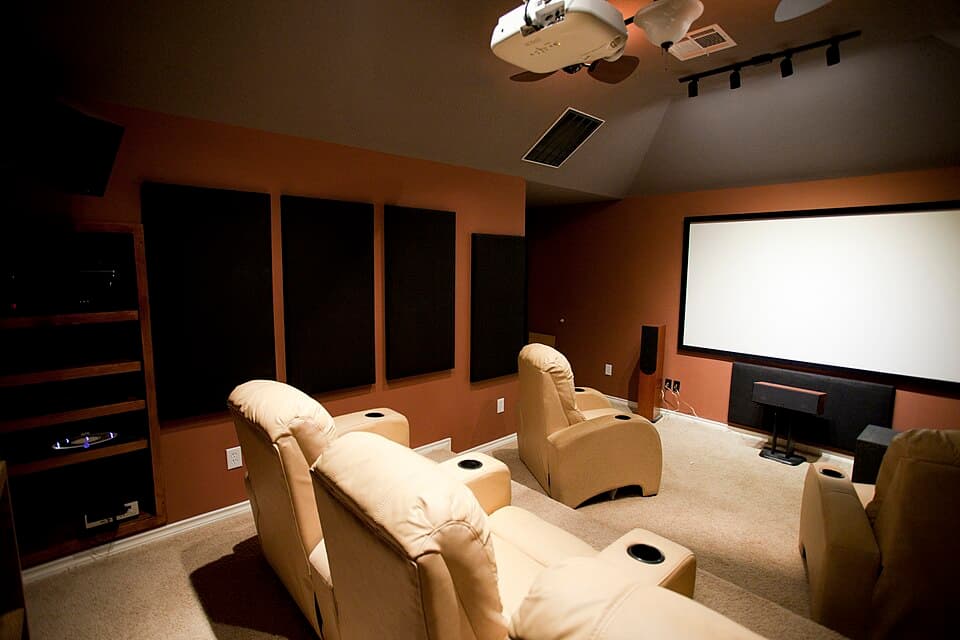
I want to say that I went back to the cinema the week it reopened. I want to say that I bought a ticket the day the restrictions lifted, that I sat in a half-empty auditorium somewhere in the inner west and felt the particular relief of being in a dark room with strangers watching something projected on a wall, and that the experience confirmed everything I had always believed about the theatrical experience being essential, irreplaceable, a thing that streaming could never approximate. I want to say all of this because it is what I expected to do. It is what I told people I would do, during lockdown, when the question of what you missed became a kind of social currency. I miss the cinema, I said, many times, to many people, and I meant it every time.
The cinemas in Melbourne reopened in late October 2020. It is now February 2021. I have been to the cinema twice.
Twice in four months. For someone who used to go twice a week, this is not a return. It is a visit. The kind of frequency that suggests you are being polite to an old friend rather than resuming a relationship. And the worst part, the part I have been circling around for weeks without quite writing it down, is that both times I went, I spent at least part of the screening thinking about how I could have watched this at home. Not because the experience was bad. The experience was fine. The projection was fine, the sound was fine, the seats were the same seats. But my body had learned something new during lockdown, and the thing it had learned was that the couch was also fine.
The habit that formed in the gap
I watched more films during lockdown than in any comparable period of my life. This is true for almost everyone I know. The numbers bear it out at scale, streaming subscriptions surged, catalogue titles got second lives, films that had been sitting unwatched in queues for years finally got watched. But the volume is not the interesting part. The interesting part is the conditions.
I watched films on my laptop, in bed, sometimes with headphones and sometimes without. I watched them in the afternoon when I would normally have been at work. I watched them in fragments, pausing to make tea, to check my phone, to stare out the window at a street that had no one on it. I watched them in ways that would have appalled me twelve months earlier, ways that I would have described, without irony, as not really watching.
And the films still worked. Not all of them, and not in the same way, but enough of them worked well enough that something shifted in my understanding of what the theatrical experience actually provides. I had always assumed it provided something essential, something that could not be replicated. The darkness, the scale, the enforced attention, the collective breathing of an audience. These are real things. I still believe they are real things. But lockdown taught me that they are not required things. You can have a genuine encounter with a film on a thirteen-inch screen in a room that smells like toast, and the encounter can be real, and the film can still do what films do.
The guilt and the convenience
There is a guilt to this that I find difficult to articulate. I grew up in a household where going to the cinema was an event, a Saturday afternoon ritual that involved driving twenty minutes to the nearest multiplex and buying overpriced popcorn and sitting through trailers that felt like part of the experience rather than an obstacle to it. My relationship to cinema, in the literal sense of the building, is bound up with my relationship to my parents, to weekends, to the feeling of being taken somewhere. When I say I miss the cinema, I am also saying I miss being the kind of person who goes to the cinema, and these are not the same thing, and the difference matters.
Because what I discovered during lockdown is that the cinema was never purely about the art. It was also about the effort. The getting dressed, the leaving the house, the buying of the ticket, the committing of time. All of these things created a frame around the experience that made it feel significant. When you remove the frame, when you are just a person on a couch pressing play, the significance has to come from the film itself, and sometimes it does and sometimes it does not, and the films that cannot generate their own significance without the frame of the theatrical experience are, I suspect, more numerous than I would like to admit.
This is not an argument against cinemas. I need to be clear about that because I can feel the essay tilting in a direction I do not intend. Cinemas are good. The theatrical experience is good. Projection is better than a laptop screen. Surround sound is better than laptop speakers. Being in a room where you cannot check your phone is better than being in a room where you can. All of these things are true and I am not arguing against any of them.
Principle or preference
What I am arguing, or trying to argue, or at least trying to be honest about, is that I spent years treating the theatrical experience as a principle when it might have been a preference. Principles are things you hold regardless of convenience. Preferences are things you hold until something more convenient comes along. I thought going to the cinema was a principle. Lockdown suggested it was a preference, one that I genuinely enjoy, one that I will probably resume at some point, but a preference nonetheless.
And I think this distinction matters because so much of film culture is built on the idea that the theatrical experience is sacred. That to watch a film at home is to watch a diminished version. That the director intended the cinema, the projectionist intended the cinema, the film itself intends the cinema. And some of this is true for some films. I would not want to watch Mad Max: Fury Road on a phone. But the idea that every film requires a cinema, that the only real way to watch a film is in a dark room with a projected image, is an idea that protects the institution more than it protects the art.
I know filmmakers who would disagree with me. I know critics who would disagree with me. I might disagree with myself in six months, when the weather is warmer and the habit of leaving the house has reasserted itself and the memory of lockdown has faded enough that I can stop interrogating every choice I make about where and how I watch things. But right now, in February 2021, with the cinemas open and my laptop on the coffee table and a film I have been meaning to watch sitting in my queue, I am going to watch it at home. And I am going to feel guilty about it. And I am going to watch it anyway.
What stays changed
The question I keep returning to is whether this is permanent. Whether the habits formed during lockdown are temporary adaptations or permanent shifts. I do not know the answer. Nobody knows the answer yet. But I notice things. I notice that my friends who used to organise cinema outings now organise streaming nights. I notice that the conversation about a new release used to be “have you seen it” and is now “have you seen it, and where did you watch it.” I notice that the cinemas I have been to since they reopened are emptier than they used to be, and the people in them are older, and the vibe is not excitement but something closer to loyalty.
I want to go back. I want to want to go back. These are different things, and the gap between them is where I have been living for the last four months. The couch is not the cinema. But the couch is where I am, and the films are there too, and the distance between wanting something and doing something turns out to be wider than I thought.

Mara writes essays. She came to film writing from a decade of literary criticism and still reaches, sometimes, for a novel before she reaches for a shot list. She lives in the inner north of Melbourne and does not explain which city that is.
MORE BY MARA DENG →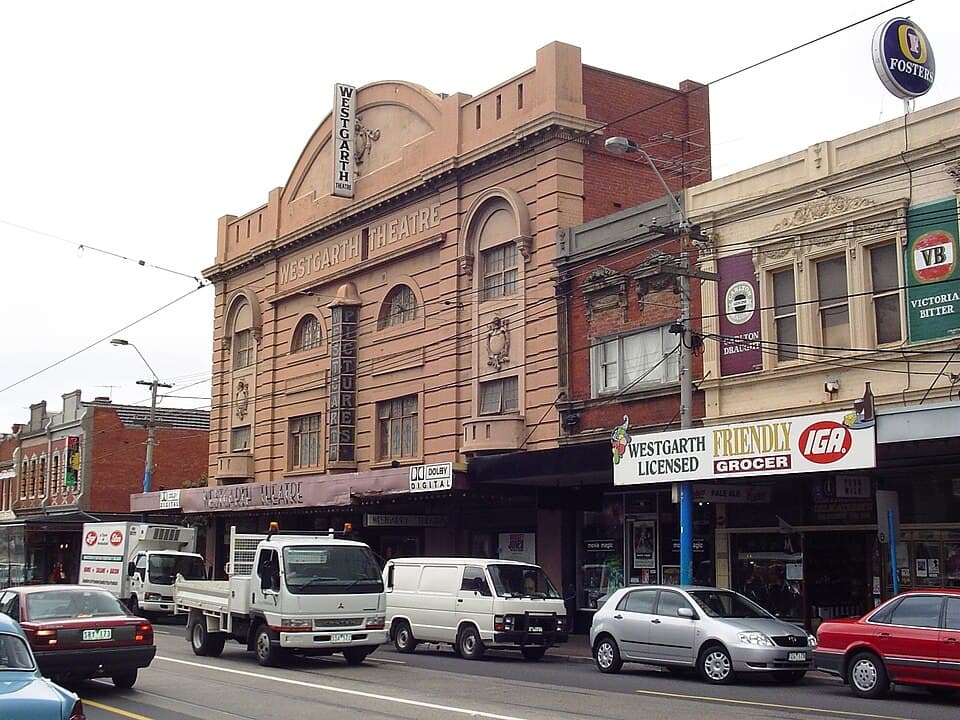
The cinema is not dying but it is learning to share the room
The argument between cinema and streaming was never about screens; it was about who gets to decide what watching means.
The wellness industry became content and nobody noticed the transaction
Retreats became series, gurus became characters, and the audience who buys both did not notice the overlap.
What happens when a country stops making new films for six months
The productions paused, the releases dried up, and the silence where new Australian cinema should have been got louder every week.