What happens when a country stops making new films for six months
The productions paused, the releases dried up, and the silence where new Australian cinema should have been got louder every week.

I want to say that the absence hit me immediately, but it did not. The first few weeks were strange for every reason, not specifically the film reason. The world was rearranging itself in March and April and the fact that Australian productions were shutting down was, honestly, a minor detail inside a much larger emergency. I was thinking about my parents, about groceries, about whether the cough I had was the cough. Films were not the priority. I do not think they should have been.
But by June I noticed. The pipeline had gone quiet. Not reduced, not slowed. Quiet. The films that were supposed to be shooting in autumn were not shooting. The films that were supposed to be in post-production were stalled because editing suites had closed and sound mixers were locked out of their studios. The films that were finished and waiting for release had no cinemas to open in. Every stage of the process had seized at once, and the result was a silence that grew louder the longer it lasted.
I am a film critic. My job, the thing I do that gives structure to my weeks, is to watch new Australian films and write about them. By August 2020 I had not seen a new Australian film in nearly five months. I had watched plenty of films. I had watched old films, foreign films, American films that were going straight to streaming because Hollywood had the same problem we did but with more money behind it. But I had not sat in a cinema or opened a screener link and encountered something new from this country. The pipeline was not just paused. It was empty.
The films I went back to
When there is nothing new, you go back. I rewatched Lantana (2001) in May and found things in it I had missed the first three times. The way the camera holds on Anthony LaPaglia’s face a beat longer than the dialogue requires, as though the film itself is uncertain about him. I rewatched Samson and Delilah (2009) and was struck by how patient it is, how much of the film is spent in the car, how much of the story is told through geography. I rewatched Animal Kingdom (2010) because I wanted to see Jacki Weaver’s performance again and because I remembered it being a film about Melbourne and I missed Melbourne.
These are all good films. Some of them are great. But rewatching them in the middle of a production freeze felt different from rewatching them by choice. There was a quality of necessity to it that I did not enjoy. I was not returning to old favourites for pleasure. I was returning to them because they were all there was. The difference matters. A national cinema that you revisit out of love is a living tradition. A national cinema that you revisit because nothing new exists is a museum.
I kept a list. Between March and August 2020, the new Australian features I was able to watch in any format totalled four, and two of those had been finished before the pandemic and were released on digital platforms because there was nowhere else for them to go. Four films in five months from a country that normally produces between forty and fifty features a year. The mathematics of that drop are not subtle.
The pipeline and the pipe
People kept saying the pipeline had paused, and I kept thinking about what that metaphor actually means. A pipeline is a thing you can turn off and on. You close the valve, the flow stops. You open the valve, the flow resumes. The pipeline metaphor assumes that the capacity remains intact during the pause, that the infrastructure is sitting there waiting, that you just need to restart it.
But film production is not a pipeline in any mechanical sense. It is a network of freelancers and small companies and relationships and institutional knowledge, and when it stops, the people who make it work do not stand in place waiting. They leave. They take other jobs. They move cities. They abandon projects that were in development for years because the financing has a time limit and the time has run out.
By August, I was hearing stories. A cinematographer who had moved to Brisbane to work in corporate video. A sound designer who was driving for a delivery service. A producer who had been developing a feature for three years and lost her funding because the completion bond required a shooting date that was no longer possible. These are not pipeline problems. These are people problems. The pipeline metaphor lets us imagine that everything will simply resume. The reality is that some things break permanently when they stop.
Whether six months is enough to kill something
I do not know the answer to this question and I do not think anyone does, which is what makes it frightening. Australian cinema has survived worse funding environments, worse audience numbers, worse political hostility. It survived the 1990s, when the cultural cringe was at its peak and Australians would cross the street to avoid seeing an Australian film. It survived the mid-2000s, when Screen Australia was restructured and the development pipeline was disrupted for years.
But those were gradual pressures. A slow squeeze that the industry adapted to over time. This is different. This is a complete stop. Every production, every stage, all at once. And the question that keeps me awake is not whether Australian cinema will survive the pandemic, because it will, in some form, but whether what comes back will be the same thing that stopped. Whether the six-month gap will be visible in the filmography of this country the way a scar is visible on a body. A healed wound that changed the shape of the thing.
What the silence sounds like
I want to be clear that I am not writing this from a position of alarm. I do not think Australian cinema is dying. I think it is in a medically induced coma and the doctors are cautiously optimistic, and I think that is different from dying, but it is also different from health. I am writing this from a position of genuine uncertainty, which is not a feeling I am used to. I normally write about films that exist. I have opinions about things I have seen. Right now I am writing about an absence, and my opinion about the absence is that I do not know what it means.
There is a version of this essay that ends with optimism. Productions will resume. Cinemas will reopen. The pipeline will be repaired. New films will arrive. I believe all of this will happen. But I also believe that the people who left the industry during the pause will not all come back, and the projects that collapsed will not all be reassembled, and the films that should have been made this year will never be made. They will simply not exist. No one will miss them because no one will know what they would have been.
That is the thing about a gap in a national cinema. It is not like a gap in a sentence, where you can see the missing word and guess what it was. It is like a gap in a life. It is invisible. The films that were not made leave no trace. The only evidence that something is missing is the silence, and silence, by definition, does not announce itself.
It is August 2020 and there are no new Australian films and I am sitting here listening to nothing and trying to describe what it sounds like.

Mara writes essays. She came to film writing from a decade of literary criticism and still reaches, sometimes, for a novel before she reaches for a shot list. She lives in the inner north of Melbourne and does not explain which city that is.
MORE BY MARA DENG →
Australian cinema does not know what it wants to be next and that might be the whole point
Six years of writing about Australian film has taught me that the industry's identity crisis is not a bug; it is the condition under which the best work gets made.
This year I watched forty Australian films and the best ones made me nervous
The comfortable films were fine, the difficult ones were better, and the gap between the two is where Australian cinema lives.
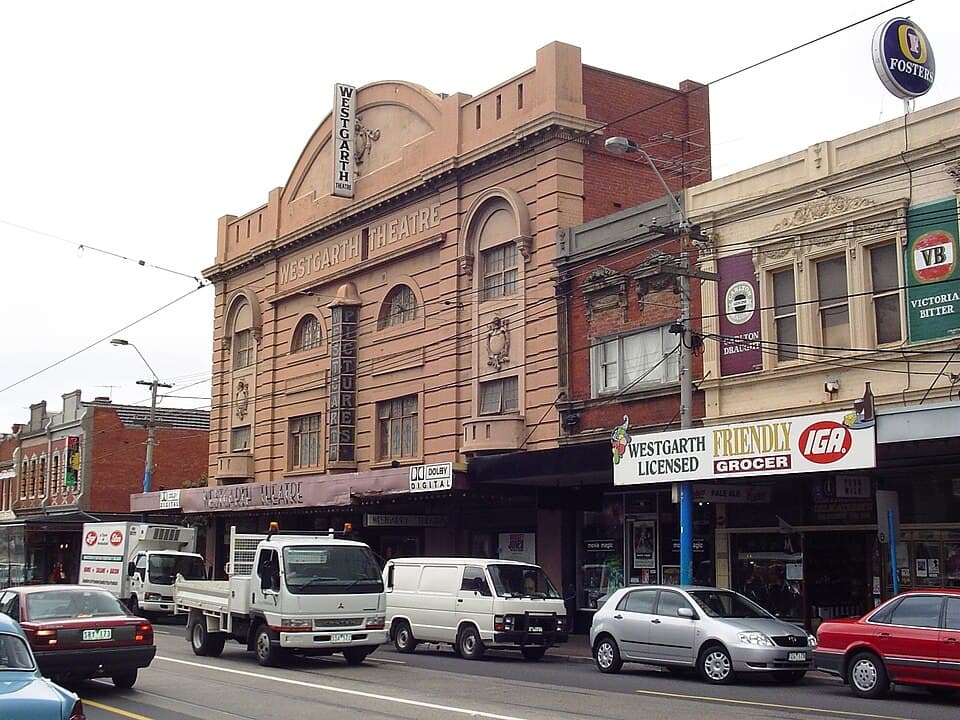
The cinema is not dying but it is learning to share the room
The argument between cinema and streaming was never about screens; it was about who gets to decide what watching means.