True History of the Kelly Gang sets the myth on fire and films the ashes
Kurzel's Kelly Gang film is not a biopic; it is a punk song dressed in a stolen frock, and the costume is the argument.
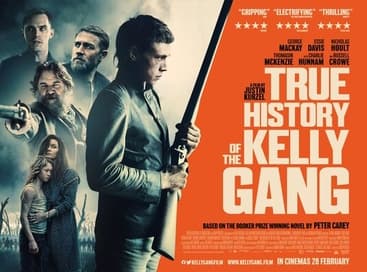
The first thing you notice is that nobody in this film is trying to be liked. Not Ned Kelly, not his mother, not the colonial authorities who brutalise them, not the film itself. Justin Kurzel’s True History of the Kelly Gang (2020) opens with a title card announcing that nothing in the story is true, and then proceeds to tell a version of the Kelly myth that feels more honest than any of the respectful ones that came before it. The trick is simple: by declaring itself false, the film frees itself from the obligation to be accurate, and in that freedom it finds something that accuracy was never going to deliver. It finds the fury.
George MacKay plays Ned Kelly as a young man who has been systematically brutalised by the colony he was born into and who responds to that brutalisation not with noble resistance but with violent, contradictory, self-destructive rage. MacKay is all sinew and stare, his body permanently coiled, his speech rapid and clipped as though he cannot get the words out fast enough to match the pace of his anger. This is not the Kelly of popular imagination, the gentleman bushranger with the dry wit and the iron helmet. This is a boy who was sold by his mother to a bushranger, abused by a constable, and taught that the only currency the colony recognises is violence. MacKay makes that boy physically present in every scene: the way he holds his jaw, the way he walks with his fists slightly open, the way he looks at authority figures with an expression that sits precisely between contempt and terror.
The frock and the fight
The most discussed element of the film is the cross-dressing, and it deserves discussion because Kurzel makes it central rather than incidental. Ned and his gang wear dresses into battle. The dresses are not costumes in the theatrical sense; they are not camp, not drag, not subversion as fashion statement. They are war paint. The historical basis for this is genuine, though contested: there are contemporary accounts of the Kelly gang wearing women’s clothing during certain confrontations, and the reasons are debated by historians with the kind of intensity that suggests the image touches something uncomfortable in the national mythology.
Kurzel does not settle the debate. He uses it. In his telling, the dresses function simultaneously as armour, provocation, and inheritance. Ellen Kelly (Essie Davis, magnificent and terrifying) teaches her sons that the frock is a weapon, that to wear it is to announce yourself as something the colony cannot categorise and therefore cannot control. The cross-dressing becomes an act of class warfare waged through gender confusion, and Kurzel films it with the same visceral intensity he brings to the violence: close, handheld, lit by firelight, the fabric moving with the bodies beneath it in a way that makes the distinction between clothing and skin difficult to locate.
Russell Crowe appears as the bushranger Harry Power, who takes the young Ned under his tutelage in a relationship that the film presents as simultaneously paternal, predatory, and educational. Crowe plays Power as a man who has convinced himself that his appetites are philosophy, and his scenes with MacKay have a queasy intimacy that the film refuses to resolve into either abuse or mentorship. It is both. That refusal is characteristic of the whole project.
What the other Kelly films got wrong
Australia has made Kelly films the way other countries make war films: repeatedly, reverently, and with diminishing returns. Tony Richardson’s Ned Kelly (1970), starring Mick Jagger, treated the story as counter-cultural allegory, dressing the rebellion in the politics of its own era and producing a film that now feels more like a period piece about the late 1960s than about the 1870s. Gregor Jordan’s Ned Kelly (2003), with Heath Ledger, went in the opposite direction: respectful, well-researched, handsomely shot, and so committed to historical fidelity that it forgot to be dangerous. Ledger was good. The film around him was cautious.
The problem with both versions, and with the Kelly mythology in general, is respectability. Kelly has been processed through so many retellings that the outlaw has become a monument, and monuments do not bleed. The 2003 film in particular suffers from the conviction that the audience already admires Kelly and needs only to be shown why their admiration is justified. It presents the rebellion as tragic heroism. It presents the armour as iconic. It presents the man as someone you would want to have a drink with, which is the surest way to drain a historical figure of everything that made them interesting.
Punk, not heritage
Kurzel’s version refuses all of this. His Kelly Gang is not heritage cinema. It is not a costume drama. It is, in its aesthetic and its attitude, a punk film that happens to be set in the nineteenth century. The score by Jed Kurzel pounds with distorted percussion and feedback loops that owe more to post-punk than to period composition. The colour palette is mud, blood, and firelight. The camera moves with the urgency of a body in motion, never settling into the composed wide shots that heritage cinema uses to signal authority and distance. When the violence arrives, and it arrives often, it is chaotic, ugly, and close. You feel the impact in your sternum.
The casting reinforces this. Nicholas Hoult plays Constable Fitzpatrick as a man whose cruelty is inseparable from his charm, all bright smiles and casual sadism, the kind of colonial functionary who believes his own civility while exercising power that is anything but civil. Charlie Hunnam appears briefly as Sergeant O’Neil, and Thomasin McKenzie plays a young woman whose relationship with Ned the film presents without sentimentality. None of these performances ask for the audience’s sympathy. They present the colony as a system of intersecting brutalities in which everyone is damaged and nobody is innocent, least of all Ned Kelly himself.
The armour, finally
The armour appears late in the film, and Kurzel treats it not as the iconic image it has become but as an act of desperation. The tin plates are hammered in a forge, and the scene is scored and shot as though the men are preparing not for battle but for burial. The armour does not make Kelly invincible. It makes him slow, half-blind, and terrifying in the way that something inhuman is terrifying: a figure that moves wrong, that absorbs bullets without falling, that has given up the shape of a man in exchange for a few minutes of mechanical advantage.
This is the image that Kurzel has been building toward, and it works because the film has spent two hours dismantling the mythology that would otherwise make the armour heroic. By the time Kelly puts it on, we have seen what the colony did to him, what he did to others in return, what the cross-dressing meant and what it cost, and the armour reads not as the birth of a legend but as the final act of a man who has run out of human responses. The frock said: I am what you cannot classify. The armour says: I am what you made.
True History of the Kelly Gang is adapted from Peter Carey’s Booker Prize-winning novel, and Kurzel and screenwriter Shaun Grant keep Carey’s central insight: that the truth of a colonial story is not in its facts but in its rage. The film is not accurate. It is not fair. It is not interested in the balanced assessment of Ned Kelly’s place in Australian history. It is interested in the fire, and it films the fire, and it lets the ashes fall where they will. After decades of respectful Kelly films, this one works by refusing to respect anything at all.
Bronte writes long-form criticism of Australian cinema and the international art films that feed into it. She was on the ground at Cannes in 2019 and has not entirely forgiven the festival for 2020. Patient with slow films; impatient with tidy ones.
MORE BY BRONTE HAUGHEY →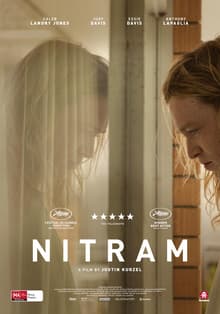
Nitram refuses to look away and refuses to explain why
Justin Kurzel made a film about the worst thing that ever happened in this country, and he did it without giving the audience anywhere to hide.

Nitram premiered at Cannes and nobody in the room was comfortable
Justin Kurzel brought his Port Arthur film to the Croisette and the festival held its breath for two hours.
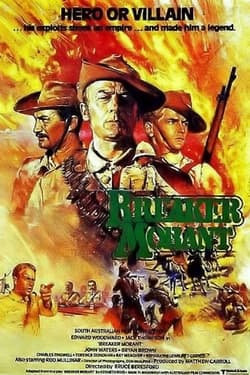
Breaker Morant and the country that adopted its scapegoat
Bruce Beresford's 1980 courtroom drama made an English-born soldier into an Australian martyr, and the picture's argument about empire has outlived its historical certainties.