Nitram refuses to look away and refuses to explain why
Justin Kurzel made a film about the worst thing that ever happened in this country, and he did it without giving the audience anywhere to hide.
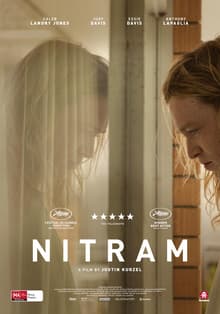
There was a question that preceded Nitram by twenty-five years and has never been satisfactorily answered: should this film exist? Not whether it could be made, or whether someone would eventually make it, but whether the act of turning the Port Arthur massacre into narrative cinema was a thing the culture required or a thing the culture would merely consume. Justin Kurzel knew the question was there. He made the picture anyway, and what is most striking about it is not the courage required to proceed but the discipline required to proceed without answering. Nitram does not justify itself. It does not offer a thesis about why the massacre happened. It does not even offer the consolation of comprehension. It watches, and it refuses to look away, and when it is finished you are left with the weight of what you have seen and no framework for processing it.
The film follows the man who committed the massacre, here called only by his childhood nickname, played by Caleb Landry Jones in a performance that won the Best Actor prize at Cannes in 2021. Kurzel and screenwriter Shaun Grant do not begin with the act; they begin years before it, with a young man setting off fireworks in his parents’ suburban backyard, frightening the neighbours, grinning with a delight that is not quite innocent and not quite malicious. The film will hold this ambiguity for its entire duration, presenting behaviour that is by turns pitiable, irritating, disturbing and opaque, and never collapsing these registers into a single diagnosis.
What the picture withholds
The most consequential decision Kurzel makes is what he does not show. The massacre itself is absent from the film. There is no recreation, no montage of violence, no sequence in which the horror is rendered as spectacle. The picture ends before the act begins, cutting to black and silence at the moment the audience knows, with certainty, what is about to happen. This structural choice is not a hedge; it is the film’s moral architecture. Kurzel understood that to depict the massacre would be to convert it into cinema, to make it available for the particular kinds of engagement that cinema enables: identification, catharsis, aesthetic pleasure, the frisson of represented violence. By withholding the act, he denies the audience these satisfactions and forces them to sit with the accumulation that preceded it.
This is not a new strategy. Gus Van Sant’s Elephant (2003) employed a similar withholding in its depiction of a Columbine-like school shooting, though Van Sant ultimately showed the violence in long, unbearable takes. Kurzel goes further. He removes the event entirely and makes the absence the point. What remains is the before: the long, shapeless, suburban before in which a disturbed young man drifts through a society that cannot see what is coming because it has no category for it.
Jones and the refusal to psychologise
Caleb Landry Jones’ performance is the mechanism by which the film sustains its refusal to explain. Jones does not play the character as a monster. He does not play him as a victim. He plays him as a person whose interior life is radically inaccessible, whose motivations resist the kind of narrative coherence that acting conventions typically impose. His body is loose, restless, slightly wrong in every social context he enters. His speech patterns shift between childlike enthusiasm and flat, affectless monotone. He smiles at moments when a smile is inappropriate, not because he is cruel but because his emotional calibration is off in a way that the film will not name.
This is a performance that asks the audience to abandon the interpretive tools they bring to character study. There is no backstory revelation that explains the behaviour. There is no scene of trauma, no genetic predisposition laid out in dialogue, no psychiatrist delivering a clinical framework. Judy Davis and Anthony LaPaglia, playing the parents, are superb in roles that are principally about helplessness; they see their son’s strangeness and they cannot fix it, and the film does not blame them for this because the film does not distribute blame at all. It distributes proximity, and proximity without explanation is one of the most uncomfortable things a picture can impose.
The line from Snowtown
Kurzel’s first feature, Snowtown (2011), covered adjacent territory: a true story of serial murder in suburban Adelaide, told with a realism so unsparing that audiences at festival screenings walked out. That film was interested in the social ecology of violence, the way poverty and neglect and damaged masculinity create conditions in which a charismatic predator can operate. It had a thesis, even if the thesis was expressed formally rather than didactically. Nitram does not have a thesis. It has a question, and the question is: what do you do with the knowledge that some acts of violence are not fully explicable, that the search for cause and motive will not yield an answer proportionate to the harm?
The formal evolution between the two films is significant. Snowtown was shot with a handheld immediacy that placed the audience inside the domestic spaces of its characters; the camera moved with them, breathed with them, shared their proximity to the violence. Nitram is more composed, more distanced. Germain McMicking’s cinematography favours wide shots, suburban landscapes rendered in flat afternoon light, interiors held at a remove. The camera watches the character rather than inhabiting him, and this distance is deliberate. Kurzel does not want you inside this man’s head. He wants you watching from the position of a society that watched and did not intervene, and then asking what intervention would have looked like.
Why Australia did not want this film
The production of Nitram was contentious. Tasmanian premier Peter Gutwein publicly opposed the film before a frame had been shot. Survivors and families of victims expressed concern that the picture would retraumatise communities still carrying the weight of 1996. The Tasmanian government refused to cooperate with the production, which was ultimately shot in Victoria. These objections were not frivolous. They reflected a legitimate question about whose story this was and who had the right to tell it.
Kurzel’s response, enacted through the film itself rather than through public statements, was to make a picture that honoured those objections by refusing to provide what its critics feared it would. Nitram does not sensationalise. It does not glorify. It does not, in any meaningful sense, tell the killer’s story, because a story implies causation and arc and resolution, and the film offers none of these. What it offers instead is a record of drift: a man moving through a society that has no mechanism for identifying what he is becoming, acquiring the means to do what he will do, while the people around him register discomfort without converting it to action.
The question that stays
There is a scene late in the film where the character walks into a gun shop and purchases a semi-automatic rifle. The transaction is ordinary. The shopkeeper is helpful. The paperwork is completed. At the time of the real events, Tasmania had some of the most permissive firearms legislation in Australia; in the aftermath of Port Arthur, the Howard government enacted the National Firearms Agreement, which remains one of the most successful gun-control measures in the world’s history. Kurzel films the purchase without commentary, without a swelling score, without a close-up on the weapon. He films it the way the transaction happened: as a routine commercial exchange in a country that had not yet understood what routine could produce.
This is the film’s most devastating sequence, and it is devastating precisely because it is mundane. The horror of Nitram is not the violence, which is absent, but the legibility of the path toward it, the way each step makes sense individually and the outcome makes no sense at all. Kurzel does not tell you what to think about this. He places the images in front of you and sits down. The picture does not argue for gun control, though it is difficult to watch the gun-shop scene without arriving there on your own. It does not argue for better mental health services, though the parents’ helplessness makes the absence of institutional support viscerally clear. It argues for nothing. It shows you what happened before the worst thing happened, and it lets the weight of that knowledge sit where it falls.
Australia needed this film in the way that a country needs to look at the thing it would rather not look at. Not to understand it, because understanding may not be available, but to acknowledge that not understanding does not make it go away. Kurzel, to his considerable credit, does not pretend to have understood it either. He made a picture about incomprehension, and he made it with the formal restraint necessary to keep that incomprehension intact. The film does not look away. It also does not explain what it sees. Both of these refusals are the point.

Bronte writes long-form criticism of Australian cinema and the international art films that feed into it. She was on the ground at Cannes in 2019 and has not entirely forgiven the festival for 2020. Patient with slow films; impatient with tidy ones.
MORE BY BRONTE HAUGHEY →
Nitram premiered at Cannes and nobody in the room was comfortable
Justin Kurzel brought his Port Arthur film to the Croisette and the festival held its breath for two hours.
The five Australian films of 2021 that will still matter in a decade
The year gave us a portrait of a mass killer, a drought-country thriller, a sheep-farming feud, and a lucid day with a grandmother, and all four will last.
The Australian films worth anticipating in 2021
The pipeline froze in 2020, but the films that waited are beginning to move, and several of them are worth the delay.