Nitram premiered at Cannes and nobody in the room was comfortable
Justin Kurzel brought his Port Arthur film to the Croisette and the festival held its breath for two hours.

I am writing this from a cafe on the Rue d’Antibes about three hours after the credits rolled and I still have not settled on what I think. Which might be the point. Justin Kurzel’s Nitram screened in Competition this afternoon to a room that was, by the standards of a Cannes premiere, almost entirely silent. No walkouts that I saw. No restless shifting. Just two hours of people sitting very still in their seats, watching something they were not sure they wanted to be watching, unable to look away.
The film is about the Port Arthur massacre. Or rather, it is about the man who committed it, played by Caleb Landry Jones with a commitment that I keep wanting to call brave but that word is not right because bravery implies a choice to do something dangerous and what Jones does here feels less like a choice than a possession. He inhabits this person. He finds the loneliness, the frustration, the moments of almost-charm that make the eventual violence not understandable, exactly, but legible as the endpoint of a particular kind of failure. Not his failure alone. The film is very careful about that.
Kurzel has made a film about systems. About a man who needed help and did not get it, who had access to weapons and should not have had them, who lived in a country that had not yet decided that this particular catastrophe was worth preventing. The film does not excuse. It does not explain in the sense of making the inexplicable explicable. It observes. It watches. It places its camera at a distance that feels clinical until you realise it is the distance of someone who cannot bear to get closer.
The room at the Lumiere
I want to talk about the screening itself because a Cannes premiere of a film like this is its own kind of event and the event tells you something about the film. The Lumiere holds around 2,300 people. It was full. The press screening had been that morning, and word had already spread that the film was serious, that it was not exploitative, that it was going to be difficult. The evening screening had the atmosphere of an audience that had been warned.
The opening sequences play almost like an Australian indie drama. Nitram, whose real name the film never uses, lives with his parents, played by Judy Davis and Anthony LaPaglia. Davis is extraordinary. She plays the mother with a weariness that contains twenty years of conversations the audience will never hear, fights that have been fought so many times they have worn smooth, a love that has exhausted itself without ever quite disappearing. LaPaglia is quieter, more recessive, a father who has retreated into a kindness that cannot reach his son because kindness is not what his son needs.
The audience relaxed slightly during these scenes. The domestic register felt familiar. But the relaxation was provisional and everyone knew it, and you could feel the room tightening again every time the film moved towards anything that might be a turning point.
Essie Davis appears as a wealthy, isolated woman who befriends Nitram, and the relationship between them is the strangest thing in the film. It is tender and absurd and co-dependent and you cannot tell, while you are watching it, whether it represents a possibility of salvation or simply a delay. Davis plays her with a benevolence that borders on recklessness, a woman who has money and loneliness and no instinct for self-preservation, and the film lets the relationship develop at a pace that feels almost gentle. The audience wants it to save him. The audience knows it will not.
The question of venue
There has already been discussion, in the press room and on the terrace and in the queues, about whether Cannes is the right place for this film. The argument against is obvious: the festival glamorises, the red carpet contextualises everything as spectacle, and a film about a mass killing should not be received in a context where the applause at the end might be mistaken for celebration. The argument for is less obvious but, I think, stronger: Cannes is one of the few places where a film like this can be received as cinema first and controversy second. The audience here is trained to watch. They have seen Haneke’s Funny Games in this room. They have seen Von Trier. They have seen films that are designed to make them uncomfortable and they know the difference between discomfort that serves a purpose and discomfort that is merely provocative.
Nitram is not provocative. It is careful to the point of austerity. The violence, when it comes, is handled with a restraint that borders on refusal. Kurzel, who made Snowtown, which was explicit and visceral and punishing, has done something different here. He has made a film that trusts the audience to bring the knowledge of what happened to Port Arthur and to feel the weight of that knowledge in every scene that precedes it. The film does not need to show you the massacre. You already know. The dread you feel is your own, and the film respects you enough not to manufacture it.
Caleb Landry Jones
Jones won Best Actor, and the prize feels both right and slightly strange, because what he does in this film is not exactly acting in the sense that prizes usually recognise. There is no showpiece scene. There is no monologue. There is no moment where you watch him reach for an emotion and catch it. Instead there is a sustained, two-hour inhabitation of a person who is recognisably human and recognisably broken and the difficulty of watching is that you can see both things at once.
He plays Nitram with a kind of physical intelligence that reminds me, oddly, of early De Niro. Not in style but in principle. The way the body arrives before the performance. The way you understand the character through how he sits, how he holds a sparkler, how he stands in a room where he knows he is not wanted. Jones has made this person’s body his own, and the result is a performance that does not feel like a performance, which is either the highest praise or a description of something that should concern us.
What I am left with
I keep coming back to Judy Davis. Her face in the scene where she understands, finally, that her son is beyond her help. It is a face that contains an entire argument about motherhood and responsibility and the limits of love, and she does it without a single line of dialogue that states any of those things. If Cannes gives prizes for the hardest thing done with the least visible effort, she should be standing on that stage next to Jones.
The film is formally disciplined in a way that makes its ethical challenge harder to dismiss. It would be easier to reject Nitram if it were sensational, if it used its subject for shock, if it treated the Port Arthur massacre as material for a thriller. Kurzel has not done any of those things. He has made a quiet film about a loud event and the quietness is what stays with you, the sense that this story did not need to be amplified because it was already deafening and what it needed, instead, was someone willing to sit in the silence before the noise and ask what was happening in that silence that everyone missed.
I am not comfortable with the film. I do not think I am supposed to be. The room at the Lumiere was not comfortable either, and the applause at the end was the muted, uncertain applause of an audience that knows it has seen something significant and has not yet decided whether significant is the same as good. I think it might be. I will need more than three hours and a coffee to be sure.

Bronte writes long-form criticism of Australian cinema and the international art films that feed into it. She was on the ground at Cannes in 2019 and has not entirely forgiven the festival for 2020. Patient with slow films; impatient with tidy ones.
MORE BY BRONTE HAUGHEY →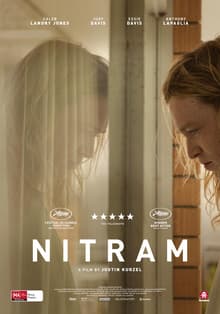
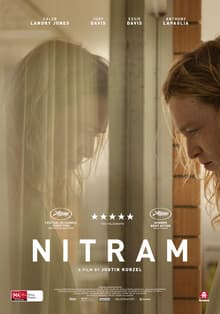
Nitram refuses to look away and refuses to explain why
Justin Kurzel made a film about the worst thing that ever happened in this country, and he did it without giving the audience anywhere to hide.
The five Australian films of 2021 that will still matter in a decade
The year gave us a portrait of a mass killer, a drought-country thriller, a sheep-farming feud, and a lucid day with a grandmother, and all four will last.
The Australian films worth anticipating in 2021
The pipeline froze in 2020, but the films that waited are beginning to move, and several of them are worth the delay.