The score for The Stranger carries the weight the actors are not allowed to show
The score does the emotional work that Joel Edgerton's blankness forbids, and the restraint in both is what makes the film unbearable.
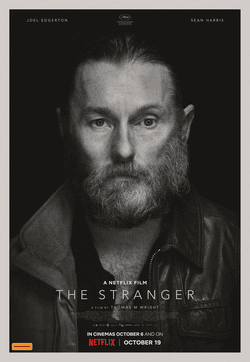
The first thing the score does is wait. There is a long opening passage in The Stranger where the music sits below the dialogue, below the ambient sound, below the threshold of conscious hearing. You feel it before you identify it. A low-frequency presence, not quite a drone, not quite silence, occupying the space between the two. It is the sound of something being withheld, and it sets the terms for everything that follows: this is a score that will not give you what you want when you want it, and the refusal is the point.
The Stranger (Thomas M. Wright, 2022) is a film about an undercover police operation to extract a confession from a man suspected of murdering a child. Joel Edgerton plays Mark, the undercover officer who befriends the suspect, Henry (Sean Harris), over months of careful, choreographed intimacy. The film is based on the real case of Daniel Morcombe, though Wright has changed the names and specific details, and it operates on a principle of radical withholding. The performances do not emote. The dialogue does not explain. The camera does not guide. Into this deliberate vacancy, the score pours everything the rest of the film refuses to provide.
The weight that blankness cannot carry
Edgerton’s performance in The Stranger is an act of sustained negation. Mark is a man pretending to be someone else, and Edgerton plays the pretence without letting you see the man underneath, or rather, he lets you see that there might be a man underneath but will not confirm it. His face is a surface. His voice is calibrated. His body language communicates availability and warmth and none of it is real, and the unreality is visible only if you are looking for it, which you are, because the film has told you he is undercover, and so you watch his face for the crack that never comes.
The score fills the crack. Where Edgerton withholds, the music provides. Not emotion exactly, not the swelling strings that would tell you what to feel, but pressure. A sustained low-end presence that sits in the chest. Harmonic textures that move so slowly they feel stationary until you notice they have changed. The score is the film’s cardiovascular system: invisible, essential, constant, and operating at a frequency designed to produce discomfort without announcing itself.
The near-absence of melody
There is almost no melody in the score for The Stranger. This is a deliberate compositional choice and it has structural consequences. Melody creates expectation. A melodic phrase implies a resolution, a place where the musical thought will arrive, and that implication gives the listener a sense of forward motion, of narrative progress. The absence of melody removes this forward motion. The score exists in a perpetual present tense, which mirrors the experience of the undercover operation itself: Mark cannot think about the future because the future depends on variables he does not control. He can only manage the current moment, the current conversation, the current lie. The score lives in that same compressed temporality. It does not go anywhere. It is already there.
What replaces melody is texture. Layers of processed sound that accumulate imperceptibly, gaining density over the course of a scene without gaining volume. There are moments where the texture thins, where the score pulls back to a single sustained tone, and these moments of reduction feel more alarming than the denser passages because they suggest that something has been removed, that a safety net you did not know was there has been taken away. The score teaches you to rely on its presence, and then it withdraws, and the withdrawal leaves you exposed in a way that the performances, with their meticulous blankness, cannot.
Building without release
The conventional thriller score follows a tension-and-release model. Pressure builds. A climactic event occurs. The music releases. The audience exhales. The Stranger’s score rejects this model entirely. Pressure builds. And builds. And continues to build across the film’s two-hour runtime without ever providing the release that the accumulated tension demands. There is no cathartic moment where the score breaks open and tells you that the worst has happened or the danger has passed. The worst has already happened. It happened before the film began, to a child, and nothing that follows can undo it. The score knows this, and it refuses to offer the audience the physiological relief of a resolved musical phrase because the story does not resolve. It concludes. There is a difference.
This refusal to release is technically demanding. A score that builds for two hours risks two failures: monotony, if the build is too uniform, and exhaustion, if the build is too intense. The composition navigates between these failures by varying the register and density of the pressure. Some scenes carry their tension in the sub-bass, felt in the body. Others shift the weight to the mid-range, where it sits behind the dialogue like a second conversation happening in a room you cannot enter. The transitions between registers are gradual enough to be imperceptible, which means the score is constantly changing without ever seeming to change, and this paradox of static movement is what makes the film so physically difficult to sit through.
Harris and the score’s other subject
Sean Harris’s performance as Henry is the score’s mirror image. Where Edgerton is blank, Harris is transparent. Henry is anxious, needy, volatile, desperate for the connection that Mark is strategically providing. Harris plays these qualities without vanity, letting Henry be ugly in his need, repulsive in his gratitude, and the score responds to his scenes differently than it responds to Edgerton’s. Around Henry, the music becomes more active, more rhythmically insistent, as if the score itself is agitated by his presence. The low-frequency dread that accompanies Mark becomes, in Henry’s scenes, something closer to nausea: a churning in the mid-range that rises and falls with Henry’s emotional state.
This differential scoring creates an effect that I find remarkable. The score makes you feel Mark’s experience of Henry. Not Henry’s experience of himself, which would produce sympathy, and not an objective view, which would produce analysis, but the specific, visceral experience of being in a room with a person you believe has killed a child and being required to perform friendship. The music does not judge Henry. It describes the sensation of proximity to him, and that sensation is unbearable, which is exactly what it should be.
Restraint as method
I wrote, in this column’s piece on Jed Kurzel’s score for Nitram, about restraint as a compositional method: the idea that what a score does not do can be as expressive as what it does. The Stranger’s score operates on the same principle but pushes it further. Kurzel’s Nitram score was restrained in the sense that it used minimal instrumentation and avoided emotional editorialising. The Stranger’s score is restrained in a more radical sense: it is a score that is constantly present, constantly working, constantly generating pressure, and yet never announces itself. It hides in the film’s foundations. You feel the building shake but you cannot see what is shaking it.
This is scoring at its most sophisticated and its least visible. There will be no soundtrack release that captures what the score does, because what it does is inseparable from the image, from the performances, from the particular silence of Edgerton’s face and the particular noise of Harris’s body. The score does not exist as music in any autonomous sense. It exists as a component of a film that has been designed, with a precision that borders on cruelty, to make you feel something you cannot name and cannot escape. The weight the title refers to is not metaphorical. It is the literal, physical heaviness of sitting in a dark room for two hours while a score presses down on your chest and never lets up. The actors carry the story. The score carries the weight. And the weight, finally, is the whole point.
Kieran writes about what films sound like. Played in a band that nearly got signed in 2012 and has been thinking about attack and decay ever since. Devoted to Warren Ellis, Amanda Brown, and the quiet work of sound editors nobody interviews.
MORE BY KIERAN BOUSTANY →
The Royal Hotel scores its danger in what it refuses to play
The score sits so far back in the mix you forget it is there, which is exactly how the threat in the film works.

Peter Raeburn scored The Dry with heat and the absence of water
The score is a heatwave set to strings: dry, persistent, and impossible to escape.
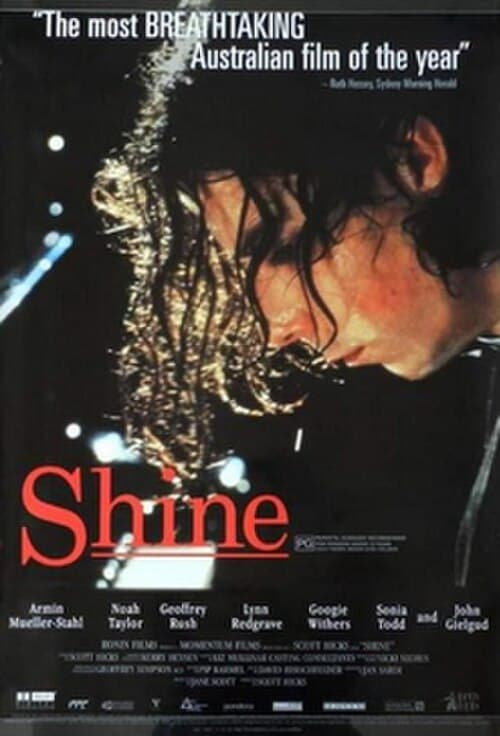
Shine and the score hiding under the Rachmaninoff
David Hirschfelder had to write original music that lives under the loudest warhorse in the piano repertoire, and the quiet writing is what carries the film.