Peter Raeburn scored The Dry with heat and the absence of water
The score is a heatwave set to strings: dry, persistent, and impossible to escape.
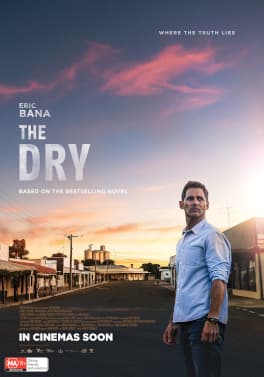
The first thing Peter Raeburn’s score for The Dry (2021) does is refuse to describe the landscape. There is no sun-bleached acoustic guitar. No didgeridoo drone placed on the soundtrack as a postal code, signalling “this is Australia, this is the outback, this is where things are ancient and pitiless.” Those sounds exist in the vocabulary of Australian film scoring, and they have been used so often that they have become a kind of shorthand that replaces observation with recognition. Raeburn does not want you to recognise anything. He wants you to feel the heat.
The method is sustained strings. Not thick, not orchestral in the romantic sense, but thin and high and held just long enough that they begin to ache. The notes do not resolve. They sit in the air the way heat sits in the air in a town that has not seen rain in months: present, oppressive, impossible to locate precisely. You cannot point to the heat. You cannot point to the source of the tension in Raeburn’s cues. It is everywhere and nowhere, a condition rather than an event, and this is exactly the right register for Robert Connolly’s film, which is a thriller built not around action but around accumulation, around the slow aggregation of secrets in a town that is too small to hold them and too dry to wash them away.
Scoring what Bana withholds
Eric Bana plays Aaron Falk, a federal police officer who returns to his hometown for a funeral and finds himself drawn into an investigation he did not come to conduct. Bana’s performance is a masterclass in restraint. Falk is a man who has trained himself not to react, not to give anything away, and Bana plays this discipline as a physical fact: the held jaw, the level gaze, the economy of gesture. He gives the audience almost nothing to read.
The scoring challenge here is precise. A less attentive composer might have used the music to supply the emotions that Bana’s performance deliberately suppresses, to tell the audience what Falk is feeling when Falk himself refuses to show it. This is a common strategy in thriller scoring, and it is almost always a mistake, because it undermines the actor’s choices and replaces dramatic tension with emotional instruction. Raeburn does something far more interesting. He does not add what Bana withholds. He scores the withholding itself: the effort of keeping still when everything around you is combustible. The strings do not swell when Falk discovers a piece of evidence. They persist. They maintain their temperature. The tension is not in the notes but in the duration, in the refusal to release.
Silence as a compositional tool
The score’s relationship to silence is as important as its relationship to sound. There are long passages in the film where the music drops out entirely, leaving only the ambient noise of the landscape: wind through dead grass, the mechanical drone of a distant pump, the particular quality of quiet that exists in a place where there are no bodies of water to generate the soft, continuous sound that most environments produce. Raeburn uses these silences structurally. They are not rests between cues but scored absences, spaces where the music has been removed so that you notice what remains.
When the strings return after one of these gaps, the effect is not climactic. It is uncomfortable. The music re-enters the film the way a headache returns: gradually, almost imperceptibly, until you realise it has been there for some time and you cannot identify the moment it began. This technique, the slow re-entry, is Raeburn’s signature move in The Dry, and it gives the score a quality that mirrors the film’s narrative structure. Connolly’s screenplay, adapted from Jane Harper’s novel, moves between past and present, between Falk’s childhood memories and the current investigation, and the transitions are often unmarked, a cut from one timeline to another without any establishing signal. Raeburn’s music operates the same way. It does not announce its arrivals or departures. It simply changes temperature.
Heat as a harmonic condition
The word I keep returning to is heat. Not warmth, which implies comfort. Heat: the condition that precedes damage. Raeburn’s harmonic language in The Dry is built around intervals that generate friction without resolving into dissonance. The strings sit in close voicings, minor seconds and major sevenths that vibrate against each other the way the air vibrates above a corrugated iron roof at midday. There is a physical quality to these harmonics that goes beyond the intellectual. You feel them in the teeth, in the sinuses, in the part of the body that registers atmospheric pressure. The score does not describe a drought. It produces one.
This is harder than it sounds. Sustained tension in film scoring is one of the most difficult effects to achieve, because the ear habituates. A held note that creates anxiety in the first thirty seconds becomes wallpaper after two minutes. Raeburn avoids this by introducing micro-variations: slight shifts in dynamics, almost inaudible changes in the overtone structure of the strings, the occasional entry of a low frequency that registers more as pressure than as pitch. These variations are too subtle to parse consciously, but they prevent the ear from settling. You cannot get used to the score the way you cannot get used to the heat.
From The Dry to Force of Nature
Raeburn returned to score Connolly’s sequel, Force of Nature: The Dry 2 (2024), and the comparison is instructive. The second film moves from the parched Victorian landscape to a dense forest, from heat and exposure to cold and enclosure, and Raeburn’s score shifts accordingly. The sustained strings remain, but they are lower, darker, wetter. The silences are shorter and more anxious. The harmonic language moves from friction to opacity: chords that absorb sound rather than reflecting it, textures that swallow detail the way a forest floor swallows footsteps.
What remains consistent across both scores is Raeburn’s fundamental compositional principle: the music does not narrate. It does not tell you what to feel. It establishes a condition, an atmospheric state, and holds it with a patience that most film scoring cannot afford. In The Dry, that condition is heat. The score sits in the air and will not move. It dries out the picture from the inside. Attack, sustain, no decay. Just the long, slow persistence of something that should have broken by now and has not.
Kieran writes about what films sound like. Played in a band that nearly got signed in 2012 and has been thinking about attack and decay ever since. Devoted to Warren Ellis, Amanda Brown, and the quiet work of sound editors nobody interviews.
MORE BY KIERAN BOUSTANY →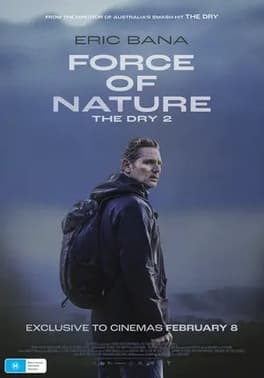
The score for Force of Nature thaws what The Dry kept frozen
Peter Raeburn scored the sequel wetter, colder, and more anxious, and the alpine setting gave him room to breathe.

The Royal Hotel scores its danger in what it refuses to play
The score sits so far back in the mix you forget it is there, which is exactly how the threat in the film works.
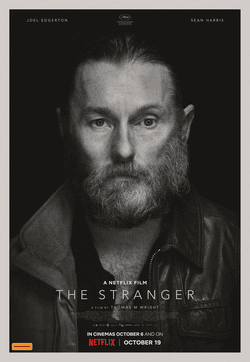
The score for The Stranger carries the weight the actors are not allowed to show
The score does the emotional work that Joel Edgerton's blankness forbids, and the restraint in both is what makes the film unbearable.