The score for Force of Nature thaws what The Dry kept frozen
Peter Raeburn scored the sequel wetter, colder, and more anxious, and the alpine setting gave him room to breathe.
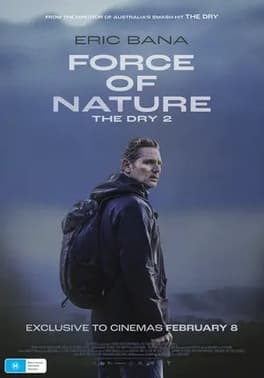
The Dry was a film about heat, and Peter Raeburn scored it accordingly. Sustained tones. Long holds. Frequencies that sat in the chest and did not move. The music behaved like the landscape: flat, dry, patient, dangerous. I wrote about it in November 2021, and what I said then was that Raeburn had composed a score that felt like waiting for a fire that had already started somewhere you could not see. The tension was thermal. The resolution never came.
Force of Nature: The Dry 2 takes Aaron Falk out of the Victorian wheat country and puts him in the alpine bush south-east of Melbourne, and everything changes. The air is cold. The trees are wet. The ground is steep and covered in ferns and fallen bark, and when it rains it does not stop. Robert Connolly directed both films, and he and Raeburn clearly understood that the sequel’s landscape demanded a fundamentally different sonic approach. You cannot score the Otway Ranges the way you score the Wimmera. The humidity alone would warp the frequencies.
From heat to cold
The first score was built on restraint. Raeburn used electronics and processed guitar, dry textures with almost no reverb, tones that felt dehydrated. The musical palette was narrow by design, a few instruments occupying a limited frequency range, mimicking the constriction of a drought-stricken town where the river has stopped and the earth has cracked and nobody can breathe properly.
The Force of Nature score opens those constraints. Strings enter the picture almost immediately, real strings recorded with room ambience, wet with reverb in a way that the first score never permitted. The shift is not subtle. Where The Dry sounded like a single surface, hard and flat, Force of Nature sounds like depth. Layers. Moisture in the signal chain. Raeburn has said in interviews that he wanted the score to feel like the forest itself, thick and vertical, sound coming from above and below and behind you, and the orchestration reflects this. Cellos underneath. High strings above. Electronics threading through the middle, moving laterally while the acoustic instruments hold their vertical positions.
Water in the signal
There is a textural element in the Force of Nature score that I find difficult to describe precisely but that registers physically when you listen. Several cues contain what sounds like processed water, recordings of rain or streams run through granular synthesis and placed low in the mix, not as a sound effect but as a musical element. It is there and not there. It sits beneath the strings the way actual water sits beneath the forest floor, present but invisible, shaping the surface from below.
This is a compositional choice that only makes sense in context. Isolated, a cue built on processed water sounds like ambient electronica, pleasant and unspecific. Inside the film, against images of five women lost in alpine bush in deteriorating weather, it becomes something else entirely. The water in the music is the water on screen, but translated into a register that operates below conscious attention. You feel damp. You feel cold. The score is doing this to you, and unless you are listening for it, you do not know.
The anxiety of the missing
The Dry was a procedural, and its score reflected that. The tension built linearly, moving with the investigation from mystery to resolution, or something close to resolution. Force of Nature is structured differently. The disappearance of Alice Russell fractures the narrative into timelines, past and present, the hike and the search, and Raeburn’s score has to hold both frames simultaneously.
He solves this with two distinct harmonic languages. The hike sequences, before the disappearance, are scored with diatonic strings, tonal and almost warm, the sound of a group of people moving through a landscape that is beautiful and not yet dangerous. The search sequences use the electronics, atonal clusters and low drones that pull the harmonic floor out from under the image. When the film cuts between timelines, the music cuts with it, and the shift is disorienting in a way that mirrors the confusion of the search party on screen. You lose your footing. The score means you to.
Raeburn between films
The three years between The Dry (2020) and Force of Nature (2023) were productive ones for Raeburn, and the growth between the two scores reflects work done elsewhere. His scoring has become more confident in its use of space, more willing to leave gaps, to let a cue breathe before the next phrase arrives. The Dry score was tight, compressed, everything pushed close together. The Force of Nature score has air in it, which sounds paradoxical for a film set in a forest so dense you can barely see the sky, but the air is not openness. It is the space between breaths when you are anxious. The pauses are not calm. They are held.
There is a cue that plays during the final act of the film, when the truth about Alice’s disappearance begins to surface, that is the best thing Raeburn has written for either film. A solo cello, unaccompanied, playing a phrase that ascends and does not resolve. It repeats. It ascends again. It does not resolve again. The repetition is the point. The music is doing what the investigation is doing: reaching for an answer that keeps receding, and the emotional weight is located not in the melody but in the space where the resolution should be and is not.
Two landscapes, one composer
What Raeburn has done across these two films is something that Australian screen music does not often get the chance to demonstrate: a sustained compositional engagement with landscape, across multiple works, with enough time and enough trust from the director to develop a musical language that deepens rather than repeats. The Dry score was excellent. The Force of Nature score is better, and it is better because it has the first score to lean against, to answer, to complicate. The heat of the original makes the cold of the sequel colder. The dryness makes the moisture more present. The two scores are in conversation, and the conversation is about what it sounds like when the same country shows you a different face, wet where it was dry, vertical where it was flat, and the danger does not diminish but changes shape.
Kieran writes about what films sound like. Played in a band that nearly got signed in 2012 and has been thinking about attack and decay ever since. Devoted to Warren Ellis, Amanda Brown, and the quiet work of sound editors nobody interviews.
MORE BY KIERAN BOUSTANY →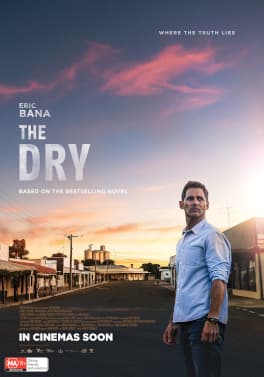
Peter Raeburn scored The Dry with heat and the absence of water
The score is a heatwave set to strings: dry, persistent, and impossible to escape.
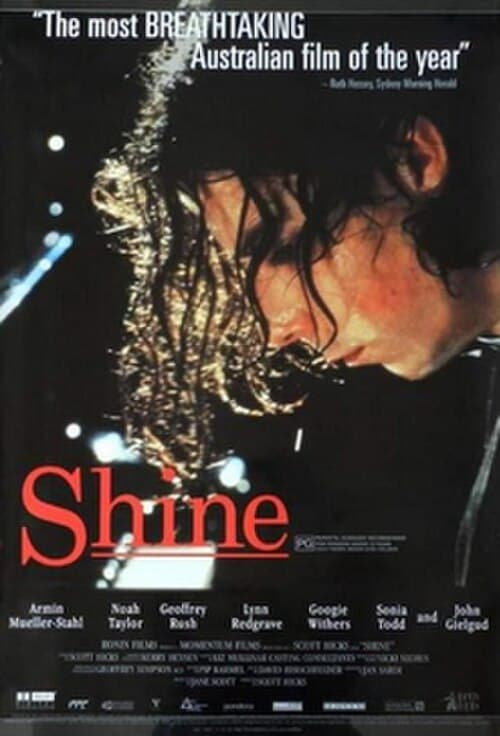
Shine and the score hiding under the Rachmaninoff
David Hirschfelder had to write original music that lives under the loudest warhorse in the piano repertoire, and the quiet writing is what carries the film.
Nigel Westlake smuggled a cathedral into a film about a pig
The score for Babe borrows its grandeur from a French organ symphony, and the trick tells you everything about how Nigel Westlake hears the relationship between small subjects and large feelings.