The Royal Hotel scores its danger in what it refuses to play
The score sits so far back in the mix you forget it is there, which is exactly how the threat in the film works.

The first thing you hear in The Royal Hotel is not music. It is the sound of glasses being collected, the dull knock of a pint hitting a bar mat, a television playing sport to a room that is not watching. The pub announces itself through its ambient noise before a single word of dialogue is spoken, and this ambient noise, this hum of a place that is always slightly too loud and slightly too empty at the same time, will be the film’s dominant sonic texture for the next ninety minutes. The score, when it appears, does not sit on top of this noise. It sits beneath it, behind it, so far back in the mix that you may not consciously register its presence at all. This is not an absence of music. It is music deployed as a form of withholding, and the withholding is the point.
Kitty Green’s The Royal Hotel (2023) follows two young women, played by Julia Garner and Jessica Henwick, who take jobs at a pub in a remote Australian mining town. The premise is simple: they need money, the pub needs staff, and the men who drink there are not safe. The film’s tension comes not from any single act of violence but from the slow, grinding accumulation of small transgressions, looks that last too long, comments that could be jokes or could be threats, physical proximity that could be accidental or could be deliberate. The women cannot be sure. The audience cannot be sure. And the score’s job is to hold that uncertainty in place without resolving it.
The pub as instrument
Every room has a sound, and the sound of an outback pub is specific: the low-frequency rumble of a refrigeration unit behind the bar, the metallic buzz of fluorescent tubes, the clink and scrape of pool balls, the intermittent eruption of laughter or argument from a table of drinkers, and underneath all of it, the particular acoustic signature of a building made from corrugated iron and concrete block, a space that absorbs high frequencies and amplifies low ones. Green and her sound team capture this texture with documentary precision. The pub sounds real because it has been recorded as a real space rather than an idealised cinematic one, and the effect is immersive in a way that a more stylised sound design would not achieve.
The score operates within this texture rather than against it. The cues tend toward low drones, sustained tones in the same frequency range as the refrigeration hum, so that the transition from ambient sound to composed music is almost imperceptible. There are no melodic themes, no identifiable instrumental voices, no rhythmic patterns that would distinguish the score from the environment it inhabits. The music does not announce itself. It seeps in, gradually, the way damp seeps through a wall, and by the time you notice it the emotional temperature of the scene has already shifted.
What Green learned from the office
Green’s previous feature, The Assistant (2019), employed a similar strategy in a radically different setting. That film, set in the offices of a Harvey Weinstein-like film producer, used the ambient sound of a corporate workspace as its primary sonic material: the hum of fluorescent lights, the clatter of keyboards, the muffled sound of a phone ringing in the next room. The score, by Tamar-kali, was equally restrained, hovering at the edge of audibility, present enough to inflect the mood but never prominent enough to direct it. The effect was cumulative. By the film’s final act, the office noise itself had become menacing; the hum of the lights had taken on the quality of a held breath.
The Royal Hotel transposes this approach from office to pub, from white-collar predation to its blue-collar equivalent, and the sonic logic holds. In both films, the danger is ambient. It is not located in a single person or a single moment; it is distributed across an environment, embedded in the social architecture of a space where power is exercised through proximity, volume, and the control of when and how silence falls. The score’s restraint mirrors the women’s predicament: they cannot name the threat because the threat has not yet declared itself, and any attempt to name it prematurely risks being dismissed as overreaction.
The silence that is not silence
There are moments in The Royal Hotel where the ambient sound drops away and the film approaches something close to silence. These moments tend to occur at the edges of scenes, in the space between the pub’s closing and the women’s retreat to their room above it, or in the early morning before the first drinkers arrive. The silence is never total. There is always something: the tick of a cooling engine in the car park, the distant drone of a road train, the wind moving through corrugated iron. But the reduction in volume is dramatic, and into this reduced space the score is finally audible as score, not as atmospheric colouring but as a deliberate compositional presence.
These passages are the film’s most unsettling. The drones deepen, the sustained tones acquire a faint dissonance, and the harmonic register shifts from neutral to uneasy without any obvious melodic or rhythmic event to mark the change. It is the sound of threat becoming legible, of ambient menace condensing into something specific. And then the pub noise returns, the men arrive, the volume rises, and the score retreats again into its hiding place behind the refrigerator hum.
Scoring the space between maybe and yes
The most difficult thing a film score can do is hold ambiguity in place. Music is, by its nature, a resolving force; it wants to tell you what to feel, to close the gap between uncertainty and understanding. A suspenseful score builds toward revelation. A mournful score confirms loss. Even an atonal or dissonant score, by virtue of its dissonance, signals that something is wrong. Green’s film requires music that does none of these things. It requires music that sits in the space between “maybe this is fine” and “this is not fine,” and stays there, without tipping in either direction, for the duration of the picture.
The score achieves this by refusing to play. Not refusing to exist, but refusing to perform the functions that film music conventionally performs. It does not build. It does not resolve. It does not underscore moments of danger or release moments of tension. It simply persists, a low hum beneath the pub’s own low hum, indistinguishable from the environment until the environment falls away and you realise, with a slow chill, that the music has been there all along, holding the threat in place with a patience that matches the film’s own. The danger in The Royal Hotel works because it is never confirmed until it is too late to leave. The score works the same way.

Kieran writes about what films sound like. Played in a band that nearly got signed in 2012 and has been thinking about attack and decay ever since. Devoted to Warren Ellis, Amanda Brown, and the quiet work of sound editors nobody interviews.
MORE BY KIERAN BOUSTANY →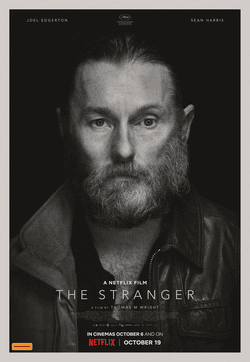
The score for The Stranger carries the weight the actors are not allowed to show
The score does the emotional work that Joel Edgerton's blankness forbids, and the restraint in both is what makes the film unbearable.

Peter Raeburn scored The Dry with heat and the absence of water
The score is a heatwave set to strings: dry, persistent, and impossible to escape.
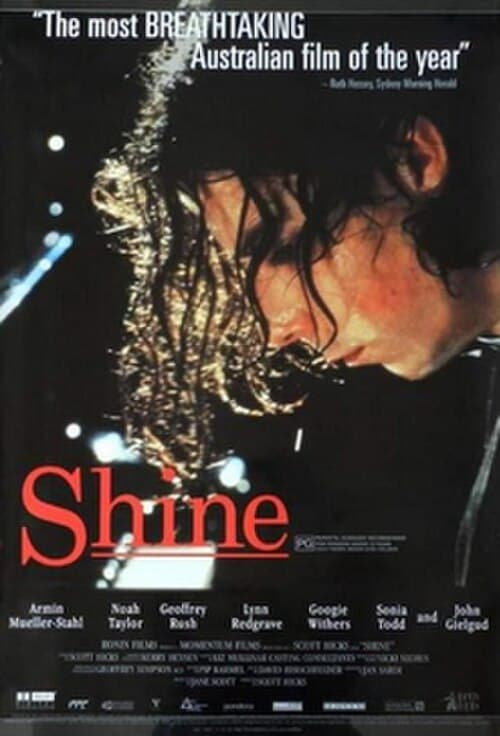
Shine and the score hiding under the Rachmaninoff
David Hirschfelder had to write original music that lives under the loudest warhorse in the piano repertoire, and the quiet writing is what carries the film.