The Piano and the Australian system that made Campion
A New Zealand-set, French-financed Palme d'Or winner swept the Australian Film Institute Awards. The picture only makes sense as the end of a local training and funding lineage.
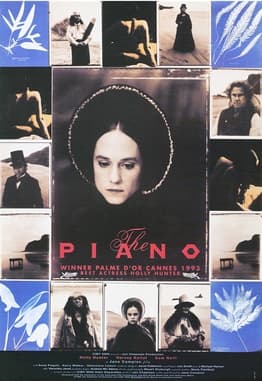
It is a curiosity of the way national cinemas keep their books that The Piano, a picture shot on the beaches and in the bush of New Zealand’s North Island, financed in part by a French company, and set in the 1850s among Scottish settlers, took eleven Australian Film Institute Awards. The easy reading is that Australia was claiming a winner. The more useful reading is that Australia had built Jane Campion, and the Australian industry was recognising its own work in a coat that did not look like its own.
A co-production with a local spine
The Piano is formally an international co-production between New Zealand, Australia and France. Campion wrote and directed; the producer was Jan Chapman, an Australian, which is a large part of why the Australian system could see itself in the picture. The film was shot over twelve weeks from February to mid-May 1992, with Karekare Beach west of Auckland standing in for the shore where a mute Scottish pianist, Ada (Holly Hunter), is left with her daughter and her instrument. The Bay of Islands doubled for the underwater scenes; the bush work was done near Matakana and Awakino.
I stress the geography because the picture’s reputation has floated free of its making. It is remembered as a European art film that happened to have antipodean weather. It is better understood as the high point of a particular Australasian method: a filmmaker trained at the Australian Film, Television and Radio School, supported by a national funding system that tolerated a strange first feature, and handed a budget (about US$7 million, per the figures usually cited) that was small enough to preserve her authority and large enough to build a world.
The lineage in the work
Campion’s earlier pictures were Sweetie, in 1989, a suburban gothic comedy that divided audiences, and An Angel at My Table, in 1990, her adaptation of Janet Frame’s autobiography. Neither was a safe project. Each depended on a small institution that was willing to let a woman in her thirties direct something odd, and each is visibly a rehearsal for The Piano: the same attention to the body as a place where feeling is stored, the same distrust of speech.
It is no accident that the central character does not talk. Ada communicates by playing, by signing (Hunter worked with a sign-language instructor, Darlene Allen Wittman, to build a composite vocabulary for her), and by writing on a slate. In a conventional costume drama a mute heroine would be a limit. Here she is the method. The picture is built on the proposition that a sound heard is truer than a sentence spoken. That is, in the end, a proposition about what cinema is for.
Nyman, and the problem of the score
Michael Nyman’s score is the picture’s most celebrated element, and its most instructive. The main theme, “The Heart Asks Pleasure First,” is based on a traditional Scottish song, “Gloomy Winter’s Noo Awa’,” which tells you something about the film’s register: it is a story of exiles, and the music has been brought from home in the luggage. Hunter took piano lessons so that she could play Nyman’s compositions herself, and you feel the commitment in how long the camera is willing to look at her hands.
What I find telling, watching it again, is how sparingly the score enters. The sound of the picture is the sea, rain on a roof, the scrape of the piano being hauled across sand; Nyman’s music arrives like speech from someone who has been waiting to be asked. The structure of the film agrees with the instrument being the character’s voice: when it plays, we are being told something.
What the awards did
The Palme d’Or the picture shared with Chen Kaige’s Farewell My Concubine in 1993 made Campion the first woman to win the prize, and the first filmmaker from New Zealand to do so. It won three Academy Awards (Hunter for Best Actress, Anna Paquin for Best Supporting Actress at the age of eleven, and Campion for Best Original Screenplay), and it grossed about US$140 million worldwide, including roughly $7 million in Australia, against that US$7 million budget. In New Zealand it became the highest-grossing domestic production to that point.
The eleven AFI wins are the figure I would put in front of a local reader. It meant the institution that gave out the national prize treated the picture as ours; it meant a French-financed, New Zealand-shot film had a thick Australian signature; and it meant that the training and the funding bodies that produced the signature had, for once, been rewarded in a year when it was visible.
Why the lineage matters now
There is a temptation, in the conversation about Australian screen policy, to treat the great pictures as accidents of talent. The Piano argues the opposite. A filmmaker emerges from a school, a short-film scheme, a state or federal funder willing to back a difficult first feature, a producer who knows how to assemble a co-production, and a festival circuit that rewards ambition. Take away one of those and the picture does not exist.
I do not say this to diminish Campion, whose authority over the film is total; it is the most personal thing she made. I say it because the thing that stays with me about The Piano is how un-accidental it was, and how much of the infrastructure it depended on is still the infrastructure we argue about at budget time. The picture was made by a system. We should be able to describe the system as clearly as we describe the film.
Bronte writes long-form criticism of Australian cinema and the international art films that feed into it. She was on the ground at Cannes in 2019 and has not entirely forgiven the festival for 2020. Patient with slow films; impatient with tidy ones.
MORE BY BRONTE HAUGHEY →
Puberty Blues and the long wait on the sand
Bruce Beresford's 1981 picture watches two girls sit on a beach for most of its running time, and the sitting is the argument.
Breaker Morant and the country that adopted its scapegoat
Bruce Beresford's 1980 courtroom drama made an English-born soldier into an Australian martyr, and the picture's argument about empire has outlived its historical certainties.
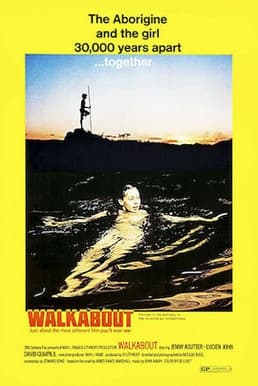
Walkabout is a British film about a country it never claims
Nicolas Roeg's 1971 picture is claimed as an Australian classic, though it was made by a Londoner, financed by two Americans and sold by 20th Century Fox. Its best argument is how little it pretends otherwise.