The Nightingale and the wound that will not close
Jennifer Kent's second feature is not interested in making its violence comfortable, and that is the whole point.
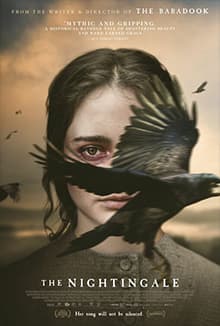
When The Nightingale screened at Venice in September 2018, a portion of the audience walked out. Reports from the Sala Grande described viewers rising during the first act, some audibly distressed, others simply unwilling to sit with what Jennifer Kent had placed in front of them. The walkouts became the story for a news cycle; the picture itself, once it reached Australian cinemas the following year, arrived trailing a kind of notoriety that had nothing to do with marketing and everything to do with what people could not unsee. It is worth pausing on this, because the discomfort was not incidental. Kent built the film around it, and to talk about The Nightingale without talking about what it demands of its audience is to miss the register in which the picture operates.
The film is set in 1825 Van Diemen’s Land. Clare (Aisling Franciosi), an Irish convict, pursues Lieutenant Hawkins (Sam Claflin) through the Tasmanian wilderness after he commits acts of extraordinary violence against her and her family. She is accompanied by Billy (Baykali Ganambarr), an Aboriginal tracker whose own relationship to the colonial apparatus is defined by coercion, suspicion and the threat of death. The premise is simple. The execution is not.
Violence as historical fact, not spectacle
Kent has spoken in interviews about her refusal to aestheticise the violence in the film; she wanted it to feel as ugly and as unbearable as it would have been for the people who lived through it. This is a meaningful distinction. Australian cinema has a long lineage of colonial narratives, from the mud and chains of For the Term of His Natural Life (1927) through to Warwick Thornton’s Sweet Country (2017), and the question each of these pictures faces is the same: how do you represent historical atrocity without turning it into entertainment? The answer Kent arrives at is radical in its simplicity. She does not look away, she does not cut to the aftermath, and she does not permit the audience a single comfortable angle from which to watch.
This puts The Nightingale in direct tension with its own genre furniture. The film borrows the shape of a revenge narrative, but it never delivers the catharsis that shape typically promises. Clare’s pursuit of Hawkins is not triumphant; it is grinding, lonely and morally corrosive. The wilderness through which she moves is not a backdrop for liberation but a space defined by colonial cartography, military supply lines and the erasure of the people who knew the land before any of these things existed. Kent and cinematographer Radek Ladczuk shot in a narrow 1.37:1 aspect ratio, boxing the frame so that the world feels cramped and suffocating even when the characters are surrounded by forest. It is a formal choice that insists on proximity: you are close to these bodies, these faces, and there is nowhere in the frame to rest.
The shadow of The Babadook
Kent’s debut, The Babadook (2014), announced her as a filmmaker interested in the places where grief and horror overlap. That picture worked because it took a genre premise (the monster in the house) and turned it into a study of a woman collapsing under the weight of unprocessed loss. The monster was real enough to be frightening but metaphorical enough to sustain interpretation. The Nightingale shares some of this architecture, the interest in female interiority under duress, the refusal of neat resolution, but it operates in a different register entirely. The violence in The Babadook was psychological; the violence in The Nightingale is historical, physical, and specific to a place and a political system.
What connects the two films is Kent’s conviction that horror is not something you import into a story but something you find already embedded in its conditions. In The Babadook, the condition was grief. In The Nightingale, the condition is colonialism. Both films insist that the horror cannot be defeated, only survived, and that survival itself carries a cost the narrative will not discount.
Billy and the problem of the buddy picture
One of the most delicate things The Nightingale does is resist the structural pull toward a redemptive relationship between Clare and Billy. The print could easily have become a version of the buddy picture, two marginalised people learning to trust each other against a common enemy, but Kent and Ganambarr refuse to let it settle into that shape. Billy is not Clare’s guide in any spiritual sense; he is a man navigating his own dispossession, and his reasons for helping her are pragmatic, shifting, and never fully legible to her. The film holds this asymmetry carefully. Clare’s suffering is real, but it does not grant her automatic solidarity with Billy, whose people are subject to a violence that precedes her arrival and will outlast it.
Ganambarr, a first-time actor, gives a performance of extraordinary restraint. He carries Billy’s anger and grief close to the surface but never lets them spill into the kind of expressive outpouring the film’s structure might seem to invite. His line readings are precise, his silences loaded, and in several scenes he communicates more through the set of his jaw than through dialogue. It is a performance that trusts the audience to read what is not being said, and it anchors the film’s politics in something lived and particular rather than schematic.
Why Australian cinema circles this wound
Australian cinema returns to colonialism the way American cinema returns to the frontier: compulsively, guiltily, and with a persistent inability to resolve what it finds there. From Peter Weir’s The Last Wave (1977) to Rolf de Heer’s The Tracker (2002) to Thornton’s Sweet Country, the national cinema has produced a body of work that circles the foundational violence of the settler state without ever quite closing the loop. What distinguishes The Nightingale from most of these pictures is its refusal to offer the viewer a position of moral safety. There is no white character in the film who functions as the audience’s conscience, no liberal intermediary through whom the violence can be filtered and softened. You are either with Clare, whose own position within the colonial hierarchy is compromised, or you are watching from outside the frame entirely.
This is what made Venice so volatile. The walkouts were not a failure of the film; they were, in a sense, its thesis made physical. The audience’s inability to remain seated was a version of the same refusal the film diagnoses in the national culture: the desire to acknowledge the wound without actually looking at it, to know what happened without feeling what it cost. Kent’s picture does not allow that distance. It puts you in the room, in the dirt, in the blood, and it does not release you into catharsis or redemption or the comforting fiction that the past is past.
The print that remains
The Nightingale is not a comfortable film and it is not a hopeful one, though it contains moments of tenderness that are all the more powerful for the brutality that surrounds them. Clare’s singing, which recurs throughout the picture, is the only space in the film where beauty is permitted to exist without qualification, and even then it is a beauty saturated with loss. The film does not argue that art redeems suffering; it argues that art persists alongside it, and that persistence is its own kind of defiance.
Five years on, the picture has settled into a strange position in Australian cinema. It is widely respected but rarely revisited, discussed with a kind of careful reverence that sometimes shades into avoidance. This is perhaps the highest compliment the film can receive. The wound it opens is the wound of the country itself, and the fact that audiences still find it difficult to sit with is not a mark against the picture. It is the whole point.
Bronte writes long-form criticism of Australian cinema and the international art films that feed into it. She was on the ground at Cannes in 2019 and has not entirely forgiven the festival for 2020. Patient with slow films; impatient with tidy ones.
MORE BY BRONTE HAUGHEY →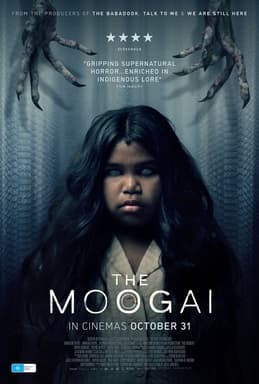
What The Moogai asks you to believe about a mother
Jon Bell's horror film splits its audience along a single question, and the split at Sundance and at Sydney tells you exactly what the film is doing.
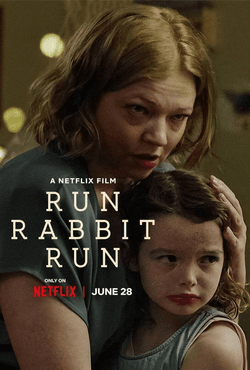
Run Rabbit Run gives Sarah Snook a haunted house and not enough script to fill it
Snook carries the film on performance alone, and the film knows this, which is both its strength and the reason it never finds a second gear.
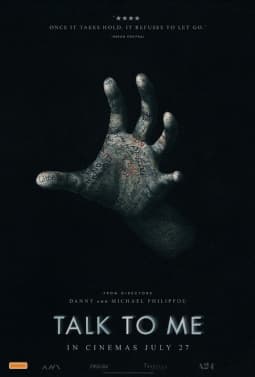
Australian horror found an audience and now it has to decide what to do with it
Talk to Me proved Australian horror could sell globally, and the pipeline behind it is filling with directors who watched that and took notes.