Talk to Me found Australian horror's nerve and held it
The Philippou brothers built a horror film out of YouTube pacing and Adelaide geography, and the combination should not work as well as it does.
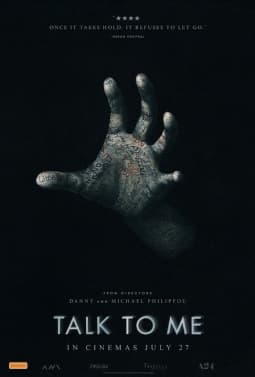
The opening scene of Talk to Me does something that most horror films take thirty minutes to achieve: it establishes the rules of its world, the social dynamics of its characters, and the specific quality of its menace, all within a single house-party sequence shot with the loose, handheld energy of a phone video. A young man is looking for his brother at a party. The crowd is dense, indifferent, lit by the kind of overhead fluorescents that make everyone look slightly ill. When he finds his brother, the brother is not right; something has happened to him in a room down the hall, something involving a ceramic hand and a candle and a ritual that the partygoers treat with the casual recklessness of a drinking game. What follows is violent, sudden, and filmed with the blunt efficiency of someone who has spent years making content designed to hold attention for ninety seconds. This is not a criticism. The Philippou brothers understand pacing in a way that most debut filmmakers do not, and that understanding is the engine of the picture.
Danny and Michael Philippou grew up in Adelaide and built their reputation on RackaRacka, a YouTube channel specialising in extreme comedy sketches involving elaborate practical effects, stunts, and a gleeful disregard for good taste. The channel has millions of subscribers. The videos are loud, fast, frequently disgusting, and technically accomplished in ways that are easy to overlook if you are distracted by the blood. When the brothers announced they were making a feature horror film, the assumption in certain corners of the Australian industry was that the result would be crude, juvenile, a YouTube video stretched to ninety minutes. That assumption was wrong.
The hand as social media logic
Talk to Me is built around a single prop: an embalmed ceramic hand that, when grasped, allows the user to communicate with the dead. The rules are simple. Light the candle, hold the hand, say “talk to me.” A spirit appears, visible only to the person holding the hand. Say “I let you in,” and the spirit enters your body for a brief, euphoric possession. The catch is the time limit: ninety seconds, after which someone must blow out the candle and break the connection. Go over, and the spirit stays.
What makes this premise work is not the supernatural mechanism but the social architecture the Philippous build around it. The hand is not used in isolation; it is used at parties, in groups, with phones recording. Each possession is a performance. The person in the chair writhes, screams, speaks in voices that are not their own, and the audience watches, laughs, films, uploads. The hand is a content machine. It produces spectacle, and spectacle produces social capital, and social capital is the currency these characters trade in. The film does not make this analogy explicit because it does not need to; the visual grammar of phones held up, faces lit by screens, the compulsion to watch and share, is so embedded in the film’s texture that it reads as atmosphere rather than commentary.
Adelaide as a horror landscape
The film is set in Adelaide’s northern suburbs, and the locations carry a specific weight that non-Australian audiences may not fully register. The houses are brick-veneer, single-storey, set back from wide streets with no footpaths. The interiors are lit with the flat warmth of downlights. The backyards are concrete and synthetic turf. This is not the gothic Australian landscape of Picnic at Hanging Rock or the desert menace of Wake in Fright; it is suburban Australia rendered with the precision of lived experience, and the Philippous use it not as a backdrop but as a container for a particular kind of teenage claustrophobia. There is nowhere to go in these suburbs. There is nothing to do. The hand arrives into a vacuum of boredom and proximity, and the characters reach for it because it is the most interesting thing that has ever happened to them.
The comparison to Jennifer Kent’s The Babadook (2014) is inevitable and, in most respects, productive. Both films are Australian horror features that broke out internationally; both use genre conventions to explore psychological terrain that the genre is not always credited with reaching. But the differences are instructive. The Babadook is a film about grief, structured as a two-character chamber piece, directed with the controlled formalism of someone trained in theatre and art-house cinema. It is a grown-up’s film about grown-up fears. Talk to Me is a teenager’s film about teenager fears, and it is structured accordingly: fast, social, driven by group dynamics rather than interior states. Where Kent’s film asked you to sit with discomfort, the Philippous’ film dares you to look away from it.
The non-traditional question
There is a conversation that recurs whenever filmmakers emerge from outside the traditional development pathway, whether that pathway is film school, short films, festival selection, or the Screen Australia funding apparatus. The conversation tends to frame the non-traditional background as either a novelty or a handicap, and it tends to resolve by declaring that the filmmaker has “transcended” their origins, as though making good work requires leaving behind the skills and instincts that got you noticed in the first place.
The Philippous have not transcended YouTube. They have brought YouTube’s grammar into a feature-length narrative and demonstrated that it is compatible with sustained tension, character development, and formal control. The film’s editing rhythm, its use of close-ups, its understanding of how a camera held at arm’s length changes the register of an image, these are skills developed over thousands of hours of making short-form content for an audience that will click away in three seconds if you lose them. That discipline is visible in every scene of Talk to Me, and it is part of why the film works as well as it does.
What it holds
The film’s final act is bleak in a way that earns its bleakness. Without detailing the plot’s resolution, it is enough to say that the Philippous do not flinch from the consequences of their premise, and that the horror of the ending is not supernatural but emotional: the damage is done by people to people, in the name of connection, and the spirits are almost incidental. This is the film’s sharpest insight. The hand is not the source of the horror. The hand is just the thing that gave the horror permission to surface.
Talk to Me grossed over $90 million worldwide on a budget of approximately $4.5 million. It was picked up by A24 after screening at the Adelaide Film Festival and Sundance, and it announced the Philippou brothers as filmmakers of serious capability. More importantly, it demonstrated something that the Australian industry has been slow to acknowledge: that horror, made with craft and specificity and a genuine understanding of its audience, is one of the most reliable vehicles for getting Australian stories onto screens around the world. The genre does not dilute the local detail; it amplifies it. The suburbs are still Adelaide. The kids are still Australian. The horror just makes sure you are paying attention.
Bronte writes long-form criticism of Australian cinema and the international art films that feed into it. She was on the ground at Cannes in 2019 and has not entirely forgiven the festival for 2020. Patient with slow films; impatient with tidy ones.
MORE BY BRONTE HAUGHEY →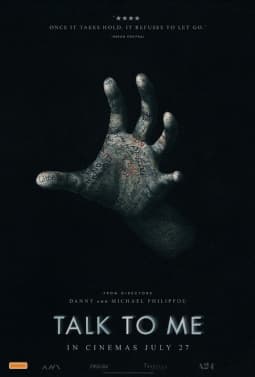
Australian horror found an audience and now it has to decide what to do with it
Talk to Me proved Australian horror could sell globally, and the pipeline behind it is filling with directors who watched that and took notes.
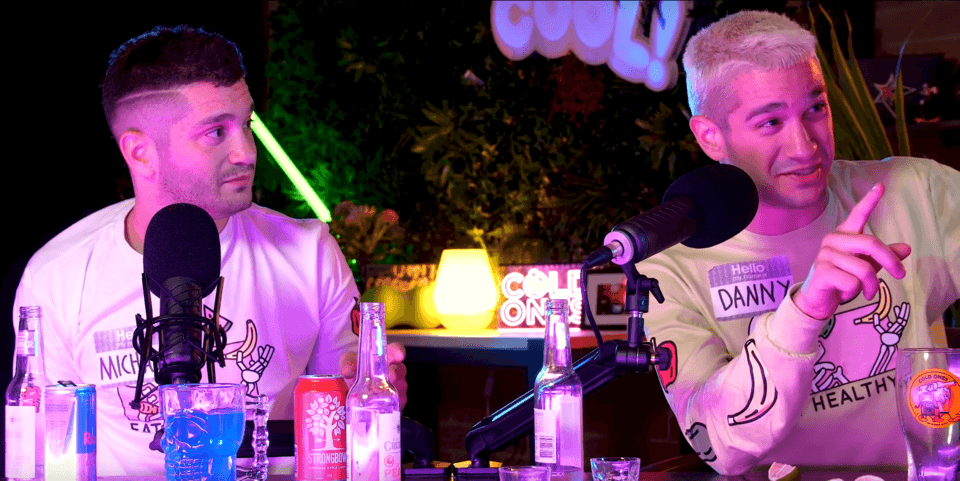
The Philippou brothers came from YouTube and brought the algorithm's pacing with them
Danny and Michael Philippou learned to direct by keeping strangers watching for three more seconds, and that instinct is the engine underneath Talk to Me.
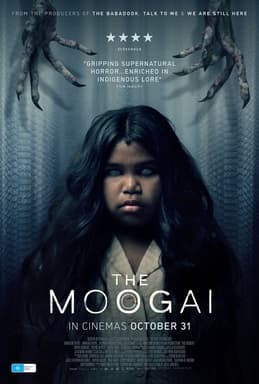
What The Moogai asks you to believe about a mother
Jon Bell's horror film splits its audience along a single question, and the split at Sundance and at Sydney tells you exactly what the film is doing.