Seriously Red puts a real estate agent in rhinestones and dares you to care
Gracie Otto's debut puts a real estate agent in a rhinestone jumpsuit and dares the audience to take both the costume and the sadness underneath it seriously.
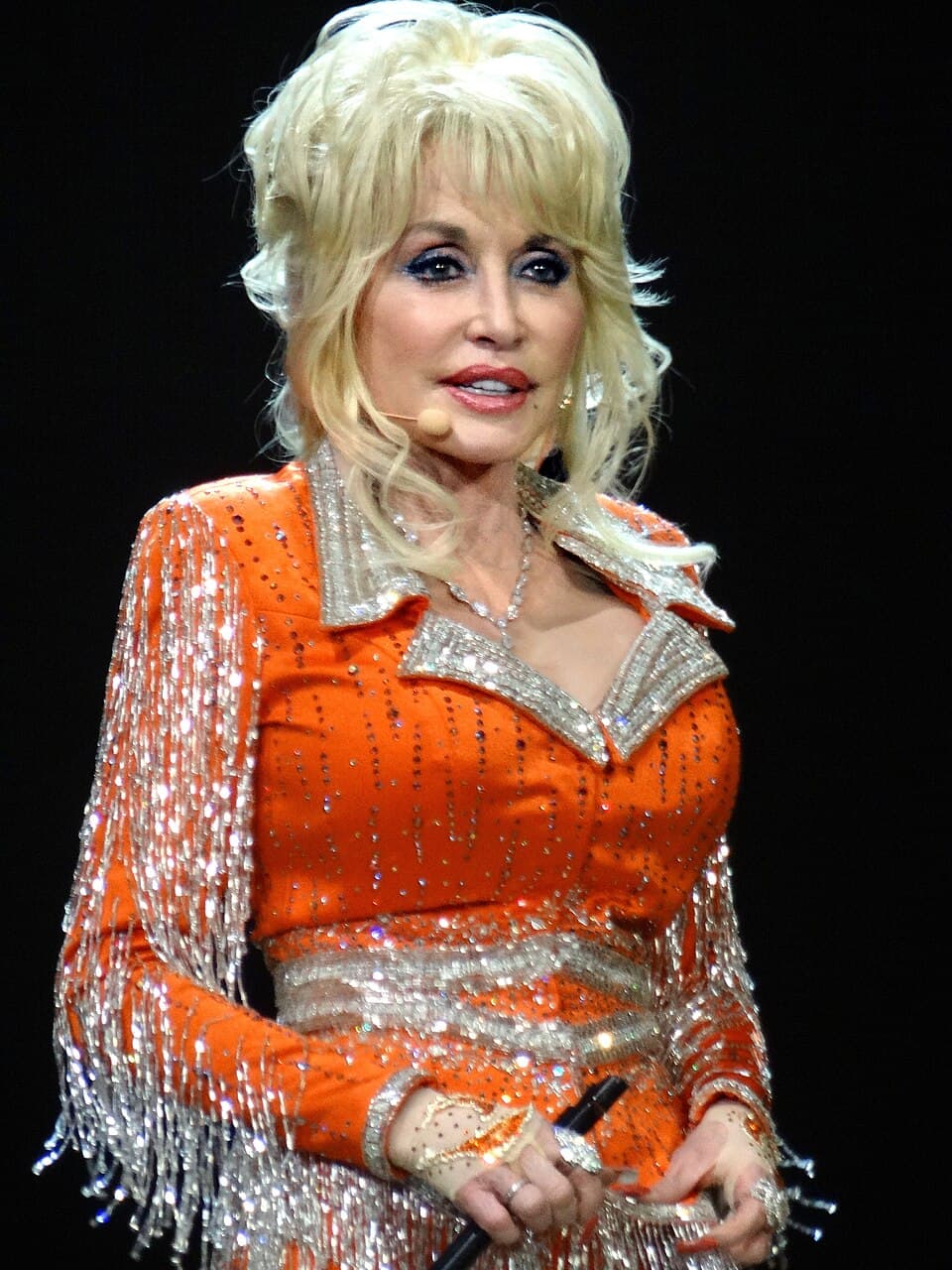
The pitch for Seriously Red sounds like something you would hear at a drinks function and immediately forget: a redheaded real estate agent in suburban Queensland starts impersonating Dolly Parton and enters the professional tribute circuit. You can feel the film it could have been, the broad comedy about a big-haired woman in a small town, the kind of picture where the laughs come from the gap between aspiration and reality and the audience is invited to feel warmly superior. Gracie Otto’s debut feature (2022) begins in the neighbourhood of that film and then, gradually and without announcement, moves somewhere else entirely. By the final act it has become something unexpectedly raw: a study of what it costs to build a self out of someone else’s image, and what happens when the borrowed version starts to feel more real than the original.
Krew Boylan plays Raylene “Red” Delaney, and the performance is the foundation on which the entire picture stands. Boylan, who also wrote the screenplay, based the character on her own experiences in the impersonator world, and that biographical grounding shows. Red is not a caricature of a woman who does not know she is ridiculous. She is a person who knows exactly how she looks and has decided, with a kind of stubborn courage, that looking like Dolly Parton is preferable to looking like herself. The comedy in the early scenes comes not from Red’s delusion but from her competence; she is genuinely good at this, and Boylan plays the performance-within-the-performance with a conviction that makes it impossible to dismiss.
The rhinestones and what they hide
The impersonator world, as the film presents it, is a specific subculture with its own hierarchies, rivalries and codes of professional conduct. Red enters it through a talent agency that manages a roster of tribute acts, and the film takes the time to establish this ecosystem without condescension. There is a Kenny Rogers impersonator, played by Bobby Cannavale with a moustache and an accent that should not work but does, and a rivalry with another Dolly tribute that Rose Byrne inhabits with the brittle composure of a woman who has been the best at something very small for a very long time.
What these supporting performances do, and both Cannavale and Byrne are very good here, is establish the emotional stakes of the impersonator world without reducing it to punchline. These are people who have organised their lives around the reproduction of someone else’s persona. The film asks, without ever stating the question directly, what the difference is between tribute and erasure; between loving someone else’s art and losing yourself inside it. Red’s Dolly starts as an act and becomes an identity, and Boylan charts the transition with a specificity that suggests she has lived the slippage herself.
Suburban Queensland as a state of mind
The setting matters. Seriously Red is not set in Sydney or Melbourne, where the impersonator circuit might read as ironic, as a knowingly camp performance for an audience fluent in the semiotics of quotation. It is set in the Queensland suburbs, in fibro houses and RSL clubs and open-plan real estate offices with motivational posters on the walls, and in this context the impersonation operates differently. It is not ironic. It is sincere. Red does not become Dolly as a joke. She becomes Dolly because Dolly represents a version of femininity that is simultaneously extravagant and hardworking, glamorous and practical, qualities that Red admires because they are the qualities she wants for herself but cannot access in her own register.
Otto shoots these suburban spaces with affection but without nostalgia. The Queensland light does its own work: flat, bright, unforgiving, the kind of light that exposes every flaw in a facade and makes even the most elaborate costume look slightly provisional. There is a visual irony in watching Red, in full Dolly regalia, standing in the car park of a shopping centre in Ipswich, and the film is aware of that irony without mocking it. The gap between the costume and the setting is where the picture lives.
The line between tribute and delusion
The film’s most interesting work happens in the second half, when the distinction between Red and Dolly begins to collapse. Boylan plays this not as a dramatic breakdown but as a gradual erosion, a series of small choices that each make sense individually but accumulate into something troubling. Red starts wearing the wig offstage. She adopts Dolly’s cadences in conversation. She begins to treat her own biography as raw material for Dolly’s, rewriting her personal history to fit the contours of a Tennessee childhood she never had. The film does not pathologise this. It understands that the impulse to become someone else is not always a symptom of illness; sometimes it is the only available response to a self that feels insufficient.
This is where Seriously Red earns its weight. The picture could coast on charm. Boylan is charismatic, the supporting cast is strong, the production design is meticulous, and there are genuine laughs distributed throughout. But the film keeps pushing past the point where a lesser comedy would settle for warmth. It wants to know what happens after the applause, when the wig comes off and the person underneath has to account for the hours spent being someone else. The answer it arrives at is not neat. Red does not have an epiphany. She does not renounce the impersonation and discover her “authentic self” in the third act, because the film is smart enough to recognise that the concept of an authentic self is precisely what is under investigation.
Funnier and sadder than its pitch
I said at the beginning that this film sounds like something you would forget, and I suspect many people did. Seriously Red had a limited theatrical run in late 2022, competed for attention in an overcrowded release calendar, and was treated by most of the critical establishment as a pleasant surprise rather than a significant work. This is a mistake. Boylan’s screenplay has more structural intelligence than it advertises, and Otto’s direction, while not flashy, demonstrates a tonal control that is genuinely difficult to achieve: the film shifts from broad comedy to quiet devastation without any visible gear change, and the transitions feel earned rather than manipulative.
The picture is funnier than you expect it to be, and sadder, and the two qualities are not distributed sequentially but layered on top of each other, operating simultaneously in a way that is closer to life than to conventional screen comedy. Red in her rhinestones, singing “Jolene” in a club where nobody is fully listening, is both hilarious and heartbreaking, and the film never asks you to choose which register to occupy. It trusts you to hold both. That trust is rare, and it is the reason this small, strange, Queensland-set film about a Dolly Parton impersonator is braver than nearly anything else Australian cinema produced that year.
Bronte writes long-form criticism of Australian cinema and the international art films that feed into it. She was on the ground at Cannes in 2019 and has not entirely forgiven the festival for 2020. Patient with slow films; impatient with tidy ones.
MORE BY BRONTE HAUGHEY →
How to Please a Woman asks a question Australian cinema rarely allows its women to answer
Renée Webster built a sex comedy about middle-aged women in Fremantle and treated the premise with more seriousness than the genre usually permits.
Breaker Morant and the country that adopted its scapegoat
Bruce Beresford's 1980 courtroom drama made an English-born soldier into an Australian martyr, and the picture's argument about empire has outlived its historical certainties.
Walkabout is a British film about a country it never claims
Nicolas Roeg's 1971 picture is claimed as an Australian classic, though it was made by a Londoner, financed by two Americans and sold by 20th Century Fox. Its best argument is how little it pretends otherwise.