I watched Samson and Delilah for the first time at thirty-two and I am still not sure I was ready
Thornton made a film about two teenagers in love in Central Australia, and the tenderness is so specific it bypasses every defence you have.
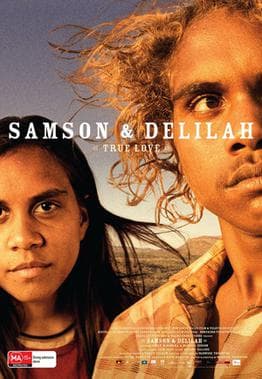
I was thirty-two when I watched Samson and Delilah, which means I was sixteen when it came out, which means I was exactly the age of its protagonists when it premiered at Cannes and won the Camera d’Or and was written about in every newspaper my parents read, and I still did not see it. I saw the poster. I read the reviews. I absorbed, through the particular osmosis of growing up in a house with a subscription to the Australian Financial Review, the general sense that it was important. And then I watched something else.
I am not going to perform guilt about this, or not much, because guilt about not watching a film is a small and self-regarding thing, and this film does not have time for small, self-regarding things. But I want to name it, the not-watching, because I think it is part of the story. Not my story. The larger one. The story of which Australian films get seen by which Australians, and when, and why it took me sixteen years to sit down with a film set three hours from where my grandmother was born.
The silence is not empty
The first thing. Almost nobody speaks. Samson and Delilah live in a remote community somewhere near Alice Springs, and their world is made of gesture and proximity and the sounds that fill the space where dialogue would normally go: a dog barking, a car engine, the tinny rattle of a band practising the same song over and over. Thornton strips out the verbal scaffolding that most films use to tell you what is happening and who to care about, and what is left is attention. Yours. The film requires it and does not reward anything less.
I have watched films with minimal dialogue before. I have sat through Bresson, Tarr, the quieter end of Malick. But the silence in Samson and Delilah is different because it is not a stylistic choice imposed on the material from outside. It is the material. These are teenagers who do not have the language, or the power, or the audience for speeches. Nobody is listening to them. The silence is the sound of a country not listening, and Thornton places you inside it so precisely that you start to feel what it is like to exist without being heard.
Samson sniffs petrol. The film shows this early and without preamble. He holds a tin of petrol to his face and breathes, and the camera does not cut away or soften or explain. There is no scene where a counsellor describes the effects of inhalant abuse. There is no montage of decline. There is a boy, and a tin, and the small chemical peace of disappearing from a life that has offered him very little reason to remain fully in it. Thornton refuses to make this legible to an outside audience. He does not translate the petrol sniffing into a social issue. He does not give you the paragraph of context that would make you feel informed rather than implicated. He just shows you a boy breathing something that is not air, and you sit with it.
Marissa Gibson and what a face can hold
Delilah is played by Marissa Gibson, who had never acted before, and I do not know how to write about her performance except to say that it does not feel like a performance. It feels like surveillance. Like the camera found a person and pointed itself at her and she let it stay. Her face holds everything the film is about: patience, fury, tenderness, a stubbornness that looks like stillness but is actually the effort of remaining present in a situation designed to make you vanish.
There is a scene where Delilah is abducted and assaulted. It happens fast and it is filmed from a distance, almost casually, the way terrible things happen in life, without close-ups or music or any of the cinematic apparatus that usually signals to the viewer: this is the important part, feel something now. The important part is afterwards. Delilah on the ground. Delilah getting up. Delilah walking, slowly, back toward the only person who has noticed she exists. The walking is the performance. The getting up is the performance.
I paused the film after this scene. Not because I needed a break, though I did, but because I needed to sit with the specific quality of what Thornton had done. He had filmed violence against an Indigenous woman without spectacle. Without aesthetic. Without the strange complicity that happens when a camera lingers on suffering and invites the audience to feel moved by it. The camera was far away. The act was small on screen. And it was the worst thing I had seen in a film in years.
Whose Australian cinema
Here is the part I have been avoiding. I grew up in a house full of films. My mother took me to the cinema most weekends. I watched Strictly Ballroom at seven, Shine at eleven, Lantana at fifteen. I knew Weir and Miller and Armstrong and Campion. I could tell you about the Australian New Wave and the 10BA tax scheme and the AFC and the difference between Screen Australia and the state agencies. I had opinions about Yahoo Serious.
And I did not see Samson and Delilah until I was thirty-two.
This is not an accident. This is a curriculum. Not a formal one, not printed on a syllabus, but a curriculum all the same. The Australian cinema I grew up inside was white. It was suburban or it was outback, but the outback was Priscilla’s outback, Mick Taylor’s outback, the outback of red dirt and eccentricity, not the outback of communities and ceremony and chronic underfunding. When Indigenous stories appeared, they were assigned to a separate category, like a special collection in a library that you know exists but never quite visit.
I say this not to perform awareness, because performed awareness is just guilt with better lighting. I say it because the fact of my lateness to this film is itself data. It tells you something about the infrastructure of taste, about which posters get put on the walls of video shops and which algorithms surface which thumbnails and whose names appear in the top line of a review and whose get mentioned in the third paragraph under “also notable.”
The mattress under the bridge
Samson and Delilah end up in Alice Springs, then further out, living under a bridge, sleeping on a mattress in the dirt. They have nothing. They have each other, which is not nothing but is also not enough, because love does not fix structural problems and Thornton knows this and does not pretend otherwise. What love does, in this film, is provide a reason to keep getting up. A direction to walk in. A face to look at when the rest of the world has turned its back.
The final act involves a car and a drive and a piece of country and a canvas and an old woman, and I will not describe it because you should see it, but I will say this: Thornton ends the film with an image of domesticity so fragile and provisional that it feels like it might dissolve if the camera holds on it too long. Two teenagers in a place that is theirs, for now, doing ordinary things. Cooking. Sitting. Being alive in each other’s company. It is not a resolution. It is a pause.
What I took home
I turned the television off and sat in my living room in Melbourne and thought about the phrase “I was not ready.” I had used it earlier, almost as a reflex, the way people do when they encounter something that moved them. But readiness is not really the question. The question is why it took me sixteen years to arrive at a film that was always there, always available, always a train ride to the video shop or a click on a streaming service. The answer is not complicated. The answer is that I was given a version of Australian cinema that did not include it, and I did not look past the edges of what I was given, and that is on me, and it is also on the culture that shaped what I was given.
I am not sure I was ready. But I think what Thornton made is a film that does not wait for readiness. It sits in the landscape like the landscape itself, patient and specific and permanent, and when you finally come to it, it does not thank you for arriving. It just shows you what was always there.

Mara writes essays. She came to film writing from a decade of literary criticism and still reaches, sometimes, for a novel before she reaches for a shot list. She lives in the inner north of Melbourne and does not explain which city that is.
MORE BY MARA DENG →
Leah Purcell rewrote the bush myth and then set fire to it
Purcell took a Henry Lawson story, stripped it to the frame, and rebuilt it as a story about the women Lawson's Australia was built to forget.
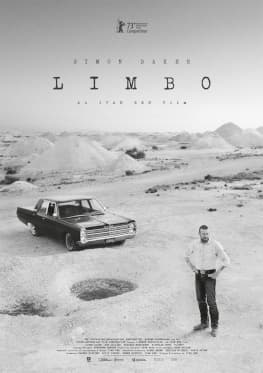
Ivan Sen stripped Limbo of colour and found everything underneath
Sen shot in black and white because the outback already has too many colours to lie behind.
Ablaze searches for films that were never meant to survive and finds them anyway
Tiriki Onus went looking for his grandfather's lost films and found something about what a country chooses to remember and what it lets rot.