Leah Purcell rewrote the bush myth and then set fire to it
Purcell took a Henry Lawson story, stripped it to the frame, and rebuilt it as a story about the women Lawson's Australia was built to forget.
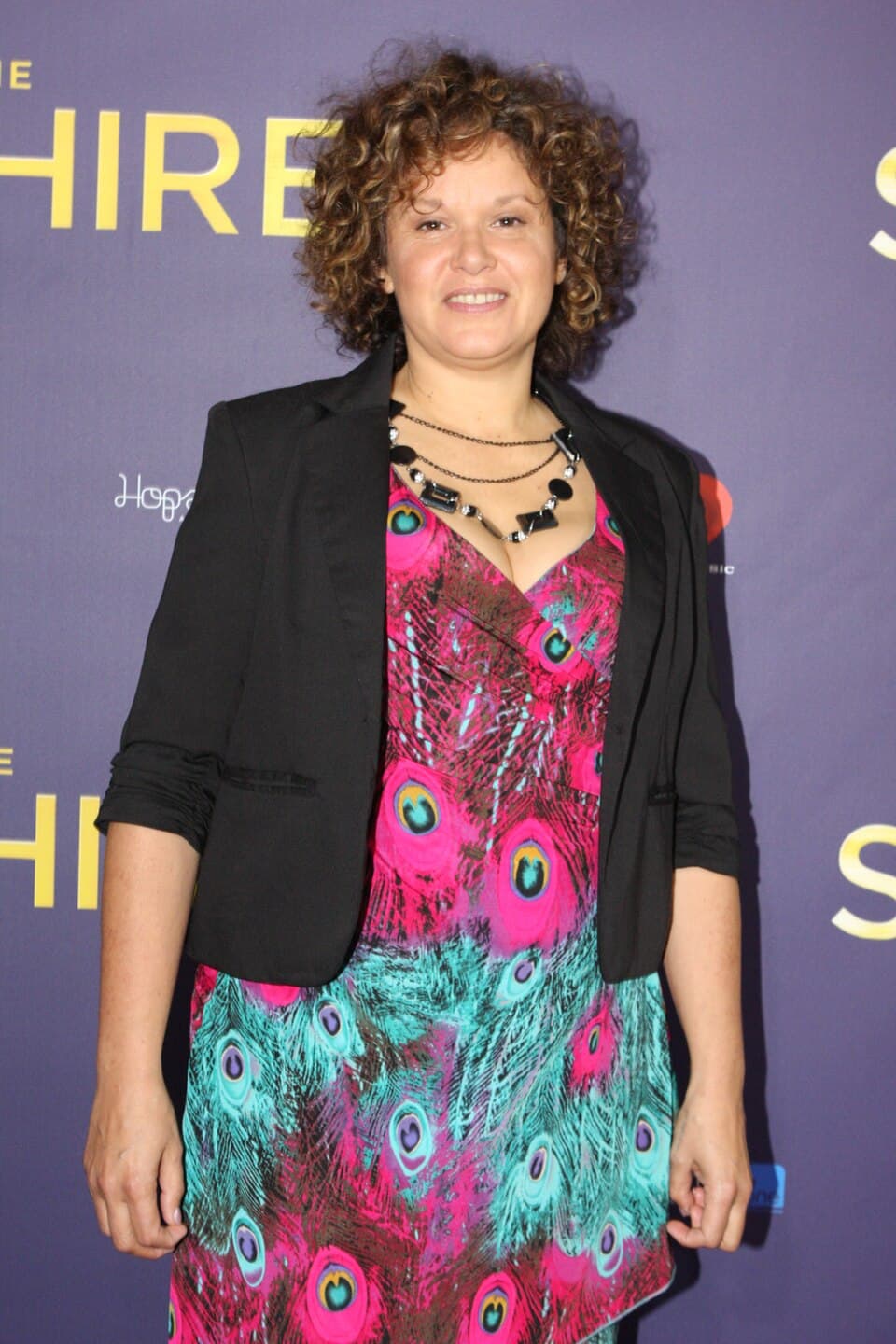
There is a Henry Lawson story that every Australian reads in school, or is supposed to read, or has absorbed through cultural contact even if they have never actually opened the book. “The Drover’s Wife.” A woman alone in the bush. A snake under the house. She waits all night with a stick and a dog, and in the morning the snake is dead and her endurance is proven. The story is a cornerstone of bush mythology. It tells you what Australian women are: stoic, silent, capable, defined entirely by what they withstand. It is a story about survival as a closed system, where the woman’s world is the house and the threat is the snake and the bush is the frame and nothing outside the frame needs to be examined. It is tidy. It is canonical. And Leah Purcell tore it to pieces.
The Drover’s Wife: The Legend of Molly Johnson is not an adaptation of Lawson’s story. It is a confrontation with it. Purcell wrote the play first, in 2016, and then the novel, and then the film, each iteration pushing further into the space that Lawson’s original left blank, which is to say the space where Aboriginal people lived and died and were erased from the narrative of the bush. Purcell’s Molly Johnson is not Lawson’s drover’s wife. She is a woman of Gomeroi descent passing as white in 1890s New South Wales, and her survival is not a matter of stoicism. It is a matter of concealment. She survives by hiding what she is, and the film is about what happens when she stops.
The body that will not be hidden
Purcell directed the film, wrote the screenplay, and plays Molly, and this triple authorship matters because it means there is no gap between the character and the vision. She is not performing someone else’s idea of an Indigenous woman in the colonial bush. She is constructing the entire world and then placing herself inside it, and the construction is deliberate, unflinching, and occasionally brutal.
Molly is pregnant. Her husband is away droving, as husbands in these stories always are. A stranger arrives, an Aboriginal man named Yadaka (Rob Collins), escaped from a chain gang, wounded and dangerous or not dangerous depending on who is looking and from where. The colonial authorities are coming. The local sergeant, Nate Klintoff (Sam Reid), has his own designs on Molly and her property. And somewhere underneath all of this, coiled like the snake in Lawson’s story, is the truth of who Molly is, the heritage she has buried in order to exist in a world that would destroy her if it knew.
I want to be precise about the violence because the film is precise about it. This is not violence used for atmosphere or period colour. When Molly kills, she kills because the alternative is her own erasure, and the film makes sure you understand that the erasure is not hypothetical. It is policy. It is the law of the colony. Aboriginal people could be shot, chained, removed, and forgotten, and the bush mythology that Lawson helped build was in part a mechanism for this forgetting. The drover’s wife does not see Aboriginal people because the story has written them out. Purcell writes them back in, and the writing-back is not peaceful, because it cannot be.
Setting fire to the house Lawson built
What Purcell does with the bush myth is structural demolition. Lawson’s bush is a place of honest hardship where white settlers endure and prevail. The snake is nature. The woman is civilisation holding the line. The story’s power comes from its simplicity, the cleanness of its binary. Inside the house is safety. Outside is danger. Hold the line.
Purcell’s bush is a crime scene. The land Molly lives on was taken from the people she descends from. The house she defends was built on ground that holds bones. The danger is not outside. The danger is the structure itself, the entire apparatus of settlement and ownership and racial hierarchy that the house represents. When Molly’s secret begins to surface, the house stops being a shelter and becomes a trap, and the film’s final act, which I will not detail here, turns the domestic space of Lawson’s story into something his mythology could never contain.
The birth scene. I need to talk about the birth scene. Molly gives birth alone, in the bush, in conditions that the film does not soften or poeticise. It is physical in a way that cinema rarely allows birth to be. The sound design is extraordinary: you hear breath and dirt and effort and pain and the indifference of the landscape, which does not care whether this child lives or dies, which has watched this happen for tens of thousands of years and will watch it happen again. Purcell plays the scene with her whole body, and the camera respects her enough to stay close and stay still and not cut away. The birth is not symbolic. It is a woman in labour, alone, in a country that does not recognise her as human, and she does it anyway, and the child arrives, and the world does not pause.
The frontier conversation that keeps going
This film exists alongside The Nightingale and High Ground and Sweet Country, and together they form something that was not possible in Australian cinema twenty years ago: a sustained, multi-film reckoning with frontier violence from perspectives that are not white, or not only white, or actively hostile to the white narrative frame. What makes The Drover’s Wife distinct in this company is that Purcell is not only telling a frontier story. She is dismantling a specific piece of cultural infrastructure. She is taking a text that generations of Australians were taught to read as the foundation of national character and showing what it obscured.
This matters because mythology is not innocent. The stories a country tells about its settlement are also the stories it tells about who belongs. Lawson’s bush, with its stoic white women and its empty horizons, is a mythology of belonging that excludes by omission. Aboriginal people are not written out of these stories violently. They are written out of them structurally, by simply not being there, by the camera not turning, by the narrative not including them in its frame. Purcell turns the camera. The frame expands. And what you see in the expanded frame is not comfortable.
What it means to own the story
I keep thinking about authorship. There is a difference between a film about an Indigenous woman made by someone else and a film about an Indigenous woman made by that woman herself. Purcell is not interpreting Molly Johnson. She is Molly Johnson, in front of the camera and behind it and in the script and in the edit and in every decision about what the audience is allowed to see and what is withheld. This is not representation. Representation is when someone else makes space for you. This is possession. Purcell took the story and made it hers, and “hers” in this case means something that extends backward through generations of Gomeroi women whose existence Lawson’s mythology did not require and did not record.
I saw the film knowing what it was about, having read the play, having followed Purcell’s work for years, and still it hit me with a force I was not prepared for. Not the violence, though the violence is confronting. What hit me was the completeness of the reclamation. Purcell did not ask permission. She did not write a respectful companion piece or a gentle corrective. She walked into the house that Lawson built, the house that Australian literature has been living in for over a century, and she burned it down and built something new on the same ground. The ground is still there. It was always there. It just needed someone to stop pretending the house was the whole story.

Mara writes essays. She came to film writing from a decade of literary criticism and still reaches, sometimes, for a novel before she reaches for a shot list. She lives in the inner north of Melbourne and does not explain which city that is.
MORE BY MARA DENG →
I watched Samson and Delilah for the first time at thirty-two and I am still not sure I was ready
Thornton made a film about two teenagers in love in Central Australia, and the tenderness is so specific it bypasses every defence you have.
Ivan Sen stripped Limbo of colour and found everything underneath
Sen shot in black and white because the outback already has too many colours to lie behind.
Ablaze searches for films that were never meant to survive and finds them anyway
Tiriki Onus went looking for his grandfather's lost films and found something about what a country chooses to remember and what it lets rot.