Ivan Sen stripped Limbo of colour and found everything underneath
Sen shot in black and white because the outback already has too many colours to lie behind.
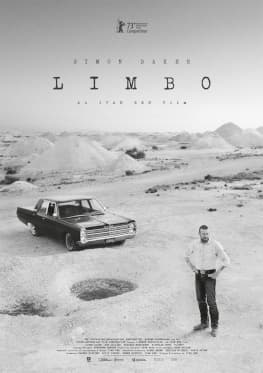
I saw Limbo at the State Theatre during Sydney Film Festival, in a session that was maybe two-thirds full, which for a weekday afternoon screening of a black-and-white Australian crime film is about right. The woman next to me was eating rice crackers very quietly, one at a time, like she was rationing. The film started and she stopped eating. She did not start again.
I want to begin there, with the stopping. Because Limbo is a film that makes you stop things. Stop checking your phone, stop shifting in your seat, stop doing that thing where you half-watch and half-think about what you are going to have for dinner. The black and white does this. It removes the easy pleasure of the outback palette, the ochres and terracottas and that particular bleached-blue sky that Australian cinema uses the way American cinema uses sunsets: as shorthand for feeling. Without colour, the landscape becomes structure. Bone and shadow. Rock face and sky weight. You cannot glide through it. You have to read it.
Ivan Sen knows this. He has been photographing the outback for twenty years, and he has never once made it look like a postcard. In Mystery Road and Goldstone, the desert was saturated and wide and beautiful in a way that felt like a dare: look at this country, really look, and then tell me who it belongs to. In Limbo, he takes the dare further. He removes the beauty entirely, or rather, he removes beauty’s usual disguise, and what is left is something starker and more honest. The land without its costume.
The man who does everything
Sen wrote Limbo. He directed it. He shot it. He edited it. He composed the score. This is not a quirk or an ego exercise. It is a methodology. When one person controls every layer of a film, the seams disappear. There is no gap between what the writer intended and what the director interpreted, no negotiation between the cinematographer’s eye and the editor’s rhythm. The film becomes a single, continuous thought.
I have seen this described as “control,” and it is, but not in the anxious way that word usually implies. Sen’s control feels more like fluency. A musician who plays every instrument on an album is not micromanaging. They are composing with their hands. Sen composes Limbo the same way: the camera moves like the score sounds, the edit breathes where the script pauses, and all of it holds together with the particular coherence of a thing made by one mind.
The score, since I mentioned it. Spare piano. Long silences. Electronic textures that sit underneath the desert wind like a second, lower frequency of emptiness. It is not a film score in the way that most films have scores, where music tells you what to feel during scenes that the image has already made clear. Sen’s score is more like weather. It arrives, it sits, it changes the pressure in the room, and then it lifts.
A cold case that is not really a cold case
The plot is a familiar shape. A detective, Travis Hurley (Simon Baker), arrives in a remote outback town to reinvestigate the cold-case murder of a young Indigenous woman, Charlotte Hayes. Twenty years have passed. The town has its silences. The local cop (Rob Collins) has his own history with the case. Evidence is sparse. Witnesses are reluctant, dead, or both.
If you have seen Mystery Road, you know Sen can do this. The procedural bones are solid. Baker is good, understated in a way that his Hollywood career rarely required of him, and Collins is better, carrying the weight of a man who lives inside a wound he cannot show. The investigation moves forward in the usual ways: interviews, re-examined evidence, long drives between properties where the real information lives in what people do not say.
But the cold case is not the subject. The cold case is the engine. The subject is guilt.
Not guilt in the legal sense. Not who did it, although the film answers that question, eventually, with a clarity that surprised me. Guilt in the structural sense. The guilt of a town that let a young Aboriginal woman disappear and then got on with its business. The guilt of a system that files Indigenous deaths under “cold case” when what it means is “insufficient priority.” The guilt, maybe, of a country that keeps telling itself it wants to know what happened to its First Nations people and then keeps not quite looking hard enough.
Black and white as a moral choice
I keep coming back to the black and white, because I think it is the key to everything Sen is doing. Colour is a kind of alibi. When the outback is red and gold and enormous, you can lose yourself in the beauty and forget that a woman died here and nobody cared enough to solve it. Colour lets the landscape do your emotional work for you. It tells you: this is vast, this is ancient, this is awe. And awe is a comfortable distance from which to observe injustice.
Black and white removes the alibi. In black and white, the outback is not beautiful. It is present. It is a place where a specific thing happened to a specific person, and the specificity is no longer softened by the golden hour. The faces are specific too. Baker’s face, lined and evasive. Collins’s face, guarded and tired. The faces of the townspeople who remember Charlotte Hayes and wish they did not, or who do not remember her and should.
There is a scene, late in the film, where Hurley stands in the landscape and the camera holds on him for a long time, longer than you expect, longer than is comfortable. He is not doing anything. He is just standing in the place where the crime happened, or might have happened, and the land is behind him and above him and under his feet. In colour, this would be a contemplative wide shot, the kind that festival programmers call “meditative.” In black and white, it feels like an accusation. The land is looking at him. The land knows what happened. The land has always known.
The question of who gets remembered
I walked out of the State Theatre into the cold June sunlight of Sydney and stood on the footpath for a while, the way you do when a film has left you with a feeling you cannot immediately name. The city was loud and bright and indifferent. Buses. Pigeons. A man on a phone arguing about a delivery.
What I was thinking about was Charlotte Hayes, who is fictional, and about all the women she is not fictional about. The Aboriginal women whose deaths sit in cold-case files across every state. The women whose names do not appear in newspapers, whose families wait decades for answers that sometimes come and sometimes do not, whose cases are reopened and reclosed like a door that nobody actually wants to walk through.
Sen made a film about one of them. He stripped the colour out so you could not look away. He scored it with silence so you could hear what the silence sounds like when a community decides not to remember. He made Baker, a white man and a movie star, stand in the landscape and reckon with the fact that his presence there is part of the problem, that the detective arriving to solve the case is also the system arriving twenty years late.
I do not know if Limbo will reach the audience it deserves. It is a black-and-white film about a dead Aboriginal woman in a country that would rather watch Thor. But I know this: I sat in the State Theatre and the woman next to me stopped eating her rice crackers, and the whole room went still, and for two hours nobody moved, and that is what cinema does when it decides to stop performing and start telling the truth.
The crackers were still in her hand when the credits rolled. She looked down at them like she had forgotten they existed. I know the feeling.

Mara writes essays. She came to film writing from a decade of literary criticism and still reaches, sometimes, for a novel before she reaches for a shot list. She lives in the inner north of Melbourne and does not explain which city that is.
MORE BY MARA DENG →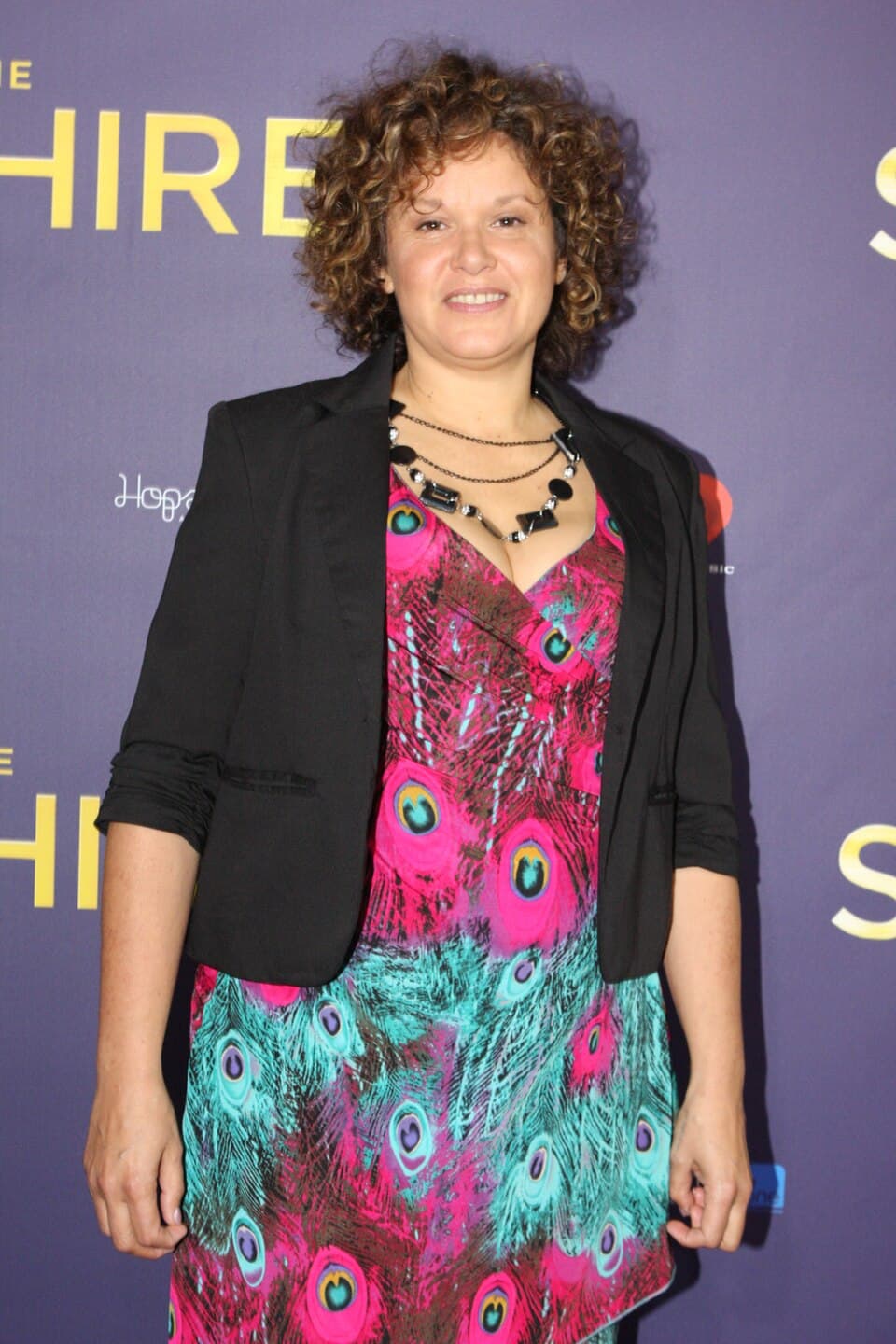
Leah Purcell rewrote the bush myth and then set fire to it
Purcell took a Henry Lawson story, stripped it to the frame, and rebuilt it as a story about the women Lawson's Australia was built to forget.
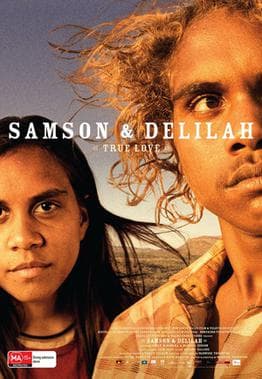
I watched Samson and Delilah for the first time at thirty-two and I am still not sure I was ready
Thornton made a film about two teenagers in love in Central Australia, and the tenderness is so specific it bypasses every defence you have.
Ivan Sen shot Limbo in black and white and the outback answered in grey
Sen's cold-case noir strips the outback of colour and finds a landscape that has been waiting to testify.