Ivan Sen shot Limbo in black and white and the outback answered in grey
Sen's cold-case noir strips the outback of colour and finds a landscape that has been waiting to testify.
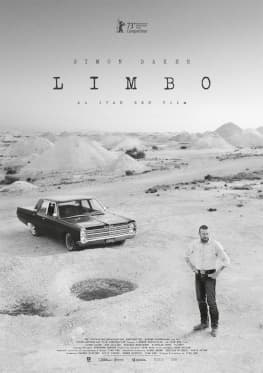
The first thing you notice about Limbo is what is missing. The red dirt is gone. The blue sky is gone. The ochre and the burnt orange and the deep green of scrubland, the entire thermal palette that Australian cinema has spent decades teaching audiences to associate with the outback, all of it stripped away. Ivan Sen shot the film in black and white, and the decision is not a stylistic flourish or an homage to classical noir. It is an argument. The argument is that colour has been doing too much work in Australian landscape cinema, that it has been making the country beautiful when it should have been making it legible, and that the only way to see what the outback is actually holding is to remove the thing that has been distracting you from looking.
Limbo follows Travis Hurley (Simon Baker), a detective sent to a remote outback town to re-investigate the cold-case disappearance of an Aboriginal woman, Charlotte Hayes. The case is twenty years old. The leads are dead. The witnesses have scattered or stayed and gone quiet. Hurley arrives with a briefcase full of documents and a heroin habit that is managed but not beaten, and the film watches him move through the town and the surrounding landscape with the patience of a camera that has nowhere else to be.
The one-man-band
Sen wrote, directed, shot, edited, scored and produced Limbo. This is not new for him; he performed the same combination of roles on Goldstone and, to varying degrees, on most of his features. But the effect in Limbo is more pronounced than in any of his previous work because the formal unity is total. There is no gap between the image and the sound, between the pacing of the edit and the rhythm of the score, between the script’s silences and the camera’s willingness to hold on a face or a horizon without cutting away. Everything flows from a single sensibility, and that sensibility is tuned to a very specific frequency: low, steady, attentive, never in a hurry.
The score deserves particular mention. Sen builds it from synthesisers and processed ambient textures, and it sits beneath the film like groundwater, present everywhere but surfacing only occasionally. It does not cue emotion. It does not tell you when to feel tension or sadness or dread. It provides a tonal foundation and then trusts the image and the performance to do the rest. In a film about a case that may never be solved, the music’s refusal to resolve is structurally honest. Nothing in Limbo reaches a conclusion. Everything remains suspended, held in the state the title describes.
The cold case as moral structure
The mystery at the centre of Limbo is not really a mystery. Sen is not interested in the mechanics of detection, in clues assembled and suspects eliminated and a killer revealed in the final act. The cold case functions instead as a moral structure, a framework for examining who cares about the disappearance of an Aboriginal woman in a remote town and who does not, and what it means that the answer, twenty years on, is still being negotiated.
Hurley is not a good detective in any conventional sense. He is functional, competent, methodical, but his investigation is hampered by his addiction and by a deeper passivity that may be exhaustion or may be something closer to despair. Baker plays him as a man who has stopped expecting answers, and the performance is remarkable for what it withholds. There are no speeches. There are no revelations delivered in raised voices. Baker’s Hurley sits, listens, takes notes, nods, and returns to his motel room to get high. The investigation proceeds anyway, not because Hurley drives it forward but because the town and its residents have been waiting for someone to ask the questions, and his presence, however compromised, is enough to set things in motion.
Sen’s country
Limbo is the third film in what has become, without anyone declaring it, a loose trilogy of outback noirs. Mystery Road (2013) introduced the template: a detective, a remote community, a crime that exposes the fault lines between Aboriginal and non-Aboriginal Australia. Goldstone (2016) expanded the scope, bringing in mining companies and political corruption and a bigger canvas of institutional failure. Limbo contracts the scope again, pulling the focus inward, making the investigation smaller and quieter and more personally devastating.
What connects the three films is not plot but landscape. Sen shoots the outback the way few other Australian filmmakers do, which is to say he shoots it as a place where people live rather than a place where dramas are staged. The country in his films is not symbolic. It is not a metaphor for spiritual emptiness or existential vastness or any of the other abstractions that the Australian outback has been made to carry in art and literature. It is ground. It is weather. It is distance measured in hours of driving. And in Limbo, stripped of colour, it becomes something else again: a surface that holds marks. Tyre tracks. Footprints. The remnants of structures that were built and abandoned. The black-and-white photography turns the landscape into a document, a record of presence and absence, and the film reads that record with the same careful attention that Hurley brings to his case files.
What the grey holds
I said at the outset that the outback answered in grey, and I want to be precise about what I mean. Black and white photography is not the absence of colour. It is the replacement of colour with tone, with the full range of values between absolute black and absolute white, and most of Limbo lives in the middle of that range, in the greys. The sky is grey. The earth is grey. The faces are grey. The motel room is grey. The distinction between land and sky, which colour photography makes obvious, becomes uncertain in Sen’s images, and this uncertainty is the film’s great visual achievement. You are never quite sure where the ground ends and the air begins, and this blurring of boundaries is not confusion but description. The outback, as Sen sees it, is a place where edges dissolve, where things that should be separate bleed into each other, where the line between past and present, between guilt and innocence, between the living and the dead, is never as clear as you need it to be.
Limbo is not an easy film. It does not deliver the satisfactions of genre. It does not solve its case. It does not redeem its detective. It does not punish the guilty or comfort the grieving, and it ends in a state of suspension that will frustrate viewers who need their narratives to land. But the frustration is the point. Charlotte Hayes disappeared twenty years ago and nobody was held accountable, and the film’s refusal to provide a fictional resolution to a structurally unresolved injustice is its most honest gesture. Sen has made a film about what it means to look at a place where something terrible happened and find that the place has absorbed the event so completely that the only evidence remaining is the quality of the silence. The grey holds everything, and it gives nothing back.
Bronte writes long-form criticism of Australian cinema and the international art films that feed into it. She was on the ground at Cannes in 2019 and has not entirely forgiven the festival for 2020. Patient with slow films; impatient with tidy ones.
MORE BY BRONTE HAUGHEY →
Ivan Sen stripped Limbo of colour and found everything underneath
Sen shot in black and white because the outback already has too many colours to lie behind.
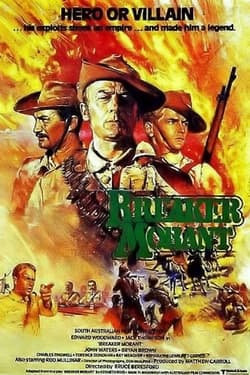
Breaker Morant and the country that adopted its scapegoat
Bruce Beresford's 1980 courtroom drama made an English-born soldier into an Australian martyr, and the picture's argument about empire has outlived its historical certainties.
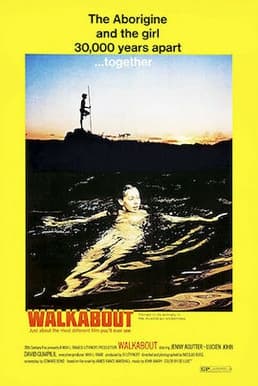
Walkabout is a British film about a country it never claims
Nicolas Roeg's 1971 picture is claimed as an Australian classic, though it was made by a Londoner, financed by two Americans and sold by 20th Century Fox. Its best argument is how little it pretends otherwise.