Ablaze searches for films that were never meant to survive and finds them anyway
Tiriki Onus went looking for his grandfather's lost films and found something about what a country chooses to remember and what it lets rot.
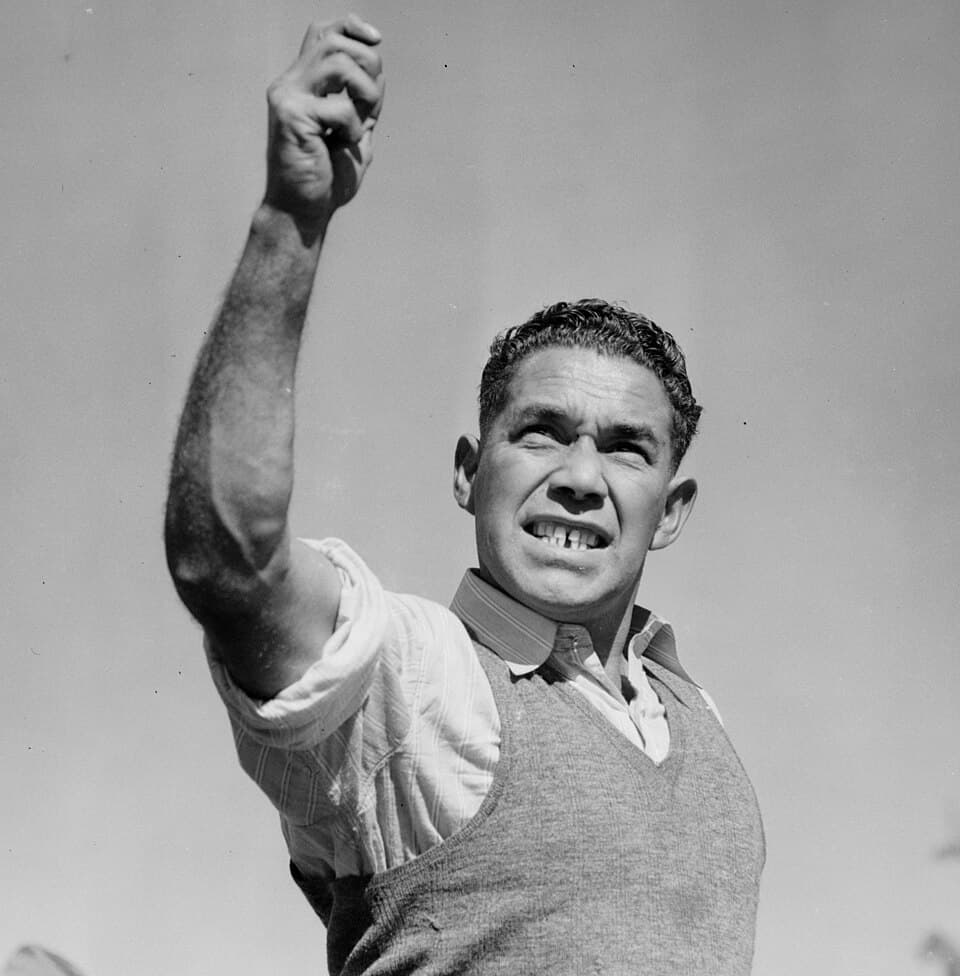
I keep thinking about a reel of film sitting in a tin somewhere, unlabelled, forgotten, slowly turning to vinegar. Not any specific reel. A hypothetical one. The one that nobody opened because nobody knew it mattered, or because the person who made it was not the kind of person whose work gets preserved. The archives are full of these absences. Or rather, they are empty of them, which is the whole problem.
Ablaze is a documentary about one man’s attempt to find the films his grandfather made. The grandfather is Bill Onus, a Yorta Yorta man who was, among many other things, an activist, a boomerang craftsman, a political organiser, and, it turns out, a filmmaker. Between the 1940s and the 1960s, Bill Onus made films. Not home movies, not incidental footage, but deliberate, composed recordings of Aboriginal culture, ceremony, and daily life. He made them at a time when the dominant culture was still telling itself that Aboriginal people were dying out, that their traditions were artefacts rather than living practices, that the appropriate institutional response was to collect and catalogue rather than to listen.
Bill Onus made films that said otherwise. And then those films disappeared.
His grandson, Tiriki Onus, who is an artist and academic, went looking for them. Ablaze, co-directed by Tiriki and Alec Morgan, is the record of that search. It is also, in the way that the best documentaries are, about something larger than its ostensible subject. It is about what happens when a country’s film archive does not contain the people who were there first.
The shape of the search
I want to say something about what it looks like to search for a film that might not exist. Because the documentary spends a lot of time in archives, in basements, in the offices of institutions that hold material they have not fully catalogued. Tiriki goes to the NFSA. He goes to state libraries. He writes letters. He makes phone calls. He sits in rooms where someone pulls out a box and says, we have this, we are not sure what it is, have a look.
The footage he finds, when he finds it, is fragmentary. A few minutes here, a few seconds there. Some of it is Bill Onus’s work. Some of it is footage of Bill Onus taken by someone else. Some of it is unidentified, and the documentary follows the process of identification with a patience that feels deliberate, almost ceremonial. This is not a treasure hunt with a triumphant reveal. It is a process of recovery in which every fragment matters because the alternative is nothing.
What struck me, watching this, is how much of the emotional weight comes not from what Tiriki finds but from the fact that he had to look at all. These films should have been catalogued, preserved, accessible. They should have been part of the national collection from the beginning. The fact that they were not is not an accident or an oversight. It is a reflection of a system that decided, through a thousand small acts of institutional neglect, that Aboriginal filmmaking was not a category that required attention.
What the archive does not hold
I have spent enough time thinking about film preservation to know that every archive is a argument about what matters. What gets preserved is what someone decided was worth the cost of storage, the cost of climate control, the cost of a cataloguer’s time. What does not get preserved is not necessarily what was considered unimportant. Sometimes it is what was considered invisible, or rather, what was made by people whom the preserving institutions did not see as makers.
This is the thing that Ablaze sits with, quietly and without polemic. Bill Onus was making films at the same time as the Australian film industry was consolidating its identity around a certain set of stories, a certain set of faces, a certain understanding of who the Australian filmmaker was. He was not part of that consolidation. His films were not reviewed, were not screened at festivals, were not deposited in institutional collections. They existed in the space between the official record and the living memory of his family and community.
Tiriki talks about this with a precision that I found moving. He does not rage at the institutions, though he would be entitled to. He describes the absence the way you might describe a room with a wall missing. You can see where the wall should be. You can see the marks where it was attached. The room still functions, sort of, but it is not the room it was meant to be, and the weather gets in.
Preservation as a political act
What I mean is this: film preservation is never neutral. Every dollar spent on preserving one film is a dollar not spent on another. Every catalogue entry is an act of naming, and naming is an act of recognition, and recognition is, in a settler-colonial context, an act with political weight whether the archivist intends it or not. When the NFSA holds every print of Gallipoli in climate-controlled storage and does not hold the films that Bill Onus made of his own people practising their own culture on their own land, that is not a resource allocation problem. It is a statement about whose cultural production constitutes the national cinema.
Ablaze does not make this argument explicitly. It does not need to. The argument is in the footage itself, in the fact that the footage exists, that Bill Onus pointed a camera and composed a frame and chose what to show, and that this act of creative agency was not recognised by the institutions whose job it is to recognise such things.
There is a moment in the documentary where Tiriki watches recovered footage of his grandfather for the first time. The footage shows Aboriginal people, possibly at a gathering, possibly performing, the context is not entirely clear because the film has no accompanying documentation. Tiriki watches. His face does something that the camera catches but that I will not try to describe, because some things are not mine to narrate. What I will say is that the footage is ordinary. It is people in a place, doing something together. Its power is not in its content but in its existence, in the fact that it survived by luck or stubbornness or the particular physics of celluloid acetate refusing to decay on schedule.
What survives and what does not
I saw Ablaze at a festival screening where the audience was mostly white, mostly older, mostly quiet. Afterwards, a woman behind me said to her companion, “I had no idea he was a filmmaker.” She meant Bill Onus. She had known about the activism, the political work, maybe the boomerang business. She had not known about the films. Of course she had not. The films were not in the archive, so they were not in the history, so they were not in the public knowledge, so she had no idea.
This is how archival absence works. It is not dramatic. It is not a bonfire or a deliberate destruction, though those things happen too. It is a slow, administrative disappearance. A film is not catalogued, so it is not findable, so it is not screened, so it is not written about, so it does not exist in the critical record, so the next generation does not know to look for it. The absence reproduces itself. It is self-sustaining.
What Tiriki Onus did, with Ablaze, is interrupt that cycle. He went looking. He found fragments. He put those fragments into a new work that is itself now in the archive, now in the catalogue, now findable. The lost films are no longer entirely lost. They are incomplete, decontextualised, separated from the community knowledge that would give them their full meaning. But they are there. They survived by accident, and now they survive by intention, and the difference between those two kinds of survival is the entire subject of the film.
I keep thinking about that tin, the hypothetical one, sitting in a basement somewhere. I keep thinking about all the tins that nobody opened. Ablaze is about the one that got opened. It does not let you forget the ones that did not.

Mara writes essays. She came to film writing from a decade of literary criticism and still reaches, sometimes, for a novel before she reaches for a shot list. She lives in the inner north of Melbourne and does not explain which city that is.
MORE BY MARA DENG →
Leah Purcell rewrote the bush myth and then set fire to it
Purcell took a Henry Lawson story, stripped it to the frame, and rebuilt it as a story about the women Lawson's Australia was built to forget.
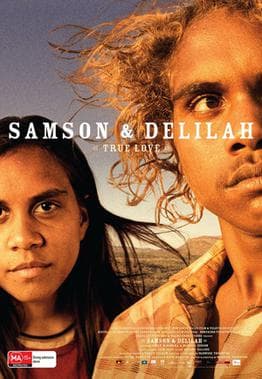
I watched Samson and Delilah for the first time at thirty-two and I am still not sure I was ready
Thornton made a film about two teenagers in love in Central Australia, and the tenderness is so specific it bypasses every defence you have.
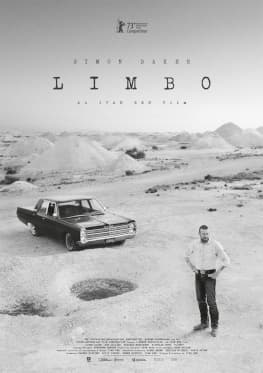
Ivan Sen stripped Limbo of colour and found everything underneath
Sen shot in black and white because the outback already has too many colours to lie behind.