Safe Home puts a refugee family in suburban Tasmania and watches the neighbours react
SBS built a drama about a Kurdish family in Launceston and gave every character enough rope to be both kind and complicit.

The most important decision Safe Home makes happens before the first scene. It sets the drama in Launceston. Not Sydney, where refugee stories in Australian television tend to be located because Sydney has the infrastructure and the demographics and the production crews. Not Melbourne, where the inner suburbs provide a convenient shorthand for progressive guilt. Launceston, Tasmania. Population 68,000. A city small enough that everyone knows whose car is parked outside whose house, and large enough that people can still pretend they do not.
This matters because the show is not really about the refugee experience. Or rather, it is, but it is equally about the neighbourhood experience of receiving refugees, which is a different thing and a less frequently dramatised one. The Nazari family, Kurdish Australians who have been resettled in Launceston through the humanitarian programme, are at the centre of the story. But the camera spends as much time with their neighbours, their landlord, the local councillor, the school principal, and the various residents who are welcoming and suspicious and generous and resentful, sometimes within the same conversation.
SBS commissioned it. Of course SBS commissioned it. Nobody else would have.
The family and the street
The Nazaris are played with restraint and specificity by a cast that includes Hazem Shammas and Helen Thomson. The family is not presented as symbols or as lessons. They are people with a history that predates their arrival in Tasmania and with relationships that are strained by the particular pressures of resettlement: the bureaucratic weight of the visa process, the gap between gratitude and autonomy, the children adapting faster than the parents, the mother’s qualifications unrecognised, the father’s pride eroding quietly under the surface.
The street they live on becomes the show’s real subject. The neighbours are drawn with the same care as the family, and the show is smart enough to avoid the easy division between good neighbours and bad ones. There is a woman who brings food and means well and also cannot stop framing her kindness as charity. There is a man who objects to the family’s presence but whose objections are tangled up with his own economic anxiety in ways that the show takes seriously without endorsing. There is a teenager who becomes friends with the Nazari daughter and whose friendship is genuine and also shaped by the social currency of being seen as open-minded. Everyone in this show is doing something kind and something complicit at the same time, and the drama lives in the gap between the two.
Not Stateless
The comparison to Stateless is inevitable, so let us get it done. Stateless, which aired three years earlier, told a story about the immigration detention system from inside the system. It was structural, institutional, deliberately scaled. The detention centre was the setting, and the setting was the argument. The show wanted you to see how the machinery worked and to understand that the machinery was the problem.
Safe Home operates at a completely different scale. There is no detention centre, no bureaucratic apparatus, no scenes in Canberra. The Nazaris have already been processed, approved, resettled. They are here. The question is not whether the system lets them in but what happens after the system has finished with them and the actual work of belonging begins. This is the less dramatic version of the story, and also the more honest one, because most refugee families in Australia do not live inside a political debate. They live on a street, next to people who have opinions and groceries and lawn mowers and complicated feelings about change.
The Launceston of it
Tasmania is doing something interesting on screen lately. The Kettering Incident, Rosehaven, The Gloaming, and now Safe Home have all used the island state as something more than a backdrop. Tasmania reads differently from the mainland. It is smaller, more contained, and the landscape presses in. Launceston in particular has a quality of enclosure that the show uses well: the hills around the city, the narrow streets, the Tamar Valley in the background. You feel the edges of the community. You understand that the Nazaris cannot disappear into a crowd because there is no crowd.
The production design is unglamorous in the right ways. The houses look like houses. The school looks like a school. The local council chamber looks like a local council chamber, which is to say it looks like a room where fluorescent lighting goes to die. The show is not interested in making Tasmania picturesque. It is interested in making Tasmania specific, and there is a difference.
Why SBS matters
I have written before about SBS being the most important broadcaster in Australian television, and I will keep writing it until people start believing me or until SBS is defunded, whichever comes first. (Look, given the current trajectory of public broadcasting funding, it might be a race.)
SBS commissions stories about people the other networks do not think about. Not because the ABC or Stan or the commercial networks are hostile to those stories, but because they operate within commercial or ratings frameworks that make certain stories harder to justify. A drama about a Kurdish family in Launceston is not a ratings play. It is not going to trend on social media. It is not going to get a second season greenlit on the strength of overnight numbers. SBS makes it anyway because SBS understands that the function of a public broadcaster is not to make what the market wants but to make what the market does not know it needs.
Safe Home is not perfect television. Some of the subplots are underdeveloped. The pacing in the middle episodes drifts. The resolution, such as it is, arrives quickly and ties off threads that deserved more room. But it is specific, and it is careful, and it is about something that almost no other show on Australian television is willing to be about: the ordinary difficulty of living next to someone whose life has been shaped by forces you cannot imagine, and the ordinary failure of imagination that prevents you from trying.
The missing 22 per cent, again
There is a number I keep returning to in these pages. Twenty-two per cent. That is the portion of Australia’s population that was born overseas in a non-English-speaking country. These are people whose stories, whose families, whose suburban negotiations with belonging are almost entirely absent from Australian prime-time television. SBS is the exception. Safe Home is the exception. The fact that it feels exceptional is the problem.

Rhys watches more television than is healthy and writes about it with a dryness that tips occasionally into cruelty. His favourite ABC drama is the one the ABC just cancelled, whichever that happens to be.
MORE BY RHYS TAVITA →
Bay of Fires and the town full of people you should not trust
An ABC dark comedy about a woman hidden in a Tasmanian town where everyone is a criminal, which is either a thriller premise or a documentary about regional Australia, depending on your mood.
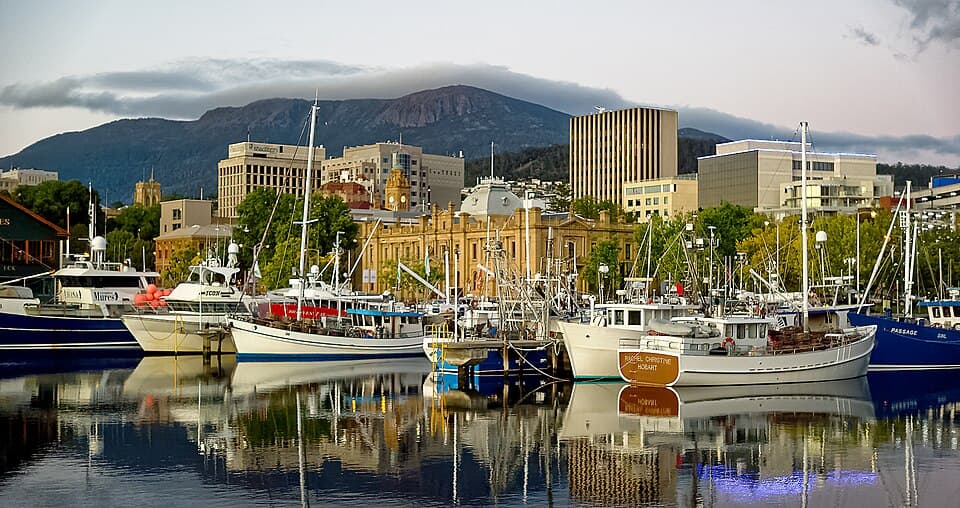
The Gloaming set a murder mystery in Hobart and let the cold do the work
Stan's Tasmanian noir is slow, cold, and occasionally baffling, and the best scenes are the ones where Emma Booth just stands in the weather.
Rake was never about the cases
Eight years and five seasons of Cleaver Greene taught Australian television that you can keep a man unredeemed, and that audiences will follow him anyway.