The Proposition was scored from motifs, and that is why it sounds like heat
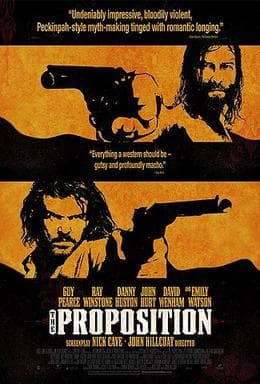
Nick Cave and Warren Ellis wrote the music for John Hillcoat's western from motifs, not from frames, and the film's strange, hymn-like heat is the result.
Most film composers are given a picture and asked to fit it. The usual method is a spotting session, a list of timings, a click track, a cue that begins at one minute and eleven seconds and ends where the dialogue starts. The result is music that behaves, which is what a picture generally needs.
The score for The Proposition does not behave, and the reason is in how it was written. According to the National Film and Sound Archive’s account of the production, Nick Cave and Warren Ellis worked on ideas and motifs by themselves first, and then took them into the studio, rather than composing to particular frames. The film’s music was found in the room and then laid against the film. Everything strange about the sound of John Hillcoat’s western starts there.
The writer who became the composer
There is a double irony in the credits. Cave was originally meant only to provide music. It was Hillcoat who suggested he write the script as well, and Cave, who by then had a body of work in songs about murder, mercy and the Old Testament, wrote the whole screenplay in about three weeks. A writer of ballads, handed a feature film, produced a story in which almost everyone speaks like a verse.
The pairing was not new. Cave had co-written and appeared in Hillcoat’s earlier prison film Ghosts… of the Civil Dead (1988), and by the mid-1990s his records had made murder ballads a recognisable genre of their own, from “Where the Wild Roses Grow”, the 1995 duet with Kylie Minogue, to the album Murder Ballads the following year. When Hillcoat needed a voice for a violent story told slowly, he was not reaching for a stranger.
That matters for the music, because it means the film and the score share an author’s sensibility from the start. The screenplay is full of rhythm, repetition, formal speech. The score takes the same posture: it is not underscoring a drama so much as extending a liturgy.
Hillcoat shot in and around Winton, in outback Queensland, with Benoît Delhomme as cinematographer, and the picture’s light is the kind of ochre, flat, hostile brightness that makes shadows look like stains. Against that, the music has a job nobody else in the film can do. It has to sound like somewhere you could be forgiven.
What the score is made of
Ellis is a violinist and a tinkerer, known for building a sound out of a loop pedal and a bow used in ways the instrument was not designed for. Cave brings the piano and the keyboards. Together they make a palette that is small, deliberately limited, and made of friction: sustained string tones that have something of the insect in them, keyboard figures that stop short, a drone that never quite resolves.
There is a refusal in the writing to do the things western scores do. No galloping rhythm. No sweeping theme for a landscape the camera is already filming. The film is full of flies, and the score sometimes seems to sit among the swarm, so that you cannot always tell where the sound design ends and the music begins. That, rather than a melody, is the signature. The cue and the climate are the same thing.
A score written from motifs and not from frames can afford to be wrong in the right places. It can arrive late. It can linger past the end of a scene. It can fail to cheer or comfort when a conventional cue would. The cumulative effect in The Proposition is that the music feels like weather, an atmosphere the characters live in and cannot influence, rather than a commentary the audience is being given on their behalf.
Why the method mattered
When I watch the film, the thing I notice is how often the music enters before I have understood why. A cut to a sunburnt face; a long take on a verandah; a man standing still in the heat. The cue rises without justification, and by the time the justification arrives, I have already felt it.
That is the advantage of the way they worked. A composer writing to frames is always, in some sense, answering the picture. A pair of musicians writing motifs is asking the picture a question, and the picture, when the two are cut together, gives back an answer that neither side quite intended.
It also explains the afterlife of the partnership. Cave and Ellis went on to score The Assassination of Jesse James by the Coward Robert Ford (2007), The Road (2009) and Lawless (2012), and each time the signature is the same: no rush, a lot of space, an instrument that sounds as if it has been brought a long way. The Proposition is where the method first became a style.
What it left behind
Australian cinema has had great scores for its landscapes before and since, and there is a long, honourable tradition of orchestras swelling over red earth. This was not that. It was two musicians, one of them a songwriter of unusual moral appetite, writing something that sounds like a hymn sung in a country that has no cathedrals.
The film still looks like heat. After more than twenty years, it also sounds like the only available prayer.

Kieran writes about what films sound like. Played in a band that nearly got signed in 2012 and has been thinking about attack and decay ever since. Devoted to Warren Ellis, Amanda Brown, and the quiet work of sound editors nobody interviews.
MORE BY KIERAN BOUSTANY →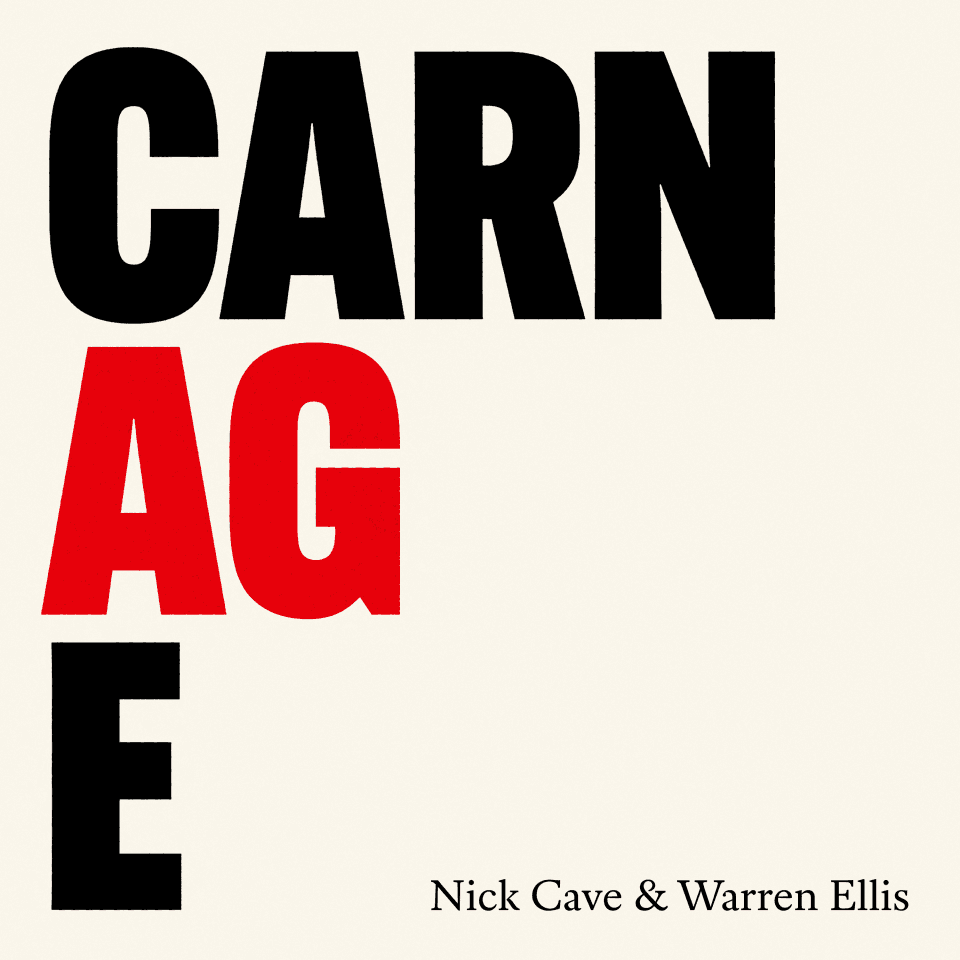
Nick Cave and Warren Ellis made Carnage in a locked room and it sounds like it
The album was recorded during lockdown, alone, and it carries the specific weight of a room that has not been left in months.
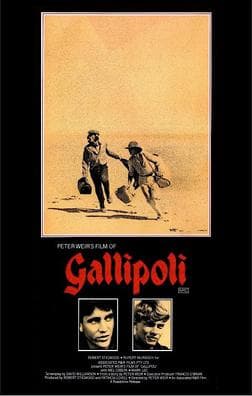
Gallipoli and the two pieces of music that are not Australian
Peter Weir's 1981 war film has no composed score to speak of. It has a French synthesiser record and a baroque lament, and between them they say everything the picture needs.

Bruce Smeaton and the scores you were never meant to notice
He won four AFI awards for original score, and the most famous cue in his most famous film belongs to a Romanian pan flute player.