Nick Cave and Warren Ellis made Carnage in a locked room and it sounds like it
The album was recorded during lockdown, alone, and it carries the specific weight of a room that has not been left in months.
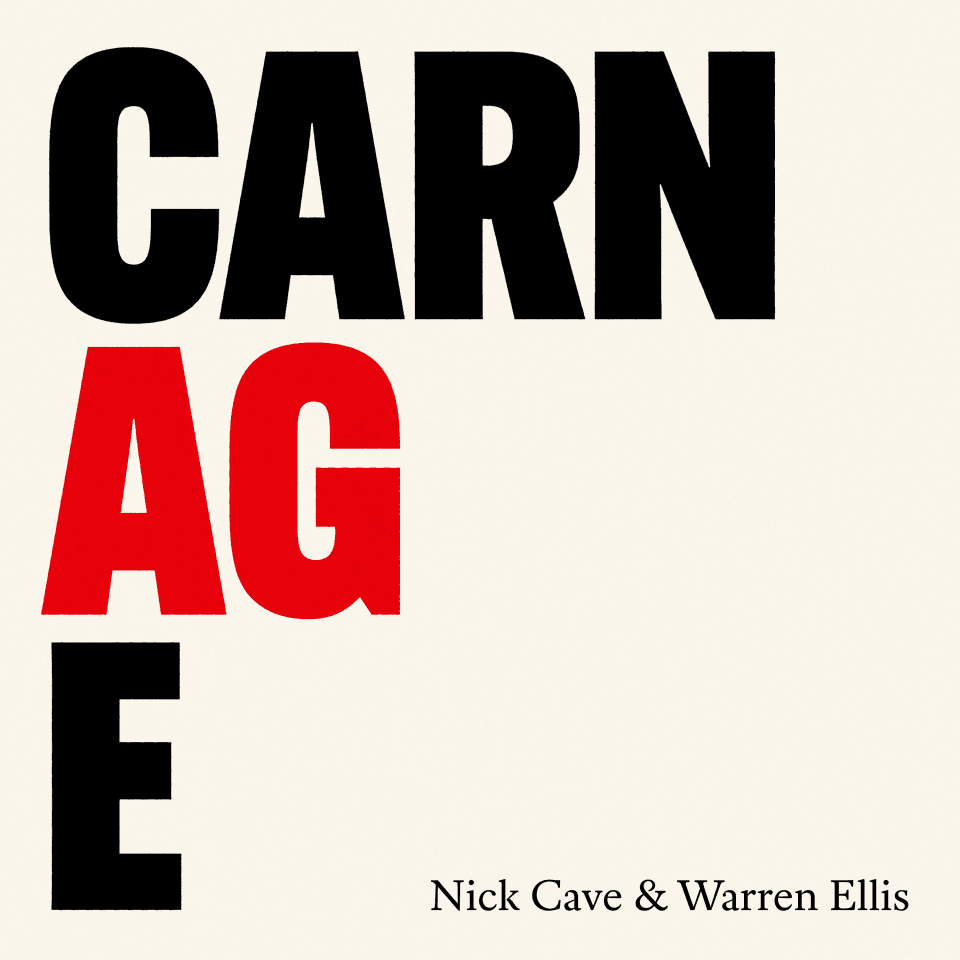
The first track on Carnage is called “Hand of God,” and it begins with a single sustained note from a synthesiser, a tone so flat and unadorned that it could be a test signal. Then Warren Ellis’s loops enter, layered and circular, building a drone that is warm in frequency but cold in affect, the sound of a machine breathing in a room where no one has opened a window. When Nick Cave’s voice arrives, it is close, closer than it has been on any record in years, placed so near the microphone that you can hear the room around it: the faint reflections off hard surfaces, the absence of the natural reverb that a larger space would provide. This is an album recorded in a small room during lockdown, and the room is audible on every track. It is, in some respects, the album’s third instrument.
Carnage was released in February 2021, written and recorded by Cave and Ellis alone during the Melbourne lockdowns of 2020. It arrived without announcement, without lead singles, without the promotional apparatus that typically accompanies a Nick Cave release. The album simply appeared, eight tracks, forty minutes, as though it had slipped out through a gap in the quarantine.
The density that is missing
For listeners accustomed to the Bad Seeds, Carnage registers first as an absence. The Bad Seeds are a big band: drums, bass, guitar, keyboards, violin, backing vocals, the combined mass of musicians who have been playing together, in various configurations, for four decades. That density is the foundation of Cave’s recorded work from From Her to Eternity through Ghosteen. Even the quieter records, even The Boatman’s Call or Push the Sky Away, carry the latent energy of a full ensemble; you can hear the other players holding back, occupying space even when they are not playing.
Carnage has none of this. It is two people: Cave on vocals, piano, and synthesiser; Ellis on loops, electronics, violin, and whatever else was within reach of his studio. The reduction is total. There is no drummer, no bassist, no guitarist. The rhythmic pulse, where it exists, comes from Ellis’s loops, which tend toward repetition rather than development, circles rather than lines. The harmonic language is spare: sustained chords, drones, the occasional piano figure that moves through three or four notes before returning to its starting point. The music does not progress so much as it accumulates, adding layers of texture without changing direction, and this quality of stasis is inseparable from the conditions of its creation.
Attack and decay in a locked city
Melbourne spent more time in lockdown than almost any other city on earth. By the time Cave and Ellis were recording Carnage, the city had been through months of restricted movement, closed venues, empty streets. The particular quality of Melbourne’s lockdowns, their duration, their severity, the eerie quiet of a city built for foot traffic and live music suddenly emptied of both, is audible in this record not as content but as form. The music sounds like a city that has stopped.
This is not to say the album is quiet. Several tracks build to considerable volume: “White Elephant” erupts into a distorted, almost industrial crescendo; “Balcony Man” layers voices and synths into a wall of harmonics that fills every available frequency. But even at its loudest, the music sounds enclosed. There is no sense of open air, no reverb that suggests distance or space. Everything is close, contained, pressed against the walls of the room it was made in. The attack of each sound is softened by proximity; the decay is swallowed by the room’s acoustics rather than allowed to ring out. It is the sonic fingerprint of isolation.
The voice in the room
Cave’s vocal performance on Carnage is among his most exposed. On records with the full Bad Seeds, his voice occupies a space within the mix; it is the foreground element, certainly, but it exists in relation to the instruments around it, and those instruments provide a kind of architectural support. Here, the voice has almost nothing to lean against. Ellis’s loops and drones create atmosphere but not structure; they do not define harmonic centres or rhythmic frameworks in the way a bass guitar and drum kit do. The voice must carry itself.
The result is a performance that sounds both intimate and precarious. Cave’s baritone, which on records like Murder Ballads or Dig, Lazarus, Dig!!! could fill a room through sheer force, is here used at a lower register of intensity. He speaks as much as he sings. He lets phrases trail off. He repeats words and lines as though testing whether they still mean what they meant a minute ago. On “Lavender Fields,” the vocal is so close and so still that it sounds like dictation, a man recording his thoughts before they can escape. On “Shattered Ground,” the delivery is more urgent, but the urgency is contained; it pushes against the room’s walls without breaking through them.
Two people, one frequency
Cave and Ellis have been collaborating for over thirty years, first within the Bad Seeds and then on a parallel body of film scores that includes The Assassination of Jesse James, The Road, Lawless, and Blonde. The film work is relevant here because it trained them to think about music as environment rather than performance. A film score does not need to develop or resolve; it needs to establish a space and hold it. Carnage works by the same logic. Each track creates a sonic environment and then inhabits it, patiently, without the need to move toward a conclusion.
This is a lockdown album that sounds like lockdown, not because it is about isolation but because it was shaped by isolation’s acoustics. The room the microphone is in is small. The air has not circulated. The two people in it have been there for a long time. And the music they made carries the specific gravity of that confinement: heavy, close, warm in the way that a room grows warm when the windows have been shut for months.
Kieran writes about what films sound like. Played in a band that nearly got signed in 2012 and has been thinking about attack and decay ever since. Devoted to Warren Ellis, Amanda Brown, and the quiet work of sound editors nobody interviews.
MORE BY KIERAN BOUSTANY →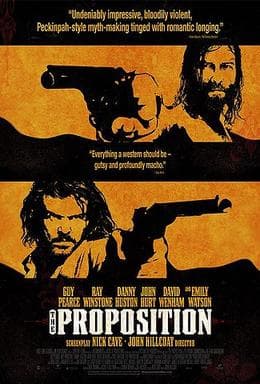
The Proposition was scored from motifs, and that is why it sounds like heat
Nick Cave and Warren Ellis wrote the music for John Hillcoat's western from motifs, not from frames, and the film's strange, hymn-like heat is the result.
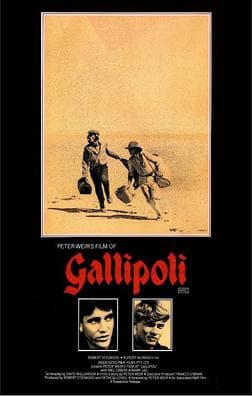
Gallipoli and the two pieces of music that are not Australian
Peter Weir's 1981 war film has no composed score to speak of. It has a French synthesiser record and a baroque lament, and between them they say everything the picture needs.
Bluey's music was made the way the Heelers play
Up Here put a hundred Brisbane musicians behind Joff Bush's Bluey cues, and the lovely result proves the small band had the scale right all along.