Three scores at MIFF 2025 that earned their silence
The best-scored films at this year's MIFF used restraint as an instrument and silence as a statement.

I saw fourteen films at MIFF this year and came away thinking seriously about three of them, which is a better ratio than it sounds. The three I am thinking about are not the three I would have predicted from the programme. They are not the ones with the most prominent composers attached, or the ones whose synopses suggested the most scoring opportunities, or the ones that critics on social media had flagged as sonically interesting. They are the three that used silence most precisely, and in a festival environment, where you are watching films back to back and your ears are adjusting between sessions, precision in silence is the quality that separates a good score from a score that understands what it is for.
The first is Gravel Road, a feature debut from South Australian director Elise Bauman, scored by Adelaide-based composer Ned Beckley. Beckley has been working in Australian screen music for over a decade, and his credits include television work that is competent and professional in the way that television scoring needs to be. What he does in Gravel Road is something different. The film is set on a farming property during a drought, and the temptation, the obvious temptation, would be to score the landscape: to use strings or processed guitar or ambient pads to communicate the dryness, the heat, the slow violence of a season that will not break. Beckley does none of this. His score enters the film approximately twelve minutes in, after the audience has already been sitting with the sound design, the wind, the distant machinery, the boots on dry ground, and when the music arrives it is so quiet and so close to the frequency range of the ambient sound that it takes a moment to register as music at all.
The score as architecture
This is a compositional choice that only works in a cinema. On a laptop speaker, or through earbuds on a train, the subtlety would vanish. The dynamic range would be compressed, the near-silence would become actual silence, and the score’s relationship to the sound design would collapse. Beckley wrote this score for a room, for the specific acoustic conditions of a darkened theatre where the audience is not multitasking, and at MIFF, in the cinema at ACMI, those conditions held. I could hear the score breathing. I could hear the moments where it withdrew and the moments where it advanced, and the discipline of the withdrawal was as composed as the music itself.
The second film is Night Country, a Wiradjuri-language drama directed by Kodie Bedford, with a score by Erkki Veltheim. Veltheim is a violinist and composer whose work sits at the intersection of contemporary classical music and experimental practice, and his score for Night Country uses the viola as its primary voice. This is an unusual choice for a film score, because the viola occupies a tonal range that sits between the warmth of the cello and the brightness of the violin without fully committing to either, and in Night Country this ambiguity becomes expressive. The viola lines are sparse, sometimes just a single sustained note held across a scene transition, and the silence around them is active rather than empty.
What Veltheim understands, and what I heard most clearly in a festival screening where my attention was undivided, is that silence in a film score is not the absence of music. It is the presence of a decision not to play. Every silent passage in Night Country is a compositional choice, as deliberate as the notes that surround it, and the effect is a score that feels like it is listening to the film rather than speaking over it.
The argument for hearing scores in cinemas
The third film is Halcyon, an international selection from a Portuguese director, with a score by a composer I had not encountered before. The score is built almost entirely from processed piano, the instrument recorded close and then digitally altered so that the attacks are softened, the sustain is extended, and the result is a sound that is recognisably piano but texturally unfamiliar. In a cinema, this processing is legible. You can hear the original instrument underneath the treatment. On a streaming platform, with the audio compressed and the room acoustics working against the dynamic range, the processing would flatten into something that sounds like generic ambient music, and the specificity of the composer’s choices would be lost.
This is the argument I keep making and that I will keep making until someone agrees with me or I run out of ways to phrase it. Film scores are written for cinemas. They are composed with specific acoustic conditions in mind, mixed for speaker systems that can reproduce the full frequency range, and designed to occupy a space that the audience shares with the sound. When you hear a score on a laptop, you are hearing a reduction. When you hear it through earbuds, you are hearing an adaptation. When you hear it in a cinema, you are hearing it.
What MIFF showed me
Festivals are the last reliable context for this kind of listening. Commercial screenings are getting shorter, the gap between theatrical release and streaming availability is narrowing, and the economic logic of the distribution chain does not reward the acoustic conditions that scores are written for. But at a festival, for a few days, the conditions hold. The films screen in proper cinemas. The audience is attentive. The sound systems are calibrated. And the scores, the ones that are written with this environment in mind, reveal themselves in ways that no other context can replicate.
The three scores I heard at MIFF this year were composed by people who understand this. Beckley, Veltheim and the Portuguese composer whose name I am now going to make a point of remembering all wrote music that required the room. They wrote silence that required attention. They wrote scores that earned the conditions they were heard in, and the fact that most of the audience will never hear them under those conditions is the quiet loss that I am not sure the industry knows how to address.
Kieran writes about what films sound like. Played in a band that nearly got signed in 2012 and has been thinking about attack and decay ever since. Devoted to Warren Ellis, Amanda Brown, and the quiet work of sound editors nobody interviews.
MORE BY KIERAN BOUSTANY →
Two Australian scores landed at Sundance in 2024 and the festival did not notice
The scores were there, the composers were not credited in the headlines, and that is the usual arrangement.
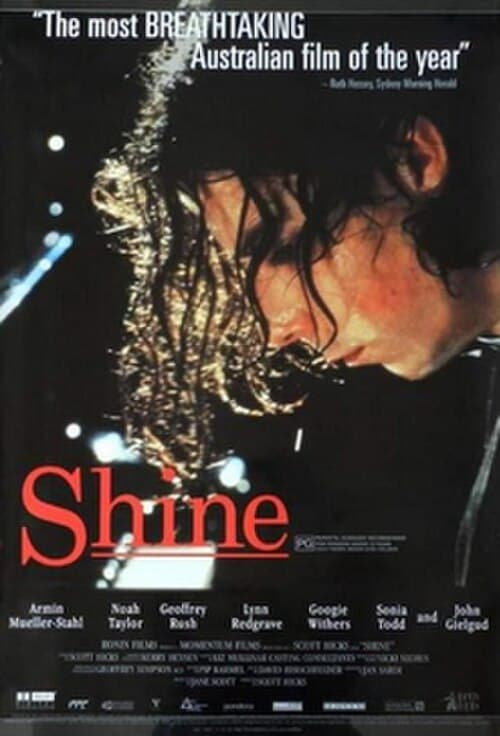
Shine and the score hiding under the Rachmaninoff
David Hirschfelder had to write original music that lives under the loudest warhorse in the piano repertoire, and the quiet writing is what carries the film.
Nigel Westlake smuggled a cathedral into a film about a pig
The score for Babe borrows its grandeur from a French organ symphony, and the trick tells you everything about how Nigel Westlake hears the relationship between small subjects and large feelings.