Australian production restarted at two speeds and the gap between them is widening
International productions are back at full capacity; local features are still waiting for insurance, cast availability, and the confidence to spend.

By mid-2021, the Australian production landscape had split into two distinct economies. The first, international productions shooting in Australia, was operating at or above pre-pandemic capacity. The second, locally financed features and independent drama, was still stalled. The numbers tell the story more efficiently than any policy summary.
Screen Australia’s production data for the 2020-21 financial year showed total production expenditure of $2.3 billion, a figure that looks healthy until you break it down. International productions accounted for approximately $1.6 billion of that total, driven by a handful of tentpole shoots: Thor: Love and Thunder in Sydney, Shang-Chi and the Legend of the Ten Rings (partially), and several other studio-backed projects attracted by the Location Incentive and the 16.5 per cent Location Offset. These productions brought crews, equipment, and spending to Australian stages. They did not bring Australian stories.
The local production figure, approximately $700 million across features, television, and documentary, was down roughly 15 per cent on the pre-pandemic average. More importantly, the composition had shifted. Television commissions, particularly from streaming platforms, held up. Local feature films did not.
The insurance wall
The single biggest obstacle for local features in mid-2021 was not health restrictions. Studios had adapted to COVID-safe protocols. Rapid testing was routine. The problem was insurance. COVID-related production insurance, the coverage required if a shoot had to shut down due to a positive case or a lockdown order, was either unavailable or prohibitively expensive for budgets under $10 million.
For a Marvel film, the cost of COVID insurance was a rounding error on a $200 million budget. For an Australian feature budgeted at $4 million, a $300,000 insurance premium represented a meaningful percentage of the total spend. Several producers reported being quoted premiums that exceeded their entire contingency. The result was a de facto freeze on the mid-budget local feature: not formally suspended, but practically unfinanceable.
The federal government’s Temporary Interruption Fund, announced in mid-2020, provided some relief, but its coverage was limited and the application process was not designed for speed. By June 2021, many local producers had been waiting more than twelve months for their financing to close, not because the creative material was not ready but because the risk architecture around production had changed faster than the support mechanisms could adapt.
Crew migration
The second structural problem was crew availability. International productions pay more. This is not new, but in a constrained market it became acute. A gaffer who could earn $2,500 per week on a local feature could earn $4,000 on a Marvel shoot. A production coordinator with options chose the higher-paying job. The same pattern repeated across departments: camera, grip, electric, art department, costume. The international productions hoovered up experienced crew, and the local productions that did manage to finance could not fill their rosters.
This created a secondary effect that is harder to quantify but shows up in industry conversations: a loss of institutional knowledge at the local level. When an experienced focus puller spends two years on international shoots, they are not working on the Australian features where they would normally be mentoring emerging crew. The pipeline does not just lose labour. It loses the informal training that keeps the next generation competent.
What the pipeline looked like
Screen Australia’s drama report for the period showed 38 Australian feature films commencing principal photography in the 2020-21 financial year, down from 47 in 2018-19. Of those 38, a disproportionate number were low-budget debuts or genre films with international pre-sales. The mid-range Australian drama, budgeted between $5 million and $12 million, with a theatrical release strategy aimed primarily at the domestic market, was the category most affected.
The television side was healthier, largely because streaming platforms continued to commission. Stan, ABC, SBS, and Netflix all had Australian titles in production or development. But television commissions follow a different economic logic: the platform absorbs the financial risk, the producer delivers the show, and the audience finds it (or does not) on the platform. The theatrical feature model, which depends on a chain of investors, distributors, and exhibitors all agreeing that a film can find an audience in cinemas, is more fragile, and it broke first.
Two recoveries
The gap between the two production economies was not temporary. By June 2021, the structural advantages that attracted international productions to Australia, competitive exchange rate, world-class stages, experienced crews, generous tax offsets, strong health outcomes relative to the US and UK, were accelerating. The Location Incentive had been topped up. New stages were being built in Sydney and on the Gold Coast. The international pipeline was full.
The local pipeline was not. The films that were delayed in 2020 had not simply shifted twelve months to the right. Some had lost their financing. Some had lost their cast. Some had lost their moment, the cultural window in which their story felt urgent or commercial, which is a real thing even if it is difficult to measure.
What this means in practice is that the Australian films released in 2023 and 2024 will reflect a gap in the production timeline. There will be fewer of them. They will skew toward the extremes: very low budget or internationally co-financed. The middle will be thinner. The two-speed recovery is not a metaphor. It is a production schedule.

Odette covers the business of Australian screen. Previously a financial journalist. Reads every Screen Australia annual report the week it drops. Short paragraphs, long memory, never misses a figure.
MORE BY ODETTE MALOUF →
Australian films earned $340 million internationally in 2025 and most of it was one film
Remove the outlier and the international number drops to $48 million, which is closer to the structural truth.

Australia brought two films to Cannes in 2025 and neither one apologised for being difficult
The Australian selection at Cannes was smaller than 2023 but the films were harder sells, and that is not a criticism.
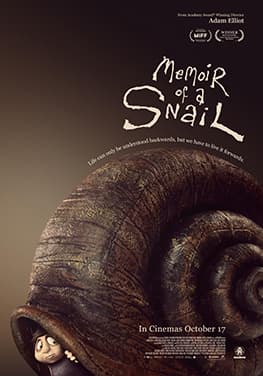
Memoir of a Snail's Oscar campaign cost more than the film and that is the system working as designed
The campaign budget for a $7 million claymation feature exceeded the production budget, and Screen Australia helped foot the bill.