Australia brought two films to Cannes in 2025 and neither one apologised for being difficult
The Australian selection at Cannes was smaller than 2023 but the films were harder sells, and that is not a criticism.
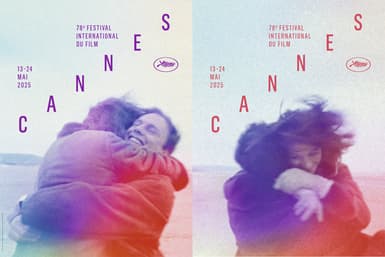
Australia sent two films to Cannes this year. In 2023, it sent three. The numbers are small enough that any variation looks like a trend when it is really just the maths of a small industry meeting a large festival. But the composition of the 2025 slate tells a story worth reading.
Warwick Thornton’s latest feature screened in the Official Selection, his first Cannes appearance since Sweet Country competed in 2017 and took the Special Jury Prize at Venice the same year. Justin Kurzel returned with a film that has been described by early respondents as uncompromising, which in Cannes parlance means either very good or very difficult or both. Neither film is an easy sell to international buyers looking for accessible Australian content. Both films exist because their directors made them the way they wanted to make them, and the festival programmed them on those terms.
What the festival strategy costs
Sending a film to Cannes is not free. The direct costs are quantifiable: market accreditation, publicist, travel for talent, accommodation on the Riviera at rates that make Sydney look reasonable. A mid-range Australian production can expect to spend between $80,000 and $150,000 on a Cannes launch, depending on the section and the scale of the publicity push. Screen Australia’s International Strategies programme offsets some of this, but the total cost still falls disproportionately on independent producers who are already operating on thin margins.
The indirect costs are harder to calculate. A Cannes premiere locks a film out of other A-list festivals. If Cannes does not generate the sales momentum a film needs, the opportunity cost is real. Toronto, Venice, and Berlin all offer different buyer demographics, and a film that plays well in Un Certain Regard might have generated more commercial traction at TIFF’s Platform section.
What the festival strategy buys
Visibility. Not the kind of visibility that translates directly into box office, because Australian films at Cannes rarely open to wide theatrical releases in France or the US. The visibility is institutional. A Cannes credit attaches to a director’s name permanently. It makes the next project easier to finance. It gives Australian funding bodies a data point they can cite when justifying international co-production investment.
For Thornton and Kurzel, both of whom already have international profiles, the Cannes placement reinforces a position rather than creating one. For the Australian industry more broadly, two films in Official Selection is evidence that the pipeline is producing work that meets the festival’s curatorial standards, which are opaque and idiosyncratic but consistently high.
The 2023 comparison
In 2023, Australia had three films at Cannes: The New Boy (Thornton, again), Limbo (Ivan Sen), and a short in the Cinefondation programme. The showing was read as a strong year, and the post-festival coverage emphasised the diversity of the slate: an Indigenous filmmaker, an Asian-Australian perspective, an emerging voice.
The 2025 showing is smaller but not weaker. Two directors with established reputations bringing challenging work to the world’s most scrutinised film festival is not a decline. It is a different proposition. The 2023 slate was diverse in voice. The 2025 slate is concentrated in intent. Both are valid strategies for a national cinema that produces, on average, thirty to forty features per year and sends a handful to the international circuit.
Does Cannes still matter
The question gets asked every year, and the answer has not changed: it depends on what you are measuring. If you are measuring box office impact on Australian theatrical distribution, Cannes is close to irrelevant. An Australian film that premieres at Cannes will open in Australian cinemas to roughly the same audience it would have reached without the festival credit. Australian audiences do not choose films based on festival pedigree, and the gap between a Cannes premiere and an Australian theatrical release is long enough that any publicity momentum dissipates.
If you are measuring the health of the industry’s international connections, Cannes still matters. The market that runs alongside the festival is where Australian sales agents build the relationships that finance the next three years of production. The meetings in the Palais and the hotels along the Croisette are where co-production treaties become actual co-productions. The festival is the occasion. The market is the infrastructure.
Australia brought two films to Cannes in 2025. Neither film was designed to be easy. The festival took them anyway. That is a small data point in a large industry, but it is the right kind of data point.
Odette covers the business of Australian screen. Previously a financial journalist. Reads every Screen Australia annual report the week it drops. Short paragraphs, long memory, never misses a figure.
MORE BY ODETTE MALOUF →
Australia sent three films to Cannes in 2023 and each one argued a different case
Warwick Thornton, the Philippou brothers, and Kitty Green all landed at the Croisette, and the three films could not have been more different.
Australian films earned $340 million internationally in 2025 and most of it was one film
Remove the outlier and the international number drops to $48 million, which is closer to the structural truth.
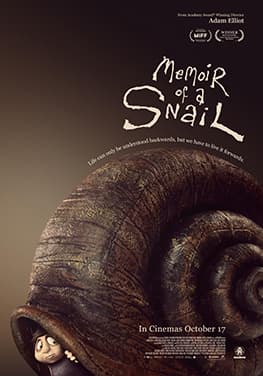
Memoir of a Snail's Oscar campaign cost more than the film and that is the system working as designed
The campaign budget for a $7 million claymation feature exceeded the production budget, and Screen Australia helped foot the bill.