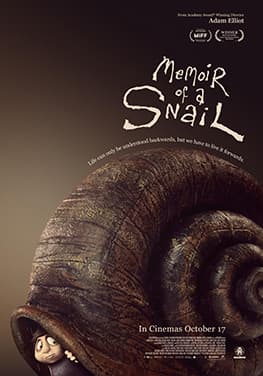
Memoir of a Snail's Oscar campaign cost more than the film and that is the system working as designed
The campaign budget for a $7 million claymation feature exceeded the production budget, and Screen Australia helped foot the bill.
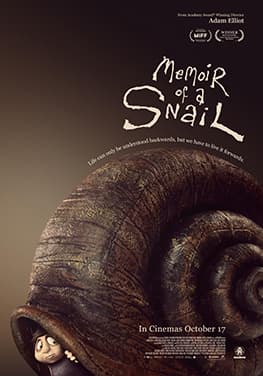
Memoir of a Snail cost approximately $7 million to make. The Oscar campaign to promote it cost an estimated $8 to $10 million. That is not a typo. The campaign to tell people the film existed cost more than the film.
This is not unusual. It is how the Academy Awards work and have worked for decades. What makes the Memoir of a Snail numbers worth examining is what they reveal about the specific economics of Australian films competing for American awards, and what the Australian taxpayer gets in return.
Where the money went
Adam Elliot’s stop-motion feature premiered at Annecy in June 2024 and won the Cristal for Best Feature Film. It screened at festivals through the second half of the year and entered the Oscar conversation for Best Animated Feature. From that point, the spend escalated.
An Oscar campaign for an animated feature in the current market involves, at minimum: for-your-consideration screenings in Los Angeles and New York (venue hire, catering, transport for talent); print and digital advertising in trade publications (Variety, The Hollywood Reporter, Deadline); a dedicated publicist or publicity firm in Los Angeles, retained for four to six months; social media campaigns targeting Academy voters; DVD and digital screener distribution to all eligible voting members; attendance at guild events, panels, and Q&As; and travel and accommodation for the director, producers, and key voice talent across multiple trips to the US.
For a studio animated feature backed by Disney or Pixar, these costs are absorbed into a marketing budget that already runs in the tens of millions. For a $7 million Australian claymation film produced by Liz Skitch and distributed by IFC Films in the US, every dollar of campaign spend is a decision made against other possible uses.
Screen Australia’s role
Screen Australia contributed to the Oscar campaign through its awards campaign support program, which provides funding to Australian films competing for major international awards. The program’s stated purpose is to maximise the international profile and commercial returns of Australian screen content. The agency does not publicly disclose the specific amounts allocated to individual campaigns, but industry sources place Screen Australia’s contribution to the Memoir of a Snail Oscar campaign in the range of $1.5 to $2 million.
This is public money. It is drawn from the same pool that funds development, production, and distribution of new Australian films. The calculation behind the spend is straightforward: an Oscar nomination, and especially a win, increases the international sales value of the film, raises the profile of the filmmaker, and makes the next Australian project marginally easier to finance. Whether the maths works depends on which variables you include.
The maths of nominating vs. winning
A Best Animated Feature nomination increases a film’s international sales revenue by an estimated 15 to 30 per cent, depending on the title and the market. A win increases it further. For Memoir of a Snail, a nomination could add between $2 million and $5 million in additional global revenue over the life of the title. A win could add more.
But the revenue does not flow to Screen Australia. It flows to the producers, the sales agent, and the distributors. Screen Australia’s return is indirect: a healthier industry, a more internationally visible national cinema, a track record that makes the next campaign easier to justify. These are real benefits. They are also impossible to quantify in the kind of cost-benefit analysis that government expenditure normally requires.
The harder question is opportunity cost. The $1.5 to $2 million that Screen Australia contributed to the Memoir of a Snail campaign is roughly equivalent to the production investment in two low-budget Australian features or five development grants for emerging filmmakers. Whether an Oscar campaign for one film delivers more value to the industry than those alternatives is a question the agency does not publicly address.
The system working as designed
None of this is a critique of Memoir of a Snail, which is a remarkable piece of filmmaking. Adam Elliot spent years building it frame by frame. The fact that his film then had to spend more than its own production budget asking American voters to watch it is not a failure of the film. It is a feature of the system.
The Academy Awards are, among other things, a market. Access to that market costs money. The price of entry has increased steadily over the past two decades, and it has increased fastest for films that do not have studio marketing departments behind them. Independent films, international films, and animated features outside the Disney-Pixar-DreamWorks axis all face the same structural disadvantage: the cost of competing is disproportionate to the resources available.
Australia keeps paying. The calculation, made repeatedly by Screen Australia and by Australian producers, is that the visibility is worth the spend. Maybe it is. The alternative is to stop competing, and nobody has suggested that yet.
Odette covers the business of Australian screen. Previously a financial journalist. Reads every Screen Australia annual report the week it drops. Short paragraphs, long memory, never misses a figure.
MORE BY ODETTE MALOUF →
Australian films earned $340 million internationally in 2025 and most of it was one film
Remove the outlier and the international number drops to $48 million, which is closer to the structural truth.
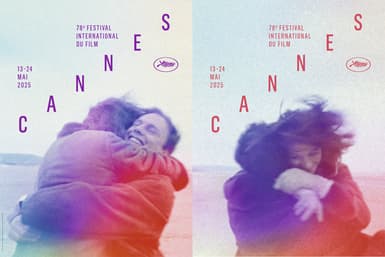
Australia brought two films to Cannes in 2025 and neither one apologised for being difficult
The Australian selection at Cannes was smaller than 2023 but the films were harder sells, and that is not a criticism.
Australian cinema's 2024 awards season by the numbers
Three Australian features made the international circuit in 2024, and the funding trail behind each tells a different story.