Australian films earned $340 million internationally in 2025 and most of it was one film
Remove the outlier and the international number drops to $48 million, which is closer to the structural truth.
The headline number is $340 million. That is the combined international box office for Australian films released theatrically outside Australia in 2025, based on reported grosses from major territories. It is, by a significant margin, the largest international figure the Australian film industry has recorded in a single year. It is also, almost entirely, one film.
George Miller’s The Wasteland, the latest entry in the Mad Max franchise, grossed $292 million internationally. Remove it from the total and the remaining figure is $48 million, spread across thirty-one titles that received international theatrical distribution. The $48 million is the number that describes the industry. The $340 million is the number that will appear in ministerial press releases.
The outlier economy
The Wasteland qualifies as an Australian film under the Producer Offset provisions. It was produced by Kennedy Miller Mitchell, filmed primarily at Fox Studios Sydney and on location in New South Wales, and employed a predominantly Australian crew. Its international distribution was handled by Warner Bros., and its marketing budget exceeded the combined production budgets of every other Australian film released in 2025. These facts are not contradictions. They are the conditions under which an Australian film can gross $292 million internationally.
The film’s success is genuine. It is also structurally irrelevant to the rest of the industry. George Miller is one filmmaker. The Mad Max franchise is one piece of IP. The combination of Miller’s vision, Warner Bros.’ marketing infrastructure, and the global audience for high-concept action cinema created a financial outcome that no other Australian filmmaker can replicate, because no other Australian filmmaker has access to the same combination of factors. Planning industry policy around the possibility of another Wasteland would be like planning municipal budgets around the assumption that someone will win the lottery.
The $48 million baseline
Strip the outlier and examine what remains. Thirty-one Australian films received international theatrical distribution in 2025. Their combined gross was approximately $48 million, with the distribution skewed heavily towards the top of the list.
The second-highest international gross was $8.4 million, earned by Talk to Me 2, the sequel to Danny and Michael Philippou’s 2023 horror hit. A24 handled distribution again, the social media campaign was effective again, and the horror genre continued to travel internationally in ways that other genres do not. The Philippous have built something durable, but their pathway remains specific to horror and to their particular audience-building strategy.
Third was Blueback director Robert Connolly’s new feature Salt Country, which grossed $5.1 million across European and Asian territories, driven partly by a Venice Film Festival selection and partly by sales to distributors in France and South Korea who have historically shown appetite for Australian drama.
The remaining twenty-eight films shared $34.5 million between them. The average gross per title was $1.23 million. The median was lower: approximately $640,000. Twelve of the thirty-one films grossed less than $300,000 internationally, which in most cases means limited release in one or two territories, typically the United Kingdom and New Zealand.
The festival-to-market conversion
Australian films continued to perform well on the festival circuit in 2025. Sixteen features screened at A-list festivals (Cannes, Venice, Berlin, Toronto, Sundance). Of those sixteen, eleven secured international distribution deals. Of those eleven, seven earned more than $1 million internationally. The conversion rate from festival premiere to meaningful international revenue is approximately 44 per cent, which is consistent with the five-year average.
The festivals that deliver the strongest commercial outcomes remain Toronto and Sundance, where buyer attendance is highest and the gap between critical reception and distribution deal is shortest. Cannes and Venice confer prestige but convert to sales less reliably for Australian titles, partly because the European art-house market has contracted and partly because Australian films compete at those festivals against better-financed European productions with stronger local distribution networks.
What the baseline tells you
The $48 million figure, the one without the outlier, is useful because it is roughly where the number has sat for the past five years, adjusted for inflation. In 2024, the equivalent figure was $43 million. In 2023, it was $51 million (boosted by the original Talk to Me). In 2022, it was $38 million. In 2021, it was $29 million (depressed by pandemic-related distribution delays).
The range is $29 million to $51 million, with the five-year average at $41.8 million. The 2025 figure of $48 million sits within that range, slightly above the average, consistent with the trend. This is the structural capacity of the Australian film industry to generate international theatrical revenue in a given year: somewhere between $35 million and $55 million, depending on the strength of the slate and the health of the international distribution market.
This number is not growing. It is stable, which in an era of contracting international theatrical markets is arguably a positive result, but it does not suggest an industry that is expanding its export capacity. The baseline is the baseline.
Planning around outliers
The $340 million will feature prominently in the next Screen Australia annual report. It should. The number is real, the production was Australian, and the industry deserves credit for supporting a filmmaker whose work consistently reaches global audiences. The risk is that the number creates an expectation that cannot be met in years when there is no George Miller film. The gap between $340 million and $48 million is not a gap that policy settings or funding levels can bridge. It is the gap between a global franchise and a national film industry, and both of those things are worth supporting, but they require different frameworks and different measures of success.
The $48 million is the number to watch. It tells you what the industry can do consistently. It tells you where the ceiling is. It tells you the structural truth, which is less dramatic than the headline but more useful for anyone trying to plan around it.
Odette covers the business of Australian screen. Previously a financial journalist. Reads every Screen Australia annual report the week it drops. Short paragraphs, long memory, never misses a figure.
MORE BY ODETTE MALOUF →
Australia brought two films to Cannes in 2025 and neither one apologised for being difficult
The Australian selection at Cannes was smaller than 2023 but the films were harder sells, and that is not a criticism.
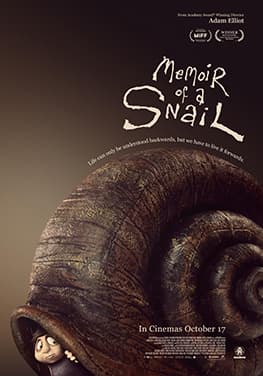
Memoir of a Snail's Oscar campaign cost more than the film and that is the system working as designed
The campaign budget for a $7 million claymation feature exceeded the production budget, and Screen Australia helped foot the bill.
Australia sent three films to Cannes in 2023 and each one argued a different case
Warwick Thornton, the Philippou brothers, and Kitty Green all landed at the Croisette, and the three films could not have been more different.