The sound of the Wasteland from Brian May to Junkie XL
The Mad Max franchise has been scored four different ways across forty-five years, and the engine noise is the only constant.
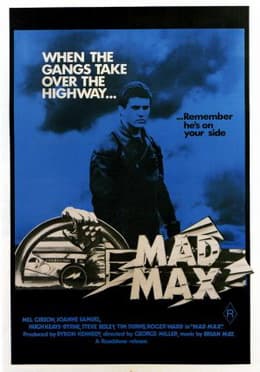
Before there is music in Mad Max (1979), there is engine noise. A supercharged V8 screaming through a gear change, the intake howl climbing to a frequency that sits right at the boundary between mechanical sound and musical tone. Brian May’s score enters over this noise, not replacing it but harmonising with it, brass and strings surging in the same register as the engine, matching its aggression, its forward momentum, its refusal to idle. This is the fundamental decision that has defined the franchise’s musical identity across four films, four decades and four different compositional approaches: the engine comes first. The music must earn its place alongside it.
Brian May and the orchestra on the highway
Brian May (no relation to the Queen guitarist) was one of Australia’s most accomplished film and television composers when George Miller hired him for Mad Max. He had scored Patrick (1978) for Richard Franklin, working in a muscular orchestral idiom that owed something to Bernard Herrmann and something to the pulp energy of exploitation cinema. For Mad Max he brought the same palette but tuned it to a different frequency. The score is relentless. It drives forward with a rhythmic insistence that mirrors the chase sequences, brass stabs punctuating gear changes, strings sustaining across long stretches of highway, timpani rolling beneath the action like the road surface itself.
What makes May’s score distinctive is its sincerity. There is no irony in it, no winking acknowledgement that the material is pulp. May scores Mad Max as though it were grand opera, and the conviction of that approach gives the film a weight it might otherwise lack. When Max’s family is killed, the orchestral response is enormous, grief-stricken, operatic in scale and emotional directness. The music does not modulate for the low budget or the B-movie context. It plays at full register, and that commitment is what lifts the film’s final act from exploitation into something genuinely mythic.
May returned for The Road Warrior (1981) and deepened the palette. The score is more varied, more willing to hold silence, more attentive to the film’s expanded emotional range. The opening narration is scored with a lonely, elegiac theme that establishes the wasteland as a space of loss rather than adventure. The action cues are more complex, layered, building multi-part structures that track multiple vehicles and multiple characters within a single sequence. May was scoring a bigger film and he rose to it, but the principle remained: the orchestra rides with the engine, not above it.
Maurice Jarre’s detour through Thunderdome
Mad Max Beyond Thunderdome (1985) replaced May with Maurice Jarre, the French composer best known for his work with David Lean on Lawrence of Arabia (1962) and Doctor Zhivago (1965). The choice signalled a deliberate shift in register. Thunderdome is the most commercially polished film in the franchise, the one that reaches furthest toward mainstream American entertainment, and Jarre’s score reflects this. It is smoother, more melodically developed, built around themes and leitmotifs rather than the rhythmic propulsion that defined May’s work. There are passages of genuine beauty, particularly in the sequences set among the lost children, where Jarre writes with a tenderness that is entirely his own and entirely foreign to the franchise’s earlier sonic world.
The score is accomplished but it sits oddly against the film’s rougher textures. Jarre was a master of the sweeping cinematic landscape, and his instincts pushed the music toward grandeur where May’s instincts had pushed toward velocity. The engine noise is less prominent in Thunderdome’s sound mix; the orchestra has taken precedence, and something is lost in the shift. The franchise’s musical identity had been built on the collision between mechanical sound and orchestral sound, and Jarre, for all his skill, smoothed that collision into something more conventional.
Junkie XL and the return of the engine
Thirty years passed. George Miller spent them making other films, developing other projects, and thinking about the Wasteland. When Fury Road finally arrived in 2015, the composer was Tom Holkenborg, known as Junkie XL, a Dutch musician and producer whose background was in electronic music, remixes and hybrid scoring. The choice was as deliberate as the Jarre hire had been, but it pointed in the opposite direction: away from classical elegance and toward industrial force.
Holkenborg’s Fury Road score is built on layers. Electronic percussion, distorted guitars, orchestral brass, synthetic textures and, beneath everything, a low-frequency pulse that vibrates in the chest before it registers in the ear. The score is not electronic in the way that 1980s synthesiser soundtracks were electronic; it uses electronic tools to amplify orchestral power, fusing the two into a hybrid that has no precedent in the franchise. The rhythmic aggression of Brian May’s work returns, but it is heavier, denser, more physical. Where May’s orchestra rode alongside the engine, Holkenborg’s score becomes the engine, absorbing the mechanical frequency into its own body.
The Furiosa score (2024) extends this approach while finding new registers within it. Holkenborg writes with more restraint in the film’s early sections, scoring Furiosa’s childhood and captivity with textures that are sparser, more exposed, allowing the narrative’s emotional architecture to emerge before the action consumes it. When the full-scale chase sequences arrive, the score unleashes itself, but it is a different kind of unleashing from Fury Road: more structured, more varied, aware that the audience has heard this palette before and must be surprised within it rather than simply overwhelmed.
The engine as instrument
Across forty-five years, the Mad Max franchise has been scored by an Australian orchestral traditionalist, a French cinema classicist, and a Dutch electronic producer. The musical languages are wildly different. May’s brass-and-strings urgency sounds nothing like Jarre’s lyrical sweep, which sounds nothing like Holkenborg’s percussive hybrid. And yet the franchise holds together sonically, because all four scores are built on the same foundation: the engine. The mechanical roar of a vehicle pushed past its limits is the franchise’s true musical signature, the one constant across every era and every approach. Each composer has had to negotiate with that sound, to find a way for music to coexist with it rather than compete against it, and that negotiation is what gives each score its particular character.
The engine does not care about melody. It does not care about harmony or structure or emotional nuance. It is pure frequency, pure force, and the composer’s job, in a Mad Max film, is to match that force without surrendering to it. Brian May matched it with orchestral conviction. Maurice Jarre tried to transcend it with classical beauty. Junkie XL absorbed it into his own sonic body and became it. Between them they describe a forty-five-year argument about how music relates to noise, and the Wasteland, indifferent to all of them, keeps burning.
Kieran writes about what films sound like. Played in a band that nearly got signed in 2012 and has been thinking about attack and decay ever since. Devoted to Warren Ellis, Amanda Brown, and the quiet work of sound editors nobody interviews.
MORE BY KIERAN BOUSTANY →
Junkie XL scored Furiosa like an engine that remembers being a heartbeat
The score carries the franchise's mechanical pulse into a prequel that needs to feel human, and the transition is where the music earns its weight.
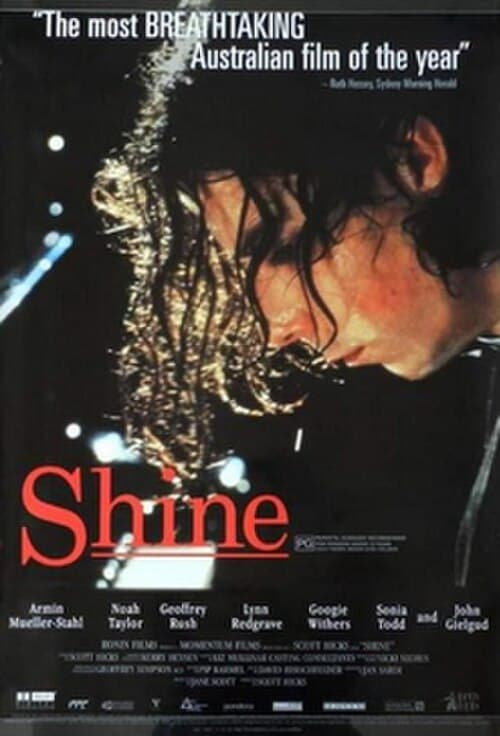
Shine and the score hiding under the Rachmaninoff
David Hirschfelder had to write original music that lives under the loudest warhorse in the piano repertoire, and the quiet writing is what carries the film.
Nigel Westlake smuggled a cathedral into a film about a pig
The score for Babe borrows its grandeur from a French organ symphony, and the trick tells you everything about how Nigel Westlake hears the relationship between small subjects and large feelings.