Junkie XL scored Furiosa like an engine that remembers being a heartbeat
The score carries the franchise's mechanical pulse into a prequel that needs to feel human, and the transition is where the music earns its weight.

The Fury Road score did not ask for your attention. It seized it. Junkie XL, working with George Miller on a film that was essentially a two-hour chase, built a wall of sound that operated on the same principle as the vehicles it accompanied: maximum output, maximum velocity, no pauses except to reload. The drums were industrial. The brass was weaponised. The electronic textures were layered into the orchestral fabric so tightly that the seams disappeared, and what remained was a single propulsive force that matched the film’s commitment to forward motion. It worked because the film never stopped moving, and the score never needed to do anything other than drive.
Furiosa: A Mad Max Saga is a different kind of film, and the score Junkie XL has written for it is, consequently, a different kind of score. This is the most interesting thing about it. Not that it is good, though it is, but that it is different, and that the difference is not a matter of volume or tempo but of structural priority. Fury Road scored movement. Furiosa scores memory. The shift changes everything.
The problem of origin
A prequel has a particular musical challenge that sequels do not share. A sequel can build on the sonic world already established, extending and varying it, pushing it into new territory while maintaining continuity with what the audience already knows. A prequel has to go backwards. It has to find the sound of a world before it became the world the audience recognises, and it has to do this without losing the connection to that future state. The audience knows where Furiosa ends up. They know the chrome and the dust and the mechanical fury of the Citadel. The score has to start somewhere else and arrive there, and the journey between those two points is where the compositional work happens.
Junkie XL solves this by beginning in a register that Fury Road never used: intimacy. The early sections of Furiosa, set in the Green Place before Furiosa’s capture, are scored with an openness that is startling if you come to them with the franchise’s sonic palette in your ears. Strings. Clean melodic lines. Intervals that resolve. The harmony is tonal in a way that Fury Road almost never was, because the Green Place is a world that has not yet been broken, and the music reflects this wholeness. It is not pastoral, exactly, but it is organic in a way that the franchise’s later industrial sound is not, and the contrast is the point.
Dementus and the carnival of ruin
The Dementus theme, written for Chris Hemsworth’s warlord, is the score’s most overtly characterful piece of writing and its most complex balancing act. Dementus is a villain, but he is also a showman, a figure whose cruelty is wrapped in performance and whose power derives partly from spectacle. The theme reflects this. It has a swagger to it, a rhythmic confidence built on a low brass ostinato that moves with the rolling gait of a motorcycle convoy. There is something almost celebratory in its energy, and this is the unsettling part, because the celebration is Dementus’s own. The music does not endorse him, but it inhabits his perspective, and from inside that perspective, the destruction he causes has a rhythm and a momentum that feel, horribly, like fun.
This is compositionally bold. Film scores for villains tend to signal villainy through conventional means: minor keys, dissonance, low register, slow tempo. The Dementus theme uses none of these. It is major-key adjacent, rhythmically active, pitched in the mid-range. It sounds, if you isolate it from the film, almost heroic. It is only in context, matched to images of violence and domination, that the theme’s irony becomes audible. Junkie XL is trusting the audience to hear the gap between what the music sounds like and what it means, and this trust is what makes the theme work.
Furiosa’s line
The Furiosa theme is the score’s quietest element and its most persistent. It appears first in the Green Place sequences as a simple melodic line, played on strings with minimal accompaniment, and it recurs throughout the film in variations that track Furiosa’s transformation from child to warrior. The variations do not follow a conventional arc of increasing complexity or volume. Instead, they change in texture. The same melody, or fragments of it, appears surrounded by different sonic environments: first acoustic, then processed, then layered with percussive elements, then buried beneath the mechanical noise of the Citadel. The melody does not change. The world around it does. This is the score’s central metaphor, and it is effective because it is structural rather than decorative. Furiosa does not become a different person. She becomes the same person in a different context, and the music reflects this by keeping her theme intact while altering everything that surrounds it.
The hybrid instrument
Junkie XL has been working at the intersection of electronic and orchestral music for his entire film-scoring career, and the Furiosa score represents the most sophisticated version of this hybrid yet. The electronic elements are not used as seasoning on top of an orchestral base, which is the default approach in most hybrid scores. They are integrated at the structural level. The percussion oscillates between acoustic drums and synthesised impacts, sometimes within the same phrase. The string lines are doubled by processed textures that extend their sustain and alter their decay in ways that sound organic but are not. The brass is real but its reverb is synthetic, placed in acoustic spaces that do not exist, and the result is a sound that belongs to neither the concert hall nor the studio but to the world of the film itself.
This integration matters because Mad Max is a franchise about machines and bodies, about the point where technology and flesh become inseparable. The score’s refusal to separate its electronic and acoustic elements is a sonic expression of this theme. The music sounds like something a machine would make if the machine had once been alive, or like something alive that has been partially mechanised. This is exactly right for a film about a character who begins as a child in a garden and ends as a woman strapped to the front of a war rig.
What the score remembers
The most striking difference between the Furiosa score and its Fury Road predecessor is not volume or tempo or instrumentation but time. Fury Road’s score existed in an eternal present. It did not remember anything because the film did not look back. Furiosa’s score is saturated with memory. The Green Place theme recurs in fragments during the Citadel sequences, buried in the mix, almost inaudible beneath the industrial noise, and these fragments function as emotional callbacks that the character herself might be experiencing. The music remembers what Furiosa has lost even when the narrative is focused on what she is fighting to gain.
This is Junkie XL’s most nuanced work in the franchise and possibly his most nuanced work in any film. The scale is enormous, the orchestration is dense, the electronic processing is relentless. But beneath all of it, holding the structure together, is a single melodic line that started in a garden and has been travelling through progressively harsher environments for two hours, and the line is still recognisable, still intact, still carrying the emotional weight of a life that began in a place the audience knows will not survive. The engine remembers being a heartbeat. The score makes sure you hear it.
Kieran writes about what films sound like. Played in a band that nearly got signed in 2012 and has been thinking about attack and decay ever since. Devoted to Warren Ellis, Amanda Brown, and the quiet work of sound editors nobody interviews.
MORE BY KIERAN BOUSTANY →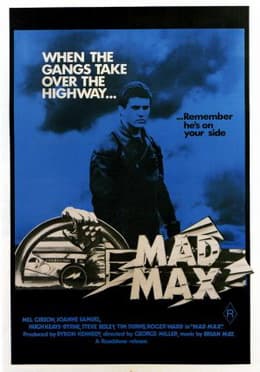
The sound of the Wasteland from Brian May to Junkie XL
The Mad Max franchise has been scored four different ways across forty-five years, and the engine noise is the only constant.
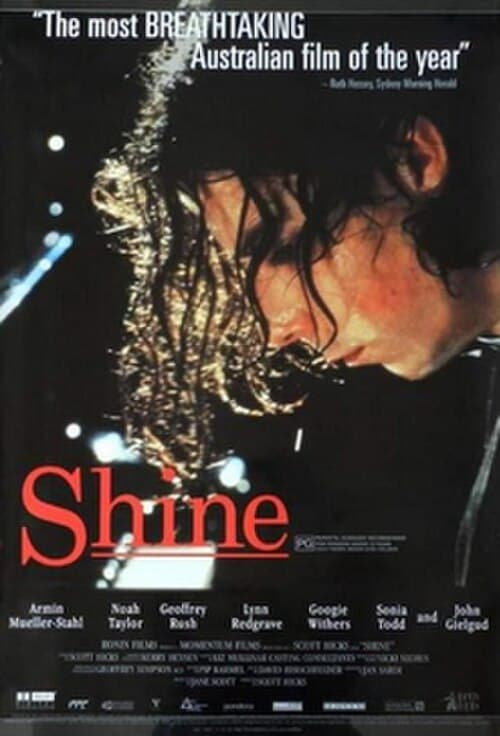
Shine and the score hiding under the Rachmaninoff
David Hirschfelder had to write original music that lives under the loudest warhorse in the piano repertoire, and the quiet writing is what carries the film.
Nigel Westlake smuggled a cathedral into a film about a pig
The score for Babe borrows its grandeur from a French organ symphony, and the trick tells you everything about how Nigel Westlake hears the relationship between small subjects and large feelings.