The score for Love Me sits so close to the characters you can hear them breathe
The score matches the show's emotional register: close, careful, and willing to sit with silence rather than fill it.
There is a kind of television score that announces itself, that tells you what to feel before the scene has decided what it is. The score for Love Me does the opposite. It arrives after the emotion, sometimes several seconds after, like a person entering a room where something has already happened and choosing to sit down quietly rather than ask about it. The restraint is precise and, more importantly, it is earned. This is a show about people who are learning how to feel things again after loss, and the music understands that learning is slow.
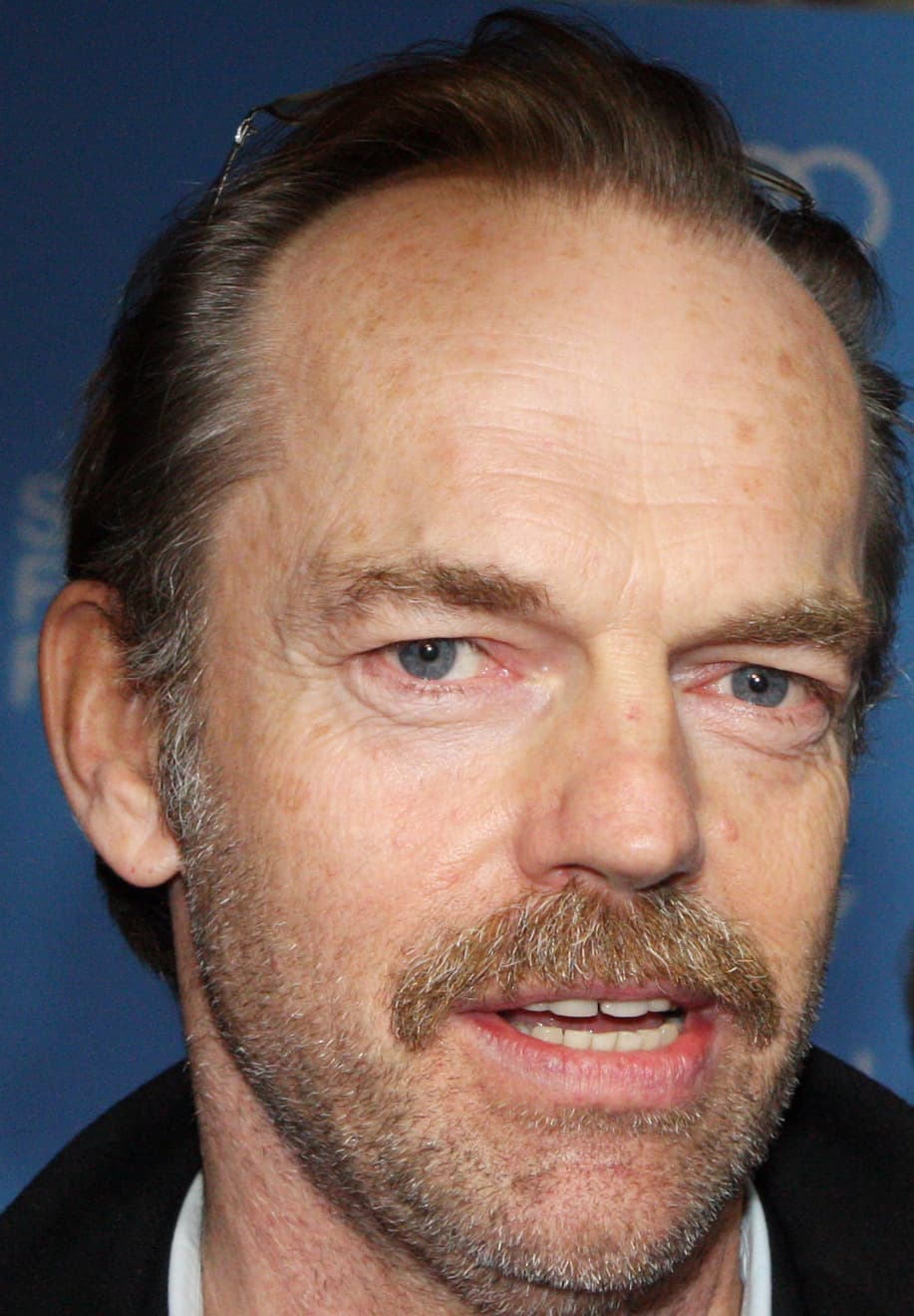
Love Me premiered on Binge in late 2021, created by Leon Ford and Alison Bell, and it tells the story of the Matheson family in the aftermath of a death. Hugo Weaving plays Glen, a man in his sixties who begins online dating for the first time. Bojana Novakovic plays Clara, his daughter, who is navigating her own complicated relationship to intimacy. William Lodder plays Aaron, Glen’s son. The show is structured around the three of them, their separate storylines running in parallel, converging at family meals where nobody says what they are actually thinking.
The score, composed by Antonia Gauci, matches this structure. It does not try to unify the three storylines into a single musical argument. Instead, it adjusts its register for each character, sitting at a different distance, breathing at a different pace.
The piano and the silence around it
The primary instrument is piano, which is the most dangerous choice a composer can make for this kind of material. Piano in a drama about grief and dating is a cliche waiting to happen, and the only way to avoid it is to play the instrument as though you are not entirely sure it should be there. Gauci does this. The piano cues are sparse, often consisting of single notes or two-note phrases separated by enough silence that the silence becomes part of the composition. The sustain pedal is used carefully. Notes are allowed to decay naturally, which means the room enters the recording, the ambience of the space between the instrument and the microphone becoming as much a part of the sound as the notes themselves.
This is a specific production choice, not just a compositional one. You can record a piano in a way that eliminates the room entirely, that gives you a clean, close, studio sound. Or you can let the microphone hear the space, the slight reverb of a real environment, the mechanical sounds of hammers and dampers, the breath of the player. Love Me chooses the second approach, and the result is music that sounds like it was made by a human being in a physical space, which is a simple thing to say but a surprisingly rare quality in television scoring.
Scoring the dating app
The most interesting compositional problem in Love Me is how to score the dating-app sequences. Glen is a man in his sixties swiping through profiles on a phone, and the potential for the music to either patronise him or sentimentalise his situation is enormous. Gauci solves this by incorporating the sounds of the phone itself into the musical texture. Notification chimes, the soft percussive tap of a finger on glass, the brief vibration of an incoming message. These sounds are not reproduced by instruments; they are used as they are, integrated into the score’s rhythm, treated as percussive elements in a composition that is otherwise almost entirely melodic.
The effect is subtle and smart. It places the technology inside the emotional landscape rather than outside it. The phone is not an intrusion into Glen’s world; it is part of how his world sounds now, part of the sonic furniture of his new life. When a notification arrives during a piano cue, the two sounds coexist without hierarchy. Neither interrupts the other. This is compositional generosity. It says: the beep of a dating app and the note of a piano are both sounds that this man hears in the course of a day, and neither is more real than the other.
Weaving’s silence and the score’s patience
Hugo Weaving is an actor who understands stillness. His performance as Glen is built from pauses, from the moments between words, from the physical hesitations of a man who is relearning social behaviour he thought he had finished with decades ago. The score respects this. It does not fill Weaving’s silences. It lets them exist, and when it does enter, it enters at his volume, matching the quiet register of his voice, the careful pace of his movements.
There is a scene in the second episode where Glen sits in his car outside a restaurant, preparing himself for a first date, and the score is a single held note, almost inaudible, sustained for the duration of the scene. It does not build. It does not resolve. It sits with him in the car, breathing at his rate, and when he opens the door and steps out, the note ends. The scene is scored with the precision of chamber music and the emotional logic of a held hand.
The comparison to June Again
I keep thinking about how Love Me compares to JJ Winlove’s June Again (2021), which uses a similarly restrained scoring approach for a similarly intimate story. Both works centre on characters who are dealing with loss and the possibility of renewal. Both use piano as their primary instrument. Both trust silence.
The difference is in proximity. June Again’s score sits at a slightly greater distance from its characters, observing them with warmth but not quite inhabiting their perspective. Love Me’s score is closer. It is inside the room with them, hearing what they hear, adjusting to their breathing. This is partly a function of the medium; a series has more time to establish a sonic relationship with its characters, to let the music learn them over six episodes rather than ninety minutes. But it is also a choice, a decision by Gauci to prioritise intimacy over observation, to score the interior experience of feeling rather than the exterior evidence of it.
What restraint costs
Restraint in scoring is not the absence of effort. It is the presence of discipline, and discipline is expensive. It means writing cues and discarding them. It means recording a full arrangement and then stripping it back to a single instrument. It means sitting with a scene and deciding that the most honest thing the music can do is almost nothing.
The score for Love Me does almost nothing, beautifully. It sits so close to the characters that you can hear them breathe, and it breathes with them, and the closeness is not comfort but companionship, the quiet presence of music that knows what the people on screen are going through and has decided not to make it worse by being louder than it needs to be.
Kieran writes about what films sound like. Played in a band that nearly got signed in 2012 and has been thinking about attack and decay ever since. Devoted to Warren Ellis, Amanda Brown, and the quiet work of sound editors nobody interviews.
MORE BY KIERAN BOUSTANY →
Shine and the score hiding under the Rachmaninoff
David Hirschfelder had to write original music that lives under the loudest warhorse in the piano repertoire, and the quiet writing is what carries the film.
Nigel Westlake smuggled a cathedral into a film about a pig
The score for Babe borrows its grandeur from a French organ symphony, and the trick tells you everything about how Nigel Westlake hears the relationship between small subjects and large feelings.
Every Australian film has a sound and most of them go unheard
This column has spent six years listening to what Australian cinema sounds like, and the answer keeps changing.