The last Australian film scores released before cinemas closed
Three scores dropped in the two weeks before every screen went dark, and nobody heard them the way they were designed to be heard.

The cinemas closed today. Not all of them, not yet, but enough. Hoyts shuttered its doors this afternoon. Event will follow. The independents are making their own calls, cinema by cinema, and by the end of the week there will be no commercial screens operating in Australia. The virus has done what decades of streaming competition could not: it has emptied the rooms.
I want to talk about what was playing in those rooms in the final weeks, specifically the scores, because a film score is composed for a specific acoustic environment and that environment has just ceased to exist. Three Australian scores were in cinemas or freshly released in the two weeks before the shutdown. Each was written for a room with surround speakers, calibrated sightlines, and a captive audience sitting in the dark. Each will now be heard, if it is heard at all, through laptop speakers or earbuds or the flat, compressed audio of a streaming player. The gap between those two experiences is the gap between hearing music and hearing a reproduction of music, and it matters more than most people think.
Jed Kurzel and the silence of True History of the Kelly Gang
Jed Kurzel’s score for True History of the Kelly Gang (Justin Kurzel, 2019) was still playing in a handful of Australian cinemas when the shutdown began. The film had a limited theatrical run that started in January, and it was holding screens in the cities, the kind of slow-burn release that depends on critical word of mouth and cinema programmers who believe in the film enough to keep it on the schedule.
Kurzel’s score is built on negative space. Long stretches of silence punctuated by eruptions of distorted guitar and industrial percussion, the sound of a landscape that is too big and too empty to contain the violence happening inside it. The score needs a room. It needs the silence of a cinema between cues, the silence that is not silence at all but the low hum of a projector and the breathing of strangers and the particular quality of attention that a dark room produces. On headphones, the quiet passages are just quiet. In a cinema, they are tense, loaded, full of the anticipation that the room itself generates. The difference is not volume. It is pressure.
Kurzel composed the score in consultation with his brother, as he has for every Kurzel film, and the relationship between image and sound is so tightly integrated that separating the score from the film diminishes both. The album release, which came out in January, is a fine listening experience. But it is a translation, not the original, and the original was designed for a room that no longer exists.
I Am Woman and the weight of period sound
Unjoo Moon’s I Am Woman, the Helen Reddy biopic, had been in and out of Australian cinemas since its premiere at the Toronto International Film Festival in September 2019. The Australian release was staggered, and in March 2020 the film was still playing in some regional cinemas and second-run houses. The score, by Marcelo Zarvos, sits alongside the period soundtrack and does the quiet structural work of connecting scenes that the songs, by design, dominate.
What interests me about the I Am Woman score in the context of cinema closures is the dynamic range. Zarvos writes for a full orchestral palette, and the score moves between intimate piano passages and full-ensemble swells that are calibrated for a cinema’s speaker system. The piano cues are delicate, placed low in the mix, designed to be felt as much as heard in a room where the subwoofer can reproduce the resonance of the instrument’s body. On laptop speakers, the piano cues become thin, stripped of the harmonic richness that gives them their emotional weight. The orchestral swells, which in a cinema fill the room from every direction, become a flat wall of sound emanating from two small drivers six inches apart.
This is not a criticism of the home listening environment. It is a description of a loss. Every film score is optimised for cinema acoustics because that is the primary delivery medium, the context in which the composer and the dubbing mixer make their final decisions about level, placement, and frequency balance. Every other context is a compromise, and the compromise is usually acceptable because the cinema experience comes first and the home experience follows it. When the cinema experience is removed entirely, the compromise becomes the only version, and something is subtracted from the music that no amount of good headphones can restore.
Amanda Brown’s Babyteeth score, suspended
Amanda Brown’s score for Babyteeth sits in a different position. The film had a limited Australian release in January 2020 and was pulled from cinemas by the shutdown before it could build the audience it needed. I will write about Brown’s score at length when I have had more time with it, but the relevant point here is this: it is a score composed for intimacy, for the particular closeness that a cinema creates between an audience and a character who is dying, and the loss of that closeness changes the score’s meaning.
Brown writes strings that breathe. Short phrases, irregular rhythms, textures that enter and withdraw. In a cinema, these textures exist in the space between the speakers and the audience, occupying the air of the room, and the audience is inside the music in a way that is physical, not metaphorical. On earbuds, the same textures are delivered directly into the ear canal, which is a different kind of intimacy, more invasive, less spatial. The score was not designed for that delivery. No film score is.
The cinema as a listening room
What has been lost today is not just a set of screens. It is a listening environment. The cinema is the last public space in which people sit together in the dark and listen to composed music played at the volume and in the spatial configuration that the composer intended. Concert halls do this too, but concert halls are not democratic in the way that cinemas are. A cinema ticket costs fifteen dollars. A concert ticket costs sixty. The cinema is where most Australians encounter orchestral music, whether they know it or not, and the closure of that space is a musical event as much as it is a cultural or public health one.
The three scores I have described here will survive. They will be streamed, downloaded, listened to on albums. But they will not be heard the way they were meant to be heard, in the rooms they were written for, surrounded by the acoustic properties that their composers spent months calibrating. The rooms are dark now, and the scores that were playing in them when the lights went out are suspended, waiting for an audience that cannot come.
I do not know when the cinemas will reopen. Nobody does. When they do, these scores will not be waiting. New films will take their place, new music will fill the rooms, and these three works will join the long list of scores that were heard once, briefly, in the conditions they were designed for, and then never in those conditions again.
Kieran writes about what films sound like. Played in a band that nearly got signed in 2012 and has been thinking about attack and decay ever since. Devoted to Warren Ellis, Amanda Brown, and the quiet work of sound editors nobody interviews.
MORE BY KIERAN BOUSTANY →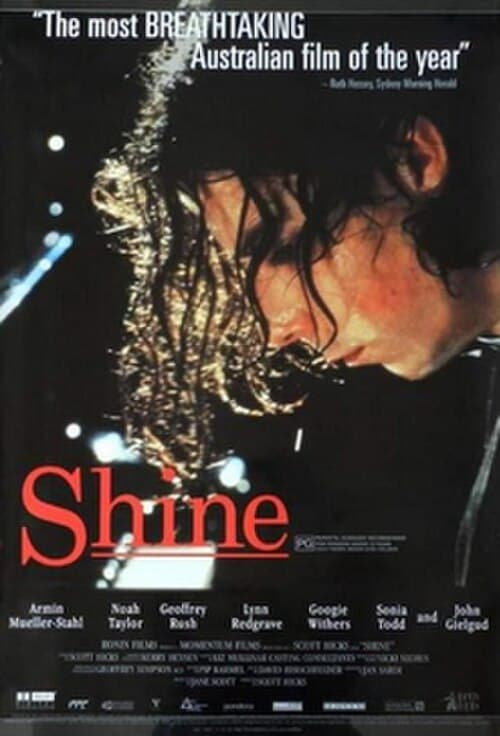
Shine and the score hiding under the Rachmaninoff
David Hirschfelder had to write original music that lives under the loudest warhorse in the piano repertoire, and the quiet writing is what carries the film.
Nigel Westlake smuggled a cathedral into a film about a pig
The score for Babe borrows its grandeur from a French organ symphony, and the trick tells you everything about how Nigel Westlake hears the relationship between small subjects and large feelings.
Every Australian film has a sound and most of them go unheard
This column has spent six years listening to what Australian cinema sounds like, and the answer keeps changing.