The score for How to Please a Woman plays it straight and the comedy plays better for it
The score refuses to wink at the premise, and that refusal is what lets the comedy land with dignity intact.

The easiest mistake a composer can make when scoring a comedy about sex is to let the music tell the audience it is okay to laugh. A winking pizzicato here, a cheeky woodwind figure there, the musical equivalent of an elbow in the ribs. The audience gets permission to treat the subject as a joke, the characters lose their dignity, and the comedy becomes smaller than it needs to be. The score for How to Please a Woman does not make this mistake. It plays the material straight, and the straightness is what lets the comedy work.
Renee Webster’s film stars Sally Phillips as Gina, a woman turning fifty in Fremantle who starts a business that pairs male cleaners with female clients, the cleaning being a front for something more intimate. The premise could be a punchline. The film refuses to treat it as one. Phillips plays Gina as a woman who has arrived at a practical solution to a genuine problem, and the film’s comedy comes not from the absurdity of the premise but from the recognisable awkwardness of women asking for what they want in a culture that has never made that easy.
The score, composed by Caitlin Yeo, takes its cue from this approach. It is warm, unhurried, and entirely sincere. There is not a single moment in the score where the music signals that the audience should find something funny. The comedy lands because the score treats it as drama, and the drama is real.
Fremantle as an acoustic space
One of the things I listen for in Australian film scores is whether the music sounds like the place the film is set. This is not about using didgeridoo for the outback or surf guitar for the coast, which are the lazy versions of the idea. It is about whether the score’s acoustic texture, its reverb, its warmth, its sense of physical space, corresponds to the environment on screen.
How to Please a Woman is set in Fremantle, and the score sounds like Fremantle. This is hard to explain in technical terms without it sounding like a stretch, but I will try. Fremantle is a warm city with low buildings and wide streets and a harbour that throws light back at you. The air is dry and bright. Yeo’s score has a similar quality: it is acoustically dry, with minimal reverb, recorded close, and the warmth comes not from effects but from the tonal qualities of the instruments themselves. Acoustic guitar, light percussion, strings that sit in a mid-range register without reaching for the heights. The sound is the temperature of the place.
Whether this was a conscious choice or an intuitive one does not matter much. What matters is that it works. The score grounds the film in a specific geography without illustrating it, and the grounding gives the comedy a physical reality that heightens rather than diminishes the humour. These are real women in a real town with real lives, and the music knows it.
The discipline of not winking
Comedy scoring has a long history of telling the audience what is funny, and the tradition is so entrenched that playing against it feels like a risk. The audience expects musical cues for comedy the way they expect a laugh track on a sitcom: not because they need it but because its absence is noticeable. When the score does not signal the joke, there is a beat of uncertainty, a moment where the audience has to decide for itself whether to laugh, and that decision is what makes the laughter real.
Yeo’s approach is to score the emotional truth of each scene rather than its comedic surface. When Gina is nervous, the music is nervous. When she is determined, the music is determined. When the situation is absurd, the music plays the human experience of being inside an absurd situation, which is not amusement but a combination of discomfort and exhilaration that comedy at its best understands.
This is harder than it sounds. Scoring comedy straight requires the composer to trust the performances, the writing, and the direction to deliver the laughs without musical assistance. It means writing a cue that could, in isolation, belong to a drama, and trusting that the context will make it funny. It means resisting the professional instinct to be helpful, to make the director’s job easier by underlining the comedy in the music. Yeo resists this instinct throughout, and the result is a score that dignifies its characters in a way that a more comedic approach would not.
The Australian comedy-score tradition
There is no established tradition of Australian comedy scoring in the way that there is an American one. The American model, developed over decades of studio comedy, tends towards the orchestral-comic: bright brass, snappy rhythms, Mancini-inflected sophistication. Australian comedies have never had the budgets for that approach, and the result is a more varied and, I would argue, more interesting landscape.
The best Australian comedy scores work by contrast. The score for The Castle (1997) is not particularly funny in itself; it is the sincerity of the music against the absurdity of the Kerrigans that produces the comedy. Muriel’s Wedding (1994) uses ABBA songs as an ironic counterpoint to Muriel’s fantasy life, but the original score underneath is gentle and sympathetic. In both cases, the comedy comes from the gap between how the music treats the characters and how the world treats them. The music takes them seriously. The world does not. The audience sees both and laughs, but the laughter has compassion in it.
How to Please a Woman belongs to this tradition. Yeo’s score takes Gina seriously, treats her business venture as a legitimate enterprise, scores her anxieties and ambitions with the same care a composer would bring to a straight drama. The comedy is produced by the film around the score rather than by the score itself, and this distinction is what separates comedy that respects its characters from comedy that uses them.
What playing it straight earns
The payoff comes in the film’s quieter scenes, the moments that are not comedy at all. When Gina confronts her own loneliness, when the women who are her clients reveal the depth of their need for connection, the score does not have to shift register. It is already there. Because Yeo has been scoring the drama all along, the emotional moments land without the tonal whiplash that comedies often suffer when they try to be serious for a scene. The music has been taking these women seriously from the opening frame, and when the film asks the audience to take them seriously too, the score has already built the foundation.
This is the reward for discipline. A score that winks at the comedy has nowhere to go when the film needs sincerity. A score that plays it straight has been building towards sincerity the entire time. Yeo plays it straight, and the comedy plays better for it, and the drama plays better for it, and the women at the centre of the film are served by music that understands them well enough to know that their story is not a joke.

Kieran writes about what films sound like. Played in a band that nearly got signed in 2012 and has been thinking about attack and decay ever since. Devoted to Warren Ellis, Amanda Brown, and the quiet work of sound editors nobody interviews.
MORE BY KIERAN BOUSTANY →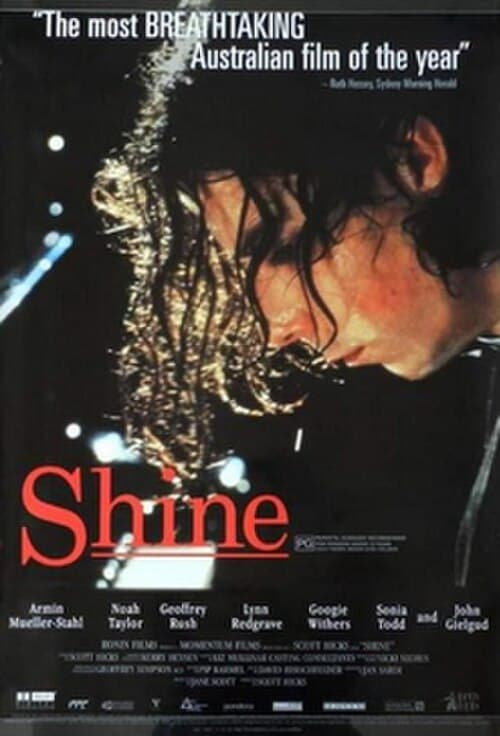
Shine and the score hiding under the Rachmaninoff
David Hirschfelder had to write original music that lives under the loudest warhorse in the piano repertoire, and the quiet writing is what carries the film.
Nigel Westlake smuggled a cathedral into a film about a pig
The score for Babe borrows its grandeur from a French organ symphony, and the trick tells you everything about how Nigel Westlake hears the relationship between small subjects and large feelings.
Every Australian film has a sound and most of them go unheard
This column has spent six years listening to what Australian cinema sounds like, and the answer keeps changing.