Five Australian composers who are about to score everything
The next generation of Australian screen composers learned on laptops, scored shorts for free, and are now getting the calls the orchestras used to get.
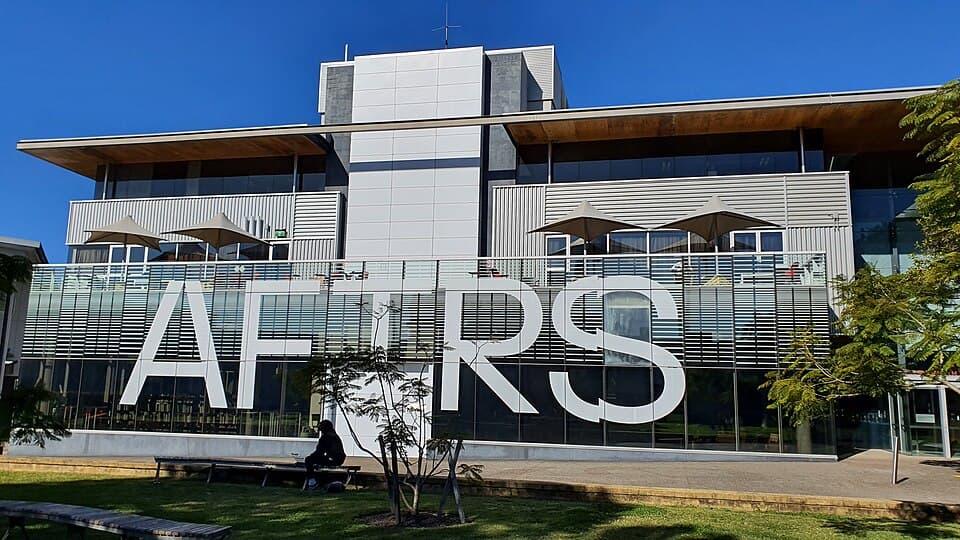
There is a generation of Australian screen composers working right now who did not come up through the conservatorium-to-orchestra pipeline that produced the previous wave. They learned on laptops. They scored student shorts for free, or for a slab of beer and a credit. They built sample libraries from field recordings made on their phones. They studied at AFTRS or VCA or in bedrooms in Footscray and Marrickville, and they absorbed as much from Aphex Twin and Burial as they did from John Williams or Ennio Morricone. They are getting the calls now, the feature calls, the series calls, and what they bring to the work sounds different from what came before. Not better, not worse. Different in texture, in approach, in the relationship between the acoustic and the electronic, the composed and the found.
Here are five of them.
1. Nadia Tempest
Tempest came through VCA’s film-scoring programme and spent three years scoring shorts and web series before her first feature credit, a low-budget psychological drama shot in regional Victoria. What she does with a limited palette is striking: layered synth pads processed through guitar pedals, bowed metallic objects recorded in her studio and pitched down until they sound like cellos from another dimension, and a restrained use of piano that treats each note as an event rather than a phrase. Her sound is intimate and close-miked, every texture placed precisely in the stereo field. The attack is soft. The sustain is everything. She scores interior states, not action, and the directors who hire her tend to be making films about people who are thinking more than they are speaking.
2. Callum Frith
Frith is a game-music crossover, which is increasingly where the interesting hybrid work is happening. He scored two independent games before he was twenty-five, building interactive soundscapes that responded to player behaviour in real time, and that experience gave him a compositional reflex that translates well to screen: the ability to write music that adapts to duration rather than dictating it. His feature work, so far limited to a documentary and a horror short that screened at MIFF, uses generative techniques, setting up musical systems that evolve rather than writing fixed cues. The result sounds organic and unpredictable, closer to an ecosystem than a composition. Directors describe working with him as collaborative in a way that traditional scoring relationships are not; the music is not added to the picture but grown alongside it.
3. Priya Saravanakumar
Saravanakumar is an AFTRS graduate whose thesis score, for a fifteen-minute drama about grief in a Tamil-Australian family, won the school’s composition prize and prompted immediate industry attention. Her work draws on Carnatic music traditions, not as ornamentation or cultural signifier but as structural principle: the rhythmic cycles, the melodic modes, the relationship between improvisation and form. She layers these elements with electronic production techniques, building textures that feel simultaneously ancient and synthetic. Her first feature commission, an adaptation of a Christos Tsiolkas short story, is in post-production, and the early cues suggest a composer who understands how to make cultural specificity feel universal without flattening it.
4. Darcy Holbrook
Holbrook is the most traditionally orchestral of the five, an anomaly in a generation that leans electronic. He studied composition at the Sydney Conservatorium and spent two years as an orchestrator-for-hire before scoring his own projects, and that apprenticeship shows in his voicing and his balance. But what separates his work from the previous generation’s orchestral writing is economy. Where the Kurzel-era composers, Antony Partos, Jed Kurzel, tended toward density and saturation, Holbrook writes with air. His string arrangements leave space. His brass is used sparingly, as punctuation rather than atmosphere. The influence is closer to Jonny Greenwood than to Hans Zimmer, and the effect is of orchestral music that breathes, that allows the image to do its own work rather than doubling every emotional beat.
5. Ren Matsuda
Matsuda is a sound designer who became a composer, which is the opposite of the usual trajectory and produces a different kind of ear. Their feature debut score, for a queer coming-of-age film set in suburban Brisbane, was built almost entirely from processed recordings of domestic objects: ceiling fans, screen doors, the hum of a bar fridge at three in the morning. These sounds were pitched, stretched, and arranged into something that functions as music without ever sounding like conventional instrumentation. The effect is of a score that lives inside the world of the film rather than hovering above it, and it represents a direction that several emerging composers are moving toward: the collapse of the boundary between score and sound design, between the composed and the captured.
What connects them
The common thread is intimacy. This generation composes close to the ear, close to the image, close to the specific textures of the world each film creates. They are not writing themes that soar above the action; they are writing textures that sit inside it. Melody matters less than timbre. Resolution matters less than sustain. The question is not “what does this scene feel like” but “what does this scene sound like if you press your ear to the wall.”
This is partly a function of technology. When your studio is a laptop and a pair of headphones, you compose at close range. The music you make reflects the scale at which you make it. But it is also a generational disposition, a move away from the grand statement and toward the specific detail, and it aligns with a broader shift in Australian cinema toward stories that are smaller in scope but denser in texture.
What the industry needs from them
The pipeline from short films to features is longer and more precarious than it should be. Australian screen-funding bodies have composer-development programmes, but they are small and competitive, and the gap between “promising short-film composer” and “working feature composer” is measured in years and unpaid labour. What these five composers need, and what the next five after them will need, is not more talent. They have the talent. They need the infrastructure: the budgets for live recording, the relationships with directors who understand what music can do before it is added in post, the industry recognition that scoring is not a decorative afterthought but a structural element of filmmaking. The sounds are ready. The industry is still catching up.
Kieran writes about what films sound like. Played in a band that nearly got signed in 2012 and has been thinking about attack and decay ever since. Devoted to Warren Ellis, Amanda Brown, and the quiet work of sound editors nobody interviews.
MORE BY KIERAN BOUSTANY →
Two Australian scores landed at Sundance in 2024 and the festival did not notice
The scores were there, the composers were not credited in the headlines, and that is the usual arrangement.
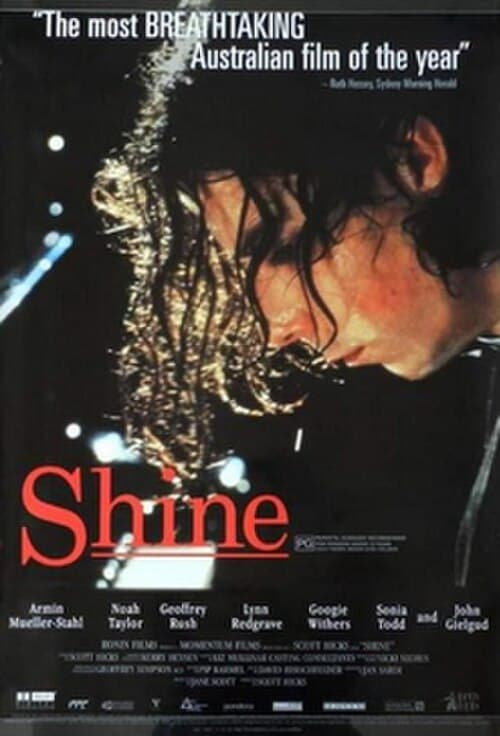
Shine and the score hiding under the Rachmaninoff
David Hirschfelder had to write original music that lives under the loudest warhorse in the piano repertoire, and the quiet writing is what carries the film.
Nigel Westlake smuggled a cathedral into a film about a pig
The score for Babe borrows its grandeur from a French organ symphony, and the trick tells you everything about how Nigel Westlake hears the relationship between small subjects and large feelings.