Rolf de Heer keeps handing the film to whoever gets left out
Across forty years Rolf de Heer never settled on a style, because his real signature was never visual; it was a decision about who gets to hold the camera.

The usual way to write about an auteur is to find the recurring shot, the signature the director cannot help repeating, and to trace it across the filmography like a watermark held up to the light. With Rolf de Heer this method fails almost immediately, and the failure is the most interesting thing about him. There is no de Heer shot. There is barely a de Heer style. What there is, running unbroken from the early features to the late ones, is a question the pictures keep asking about authorship itself: whose film is this, and who is usually kept out of the answer.
De Heer was born in the Netherlands and came to Australia as a child, and perhaps that displacement is why he never developed the proprietary relationship to a personal style that most directors treat as their brand. He made a science-fiction picture, Incident at Raven’s Gate, and a film in which Miles Davis acted and scored, Dingo; he made a near-silent slapstick comedy, Dr. Plonk, and a chamber horror, Alexandra’s Project. Placed side by side these look like the work of four different people, and in a sense they are, because de Heer builds a new technique for each film and then abandons it, refusing the accumulation of manner that lets a critic say the word “signature” and feel clever.
The method that hid the ethics
Bad Boy Bubby, in 1993, is where the method announced itself, though it took years for anyone to read it correctly. The picture was shot by thirty-two cinematographers, one for each location, so that no single eye would impose continuity on a character who had none; and the sound was recorded binaurally, from microphones fitted to the actor Nicholas Hope’s own head, so that the audience heard the world as Bubby heard it. It won at Venice and it disturbed everyone who saw it, and it was treated, then, as a provocation, a stunt of technique.
It was not a stunt. It was the first full statement of de Heer’s actual subject, which is point of view as a moral fact rather than a formal one. The binaural rig was not there to be clever. It was there to force an audience inside a consciousness the culture had discarded, and every important film he made afterward is a variation on that single act of transfer.
Handing over the pen
Watch what he does next, and the pattern stops looking like eccentricity and starts looking like a principle. Dance Me to My Song, in 1998, was written by and stars Heather Rose, a woman with severe cerebral palsy, playing a version of a life the screen had never once centred; de Heer did not make a film about disability, he made the conditions under which Rose could make a film about her own desire, and then stepped back far enough to let her. The register of the whole thing changes the moment you know the script is hers. It is not a director’s compassion. It is a director declining to be the author.
The lineage runs from there straight into the work he is now best remembered for. The Tracker, in 2002, gave David Gulpilil a role that reversed the frontier’s usual arrangement of power and set Archie Roach’s songs where a conventional score would sit. Ten Canoes, in 2006, went further than any Australian feature had gone: made with the community of Ramingining in Arnhem Land, spoken in Yolŋu Matha, co-directed with Peter Djigirr and narrated by Gulpilil, it was the first feature in an Australian Aboriginal language, and de Heer has always been careful to describe it as the community’s film that he helped to make, which is not false modesty but an accurate credit.
Charlie, and the second look
Charlie’s Country, in 2013, is the one to return to, because it is where the method and the friendship become the same thing. Gulpilil co-wrote it out of his own life, out of his own trouble, and de Heer built the picture around what the actor needed to say; Gulpilil took the acting prize in Un Certain Regard at Cannes for it, and the performance is really a collaboration in which the director’s contribution was, once again, to get out of the way with great precision. You cannot separate the authorship. That was the point of the exercise, and had been since the microphones in Bubby’s wig.
Gulpilil died in 2021, and it would have been reasonable for de Heer to stop there, the collaboration closed. Instead he made The Survival of Kindness, which premiered at the Berlinale in 2023, a nearly wordless film in which a Black woman, played by Mwajemi Hussein, is left in a cage in the desert and walks out of it through a landscape of plague and cruelty. Watched on its own it is austere to the point of forbidding. Watched as the last panel of this particular filmography, it is legible: a picture stripped of dialogue because dialogue would be one more thing the author imposed, handed almost entirely to a performer the industry would never have built a film around, asking its audience to occupy a consciousness the culture prefers to keep outside the frame.
That is the whole career, restated one final time. De Heer’s films do not look alike because looking alike was never the ambition. They are held together by a single repeated gesture, the giving away of the film, and it is the most consistent body of work in Australian cinema precisely because it refused to have a style you could point at and own.
Bronte writes long-form criticism of Australian cinema and the international art films that feed into it. She was on the ground at Cannes in 2019 and has not entirely forgiven the festival for 2020. Patient with slow films; impatient with tidy ones.
MORE BY BRONTE HAUGHEY →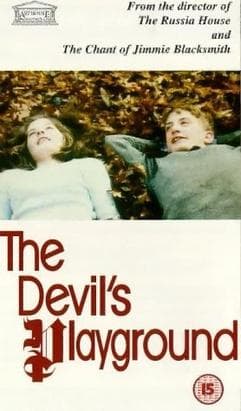
The Devil's Playground split its prize between a boy and a Brother
Fred Schepisi's juniorate drama opened fifty years ago last month, and the most accurate verdict it ever received was an acting award shared between a thirteen-year-old and a Brother.
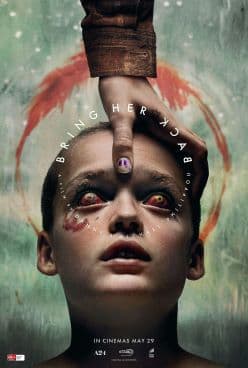
Bring Her Back builds its horror around what Piper cannot see
The Philippou brothers made a $15 million grief picture in the Adelaide suburbs and organised its entire visual scheme around a fourteen-year-old who can only see shapes.
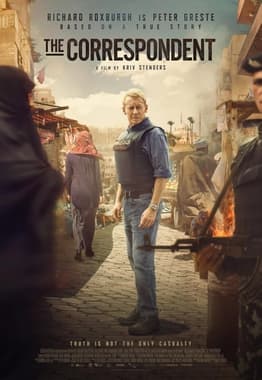
The Correspondent is a grief film wearing a prison film
Kriv Stenders built an Egyptian prison on a Sydney soundstage in six weeks, and the picture he made inside it is not about Egypt at all.