Cezary Skubiszewski has been scoring Australia's conscience for twenty years
From Jasper Jones to Breath to Go!, Skubiszewski scores the gap between what Australian characters say and what they cannot bring themselves to name.
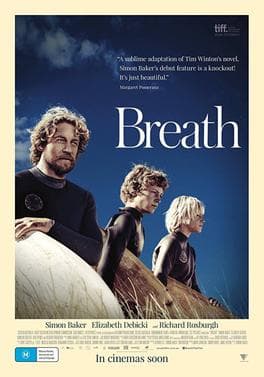
There is a sound in Cezary Skubiszewski’s work that I have never heard another Australian film composer achieve, and I have spent a long time trying to name it. It is not a texture or an instrument, though it often involves acoustic guitar played with a particular dryness, strings held just below the threshold of sentiment, and a rhythmic restraint that borders on refusal. It is closer to a temperature. His scores are warm but not comforting. They occupy the space between what a character is feeling and what a character is able to say about what they are feeling, and in Australian cinema that space is vast. Our films are full of people who cannot articulate their interior lives, men especially, and Skubiszewski has spent two decades scoring that silence without breaking it. The music does not speak for the character. It sits beside them, steady, present, holding the register open.
The guitar that knows too much
Jasper Jones (2017), directed by Rachel Perkins, is set in a small Western Australian town in the 1960s, and Skubiszewski’s score announces its intentions within the first few minutes. An acoustic guitar, fingerpicked, with a tone that is dry and close, as though recorded in a small room with the microphone inches from the soundhole. There is no reverb to speak of. No orchestral swell beneath it. The guitar exists in the same acoustic space as the cicadas and the screen doors and the distant sound of a car on a gravel road, and this integration is deliberate: the score does not sit above the world of the film but inside it, occupying the same air.
The story concerns Charlie Bucktin (Levi Miller), a bookish teenager drawn into a murder mystery by Jasper Jones (Aaron McGrath), an Indigenous boy who exists at the margins of the town’s social order. The film deals with racism, violence and the corrosion of small-town respectability, and Skubiszewski scores none of it directly. He does not underscore the racial tension. He does not amplify the violence. Instead he scores Charlie’s interiority, the widening gap between the boy’s understanding of the world and the world’s actual operations. The guitar cues appear when Charlie is alone, thinking, processing events he does not yet have the language for. The music carries the knowledge the character has not arrived at, and it carries it without announcement, without the kind of harmonic signal that tells the audience something important is happening. Something important is always happening in a Skubiszewski score. He just refuses to point at it.
Breath and the undertow
Simon Baker’s Breath (2017) is a film about surfing, adolescence and the pull of reckless men, adapted from Tim Winton’s novel of the same name. Skubiszewski’s score here is sparser than in Jasper Jones, built around sustained string textures and a piano that enters and exits without ceremony. The surfing sequences could have been scored with the kind of kinetic, pulse-driven music that action and sports films default to; instead, Skubiszewski strips the rhythm out entirely. The underwater shots are accompanied by long, held tones that emphasise the slowness beneath the wave’s violence, the eerie calm of being held under. There is no attack in these cues. Only sustain and decay.
What he captures in Breath is the particular intoxication of being young and in the presence of someone dangerous. Pikelet and Loonie, the two boys at the film’s centre, are drawn to Sando (Baker) because he offers them access to a version of masculinity that is thrilling and destructive in equal measure. Skubiszewski does not score Sando as dangerous. He scores the boys’ desire for danger, the seductive pull of risk, and he does it through harmonic ambiguity: chords that resolve in unexpected directions, melodic fragments that suggest arrival but defer it. The effect is a constant low-grade tension, a sonic undertow that mirrors the ocean’s.
Go! and the engine’s register
Go! (2020), directed by Owen Trevor, is a family film about go-kart racing, and it might seem like a departure from the weighted drama of Skubiszewski’s other work. It is not. The score operates in the same emotional territory, only the characters are younger and the stakes, while different, are no less real to the people experiencing them. Skubiszewski scores the racing sequences with an energy that never tips into the manic; there is propulsion, but it is controlled, shaped, every rhythmic accent placed with the same precision he brings to a held note in Breath. He understands that a racing film does not need music that tells you racing is exciting. Racing is already exciting. What it needs is music that tells you what racing means to the person in the seat.
The composer nobody mentions
Skubiszewski has scored dozens of Australian films and television series, including Red Dog (2011), Oddball (2015), Cleverman (2016-2017) and Blueback (2022). He has won multiple AACTA and Screen Music Awards. He is, by any metric, one of the most prolific and accomplished film composers working in this country. And yet his name rarely appears in the critical conversation about Australian film music, which tends to organise itself around figures whose work is more obviously distinctive: the Kurzel brothers’ abrasive collaborations, the electronic landscapes of Antony Partos, the orchestral ambitions of David Hirschfelder.
The reason, I think, is that Skubiszewski’s work is designed to be invisible. Not inaudible; his scores are present, often beautiful, sometimes piercing. But they do not draw attention to themselves as scores. They do not announce their own cleverness. They serve the film so completely that the seam between music and image disappears, and when the seam disappears the composer disappears with it. This is, in one sense, the highest praise a film composer can receive: to be so good that nobody notices. In another sense, it is the reason Skubiszewski does not get the recognition his body of work demands. He has been scoring the gap between what Australians say and what they feel for twenty years, and the gap is still there, and his music is still in it, steady, precise, warm without comfort, present without intrusion, holding the register open for characters who cannot hold it open for themselves.
Kieran writes about what films sound like. Played in a band that nearly got signed in 2012 and has been thinking about attack and decay ever since. Devoted to Warren Ellis, Amanda Brown, and the quiet work of sound editors nobody interviews.
MORE BY KIERAN BOUSTANY →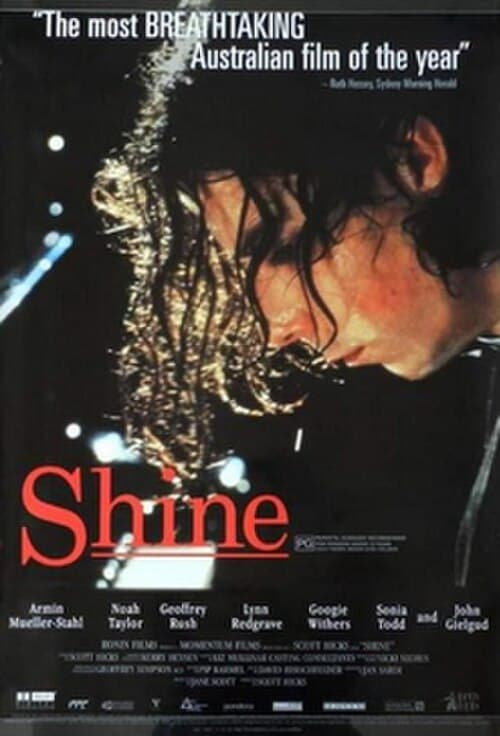
Shine and the score hiding under the Rachmaninoff
David Hirschfelder had to write original music that lives under the loudest warhorse in the piano repertoire, and the quiet writing is what carries the film.
Nigel Westlake smuggled a cathedral into a film about a pig
The score for Babe borrows its grandeur from a French organ symphony, and the trick tells you everything about how Nigel Westlake hears the relationship between small subjects and large feelings.
Every Australian film has a sound and most of them go unheard
This column has spent six years listening to what Australian cinema sounds like, and the answer keeps changing.