Cate Blanchett keeps one foot in Australia and Australian cinema keeps asking her to put it down
Blanchett produces Australian work, funds Australian stories, and has not starred in an Australian film in over a decade, and nobody quite knows how to talk about that.
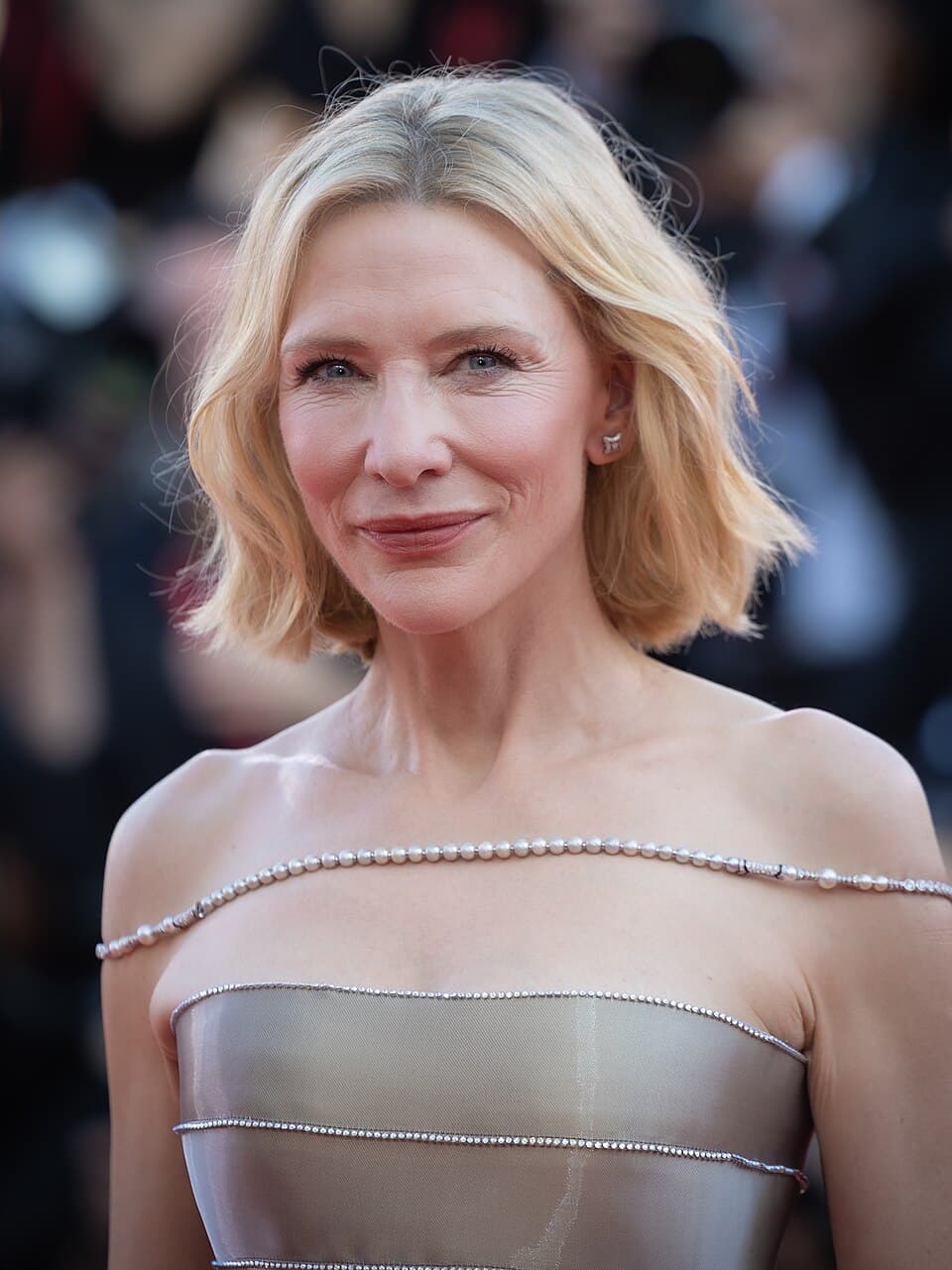
I want to say something careful about Cate Blanchett, and I am aware that the word “careful” is already a problem. The fact that you have to be careful when talking about an actor’s relationship to the country that made her is itself the interesting thing. Not the answer. The discomfort around the question.
Here is the question: when does an Australian actor stop being an Australian actor? Not legally, not in terms of citizenship or accent or where they keep their passport. I mean something softer and harder to pin down. At what point does the relationship between an actor and a national cinema become ceremonial rather than functional? And is that a failure, and if so, whose?
Blanchett grew up in Melbourne. She trained at NIDA. She did her time at the Sydney Theatre Company, years of stage work that built the instrument before the world heard it. Her early film career was Australian in the most practical sense: Oscar and Lucinda in 1997, playing opposite Ralph Fiennes in a Gillian Armstrong adaptation, and Thank God He Met Lizzie the following year, a small romantic comedy that nobody talks about now but which at the time was just another job for a working actor in a small industry. She was good. She was clearly going to leave. Everyone could see it. The question was only when.
The leaving
She left, and the leaving was not a departure so much as an expansion. Elizabeth in 1998, the Shekhar Kapur film, made her an international star essentially overnight. The trajectory from there is the trajectory: The Lord of the Rings, The Aviator, Babel, I’m Not There, Blue Jasmine, two Oscars, the whole architecture of a career that operates at a scale the Australian industry cannot provide. This is not a criticism. The Australian film industry produces, in a good year, maybe thirty features with theatrical releases. The budgets are small. The parts are limited. An actor of Blanchett’s range and ambition would have to actively choose to constrain herself in order to keep working primarily in Australian cinema, and nobody with any sense would ask her to do that.
And yet. There is a “yet” here, and it sits in the room every time Blanchett is invoked in conversations about Australian film, which is often. She is the name people reach for when they want to demonstrate that Australian cinema produces world-class talent. She and Nicole Kidman and Hugh Jackman and, more recently, Margot Robbie. The names function as evidence. Look what we made. Look where they went. The pride is real. But the pride is also, if you look at it directly, a pride in people who left. The proof that Australian cinema works is that its best people go somewhere else.
The producing question
Blanchett has not simply left. This is important and it complicates the story I am telling. She co-founded Dirty Films, her production company, and through it she has been involved in Australian projects in ways that do not require her to appear on screen. The most visible of these is Stateless, the 2020 series she co-created with Tony Ayres and Elise McCredie, which dealt with immigration detention and was shot in South Australia with a predominantly Australian cast. Blanchett executive-produced. She appeared briefly, in a supporting role. The series was released on ABC and then Netflix and it was significant work, politically sharp, structurally ambitious, the kind of project that demonstrates genuine engagement with Australian stories.
So the question becomes: is this enough? And I want to be honest about the fact that I find this question slightly repulsive, the entitlement buried inside it, the suggestion that an actor owes their home country a certain quantity of presence. Nobody asks this of plumbers who emigrate or software engineers who take jobs in San Francisco. The question is only asked of artists, and it is asked because we have decided that artists are supposed to represent something beyond themselves, that their bodies and voices are, in some sense, national property.
The comparison set
Look at the others. Nicole Kidman left Australia in the early 1990s and has returned sporadically, most notably for Baz Luhrmann’s Australia in 2008, a film that was supposed to be a statement about the nation and ended up being a statement about Baz Luhrmann. She has produced some Australian content through her company Blossom Films. But her creative life is American. Her working relationships are American. When she wins awards, Australia claims her. When she makes choices Australia does not understand, the claiming becomes quieter.
Hugh Jackman left and stayed warm. His relationship to Australia is performed with visible affection, the accent maintained, the references to Bondi and the beach, the sense of a man who chose Hollywood but kept his allegiance conspicuous. He has not starred in an Australian film since his career went international. Nobody seems to mind. The warmth covers the absence.
Margot Robbie built LuckyChap Entertainment and used it to produce I, Tonya and Barbie and a run of commercially successful films, none of which are Australian. She has spoken about wanting to make Australian work. She has not yet done so, or not in any substantial way. The wanting is noted. The not-doing is also noted, but gently.
Who belongs
What I mean is that the question of belonging is a question about use. When we say Blanchett “belongs” to Australian cinema, we mean we want to use her, her name, her prestige, her face on the poster, to make the case that our industry matters. And she does make that case, by existing, by having started here, by continuing to engage through production and occasional presence. But the case would be stronger if she were in the films. Not because producing is lesser work. Because the audience does not see the producer. The audience sees the actor, and when the actor is not there, the connection becomes abstract.
I saw Stateless when it aired. It was good. Yvonne Strahovski was excellent. Cate Blanchett appeared in flashback sequences and was, as always, precise and strange and fully present in every frame she occupied. But the frames were few. Her name was above the title and her face was in the marketing and her actual screen time was a fraction of the whole. The project was hers in the way that a building belongs to its architect: she designed it, she commissioned it, she does not live in it.
The distance that remains
I do not think Blanchett owes Australian cinema anything. I want to be clear about that. She trained here, she started here, she left, she succeeded beyond any reasonable expectation, and she has continued to engage with Australian stories through production in ways that are more substantial than most of her peers. She has put money and creative energy into work that would not exist without her involvement. This is not nothing. This is, in fact, a great deal.
But the distance remains, and the distance is felt, and the industry’s inability to talk about it honestly is its own kind of information. We cannot say “we wish she would come back and make a film here” because that sounds needy. We cannot say “her producing work is sufficient” because that sounds like settling. We cannot say “it does not matter” because it obviously does, or we would not keep bringing her up every time someone asks about the state of Australian cinema.
What I think is this: the fact that Australia’s most celebrated living actor has not starred in an Australian film in over a decade is not a personal failing. It is a structural one. The industry is too small, too underfunded, too precarious to offer roles that would justify her time, and the solution is not to guilt an individual actor into returning but to build an industry that gives people a reason to stay. Blanchett did not leave because she stopped caring about Australian cinema. She left because Australian cinema, as currently constituted, could not hold what she became. The foot is still here. The ground beneath it keeps shifting.

Mara writes essays. She came to film writing from a decade of literary criticism and still reaches, sometimes, for a novel before she reaches for a shot list. She lives in the inner north of Melbourne and does not explain which city that is.
MORE BY MARA DENG →
Australian actors keep coming home for horror films and voice roles and nobody has asked why
The biggest Australian actors return to local cinema for the roles Hollywood does not offer them, and the pattern says something about both industries.
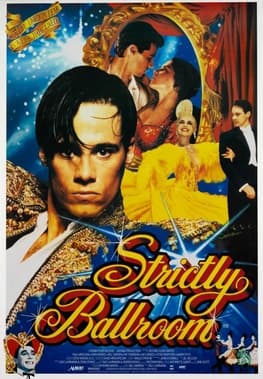
Strictly Ballroom is a film about who is allowed to teach the steps
Baz Luhrmann's 1992 comedy is sold as a story about dance. It is also a story about an Australian champion who has to be taught his own steps by a Spanish-Australian family in their own house.

Looking for Alibrandi was the first Australian story handed to me as mine
It was not my family's story. It was the shape of my family's story, put on a screen in a country that had never once bothered to hold it before.