Australian actors keep coming home for horror films and voice roles and nobody has asked why
The biggest Australian actors return to local cinema for the roles Hollywood does not offer them, and the pattern says something about both industries.
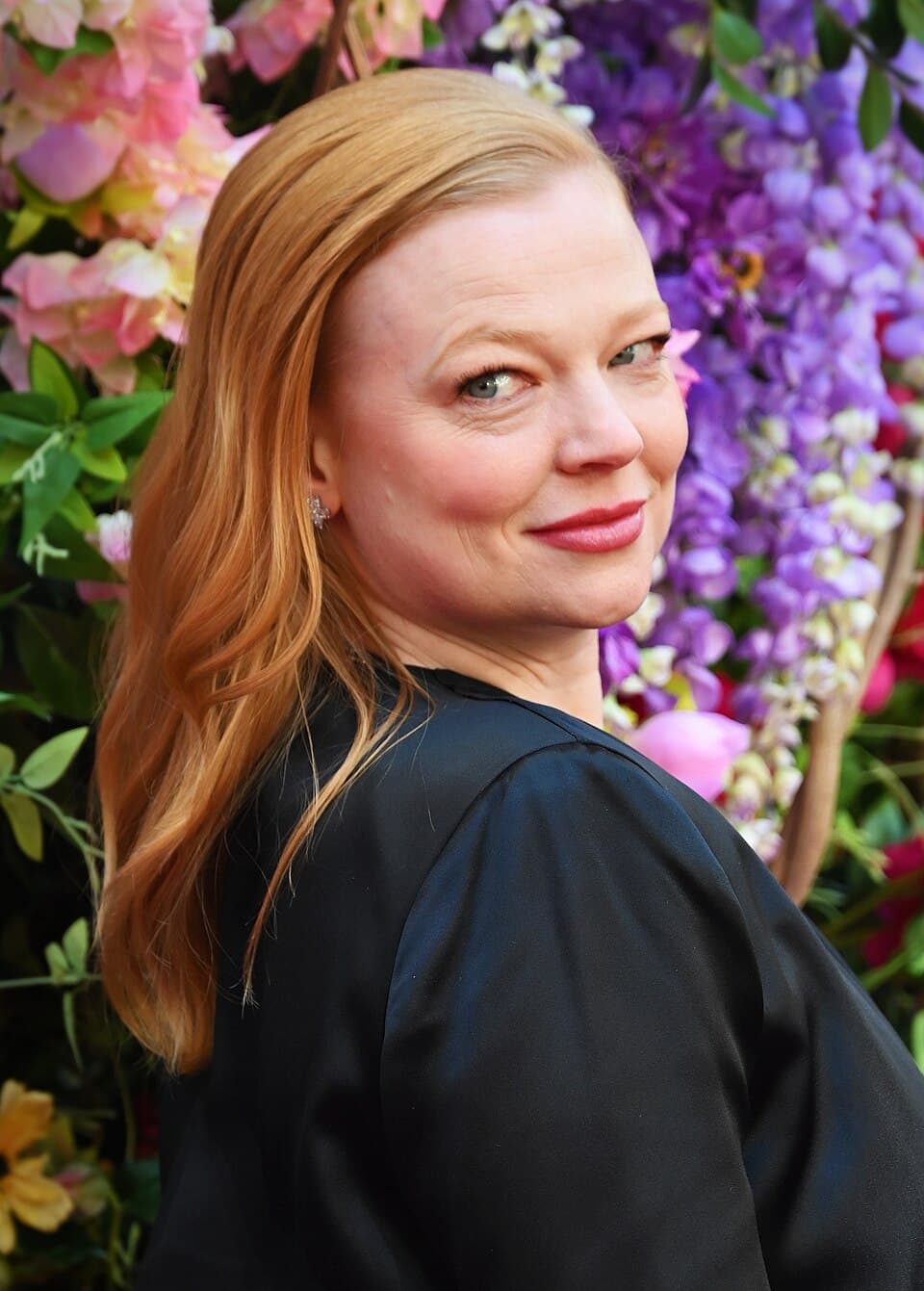
The pattern is there if you look for it, and once you see it you cannot stop seeing it. Australian actors leave. They go to Los Angeles or London or wherever the work is, and they build careers that are enormous by any measure, and then they come home. Not permanently. Not to stay. They come home to make a film, one film, sometimes two, and then they leave again. What is interesting is not that they come home but what they come home for. It is almost never the thing you would expect.
Sarah Snook came home for Run Rabbit Run, a horror film. She came home again, in a sense, for Memoir of a Snail, an animated feature where she provided the voice of a woman who hoards snail figurines in a cramped flat. Eric Bana came home for The Dry and its sequel Force of Nature: The Dry 2, both genre films, both based on bestselling novels, both built around a detective character rather than the kind of complex dramatic work he had done with Ang Lee or Ridley Scott. Nicole Kidman came home for Nine Perfect Strangers, filmed at a resort in Byron Bay, a television series adapted from a Liane Moriarty novel, a project that was less a film than a working holiday with a Hulu deal attached. Cate Blanchett came back as a producer for Stateless, a series about immigration detention, a project driven by political conviction rather than the kind of role that would normally require her presence.
I want to say the pattern is simple, but what I mean is the pattern is legible. They come home for horror. They come home for voice work. They come home for genre. They come home for projects where their name is the engine but the budget is small and the shooting schedule is short. They do not come home for the mid-budget dramas that the Australian industry actually needs star power to finance.
The economics of a familiar face
This is where it gets uncomfortable, because the economics are not complicated. A mid-budget Australian drama costs between five and fifteen million dollars. Screen Australia will fund a portion. State agencies will contribute. A distributor might put in money if the cast is strong enough. But “strong enough” in Australian financing terms means a name that a television network or a streaming platform will pay for, and the names that carry that weight are the names that live in Los Angeles now, and the names that live in Los Angeles are not available for the eight to twelve weeks that a mid-budget drama requires.
Horror shoots fast. Three to five weeks, often less. Voice work can be done in a studio in a single day. A limited series for a streamer has the budget to pay an international rate and the flexibility to schedule around other commitments. These are the projects that fit into the gaps in a Hollywood schedule, the breaks between press tours and studio pictures and the kind of commitments that generate the income that makes a career in Los Angeles sustainable.
So the homecoming, when it happens, is shaped by logistics as much as by sentiment. The actor wants to come back. The industry wants them back. But the only projects that can accommodate a global schedule are the ones that demand the least time, and this structural constraint determines what gets made with Australian stars in Australian films, which is genre work and voice roles and limited series and not much else.
What Hollywood does not offer
There is another reading of the pattern, and I think it is equally true, and I think it coexists with the economic reading without contradicting it. The roles these actors take when they come home are roles that Hollywood does not offer them.
Snook’s performance in Run Rabbit Run is a psychological horror performance rooted in specifically Australian anxieties: a woman alone in a house in regional Victoria, a dead mother, a daughter who may or may not be channelling something, a landscape that is flat and empty and indifferent. This is not a role that exists in the American system. It is too small, too specific, too dependent on a particular geography and a particular kind of silence. Her voice work in Memoir of a Snail is even more particular: a Melbourne woman, working class, isolated, hoarding as a form of grief management. No American studio would develop this character. It exists only in Australian animation, and Snook gave it her voice because it was a kind of work she could not do anywhere else.
Bana’s detective in The Dry is a recognisably Australian figure: quiet, competent, carrying trauma he will not discuss, moving through country towns where everyone knows what happened and nobody wants to say it. He has said in interviews that the role felt like coming home in a way that went beyond geography, that it was a return to a kind of character and a kind of storytelling that his Hollywood career had moved away from.
Blanchett’s involvement with Stateless is different again. She was not acting. She was producing, using her name and her access to get a story about immigration detention made and distributed internationally. This is homecoming as political act, using the currency earned abroad to fund the work that matters at home.
The gap in the middle
What none of these projects represent is the film that Australian cinema has always struggled to make: the mid-budget, character-driven drama with production values high enough to compete theatrically, a star recognisable enough to sell it, and a story specific enough to justify being Australian. Films like Lantana or Shine or Rabbit-Proof Fence, films that were expensive enough to look like real cinema and Australian enough to mean something and successful enough to prove the model viable. Those films barely get made anymore, and the absence of returning stars is both a symptom and a cause.
The stars cannot come home for those films because those films take too long to shoot and pay too little. Those films cannot get financed without stars because the financing models depend on attachable names. And so the mid-budget space hollows out, and the industry bifurcates into low-budget genre work that can accommodate a star for three weeks and high-end streaming content funded by American money that treats Australia as a location rather than a culture.
Working holiday or genuine return
I keep circling the question that I suspect is impolite to ask directly, so I will ask it here: is coming home a genuine creative choice or is it a working holiday? And I think the honest answer is that it is both, and that the both-ness is the point. These actors love Australian cinema. They talk about it with warmth and specificity and evident knowledge. They grew up in it. They were trained in it. They owe their careers to it. When they come home, the affection is real.
But the affection operates within constraints that are also real. The schedules are tight. The budgets are small. The projects are chosen, at least in part, for their compatibility with a life lived elsewhere. The homecoming is sincere and it is also partial, and the partiality is not the actor’s fault. It is the shape of an industry that cannot hold its biggest talents for long enough to make the films that would benefit most from their presence.
What I want, and what I suspect the industry wants, is for the homecoming to be longer. Not permanent. Nobody is asking anyone to leave Los Angeles. But long enough to make something that is not a horror film or a voice role or a three-week shoot. Long enough to make something that requires the full weight of a performance over months, something that could not exist without that particular actor in that particular landscape for that particular duration. The talent is there. The desire is there. The time is not. And in Australian cinema, the time is always the thing that runs out first.

Mara writes essays. She came to film writing from a decade of literary criticism and still reaches, sometimes, for a novel before she reaches for a shot list. She lives in the inner north of Melbourne and does not explain which city that is.
MORE BY MARA DENG →
Cate Blanchett keeps one foot in Australia and Australian cinema keeps asking her to put it down
Blanchett produces Australian work, funds Australian stories, and has not starred in an Australian film in over a decade, and nobody quite knows how to talk about that.
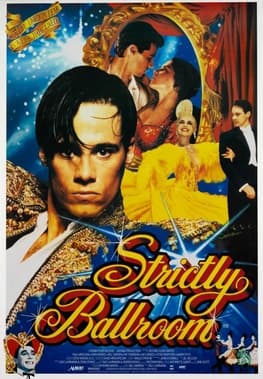
Strictly Ballroom is a film about who is allowed to teach the steps
Baz Luhrmann's 1992 comedy is sold as a story about dance. It is also a story about an Australian champion who has to be taught his own steps by a Spanish-Australian family in their own house.

Looking for Alibrandi was the first Australian story handed to me as mine
It was not my family's story. It was the shape of my family's story, put on a screen in a country that had never once bothered to hold it before.