Bump is the most honest show about Western Sydney and nobody outside Bankstown knows it exists
A show about a teenage pregnancy in Bankstown should not be this funny, this specific, or this invisible to the broader Australian audience.
The elevator pitch for Bump sounds like the setup for a show you have seen before. A high-achieving teenage girl gets pregnant, does not know how it happened (she does, she just was not paying attention), and must navigate the consequences while her family falls apart in complementary directions. You have seen this show. You have seen it set in American suburbs and English council estates and, once, memorably, in Juno’s living room. You have not seen it set in Bankstown, and that turns out to be the detail that changes everything.
Bump, which premiered on Stan in January 2021 and has run for three seasons, is created by Claudia Karvan and Kelsey Munro. It follows Olympia “Oly” Chalmers-Davis (Nathalie Morris), a year eleven student at a selective high school in Sydney’s southwest, who gives birth to a baby she did not know she was carrying. The father is Santiago “Santi” Hernandez (Carlos Sanson Jr.), a classmate she barely knew before the pregnancy and must now co-parent with despite having approximately nothing in common beyond the child.
That is the premise. What the show does with the premise is something else entirely.
Bankstown without the postcard
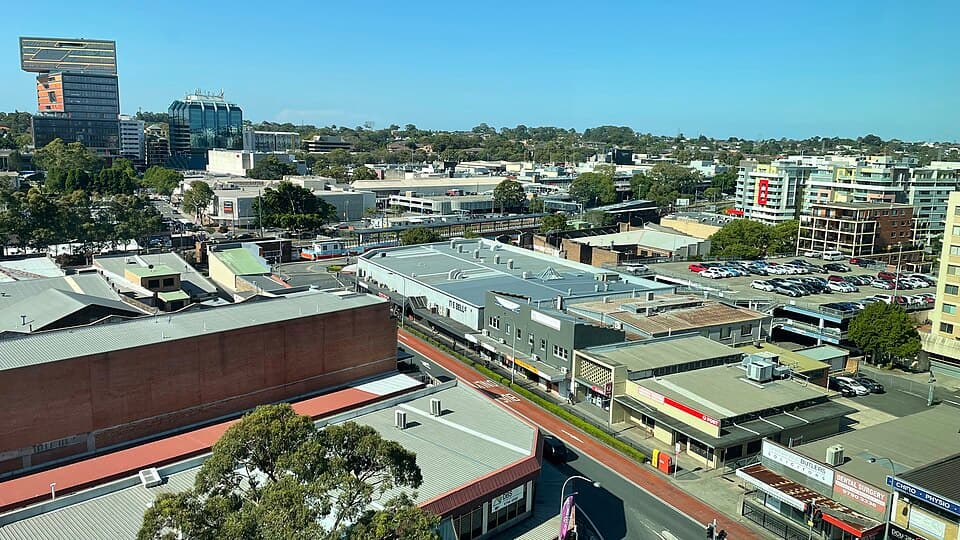
The first thing you notice is the setting. Bump is set in and around Bankstown, and it is not interested in explaining Bankstown to you. The streets, the shops, the train station, the specific quality of light that hits Canterbury Road at four in the afternoon: these are not establishing shots. They are the world the characters live in, presented without commentary or contextualisation, and if you do not know what a Bankstown kebab shop looks like at 11pm on a Friday, the show is not going to hold your hand.
This is rarer than it should be. Australian television has a long tradition of setting shows in suburbs and then treating the suburb as set dressing. Bump treats Bankstown as a character, not in the tedious “the city is the real star” sense, but in the sense that the suburb shapes how these people move, eat, argue, and raise children. Oly’s family home is on a quiet street. Santi’s family runs a restaurant. The distance between the two houses is walkable, which matters for the plot and also for the texture of the show. These are people who run into each other at Woolworths.
Multiculturalism as furniture
The cast of Bump is one of the most diverse on Australian television. Oly is Anglo-Australian. Santi is Chilean-Australian. The supporting cast includes characters who are Lebanese-Australian, Vietnamese-Australian, Tongan-Australian, and several other combinations that the show never pauses to label. This is the detail that matters most: the multiculturalism is not the subject. Nobody delivers a monologue about identity. Nobody explains their heritage to a white character who functions as an audience surrogate. The cultural specificity is just there, the way it is just there in Western Sydney, as furniture rather than theme.
Santi’s mother, Matilde (Claudia Karvan, who also created the show and knows exactly what she is doing), is a Chilean immigrant whose relationship with her son is shaped by expectations the show trusts you to understand without exposition. The Hernandez family scenes are partly in Spanish. Nobody translates. You follow the emotion, the way you follow emotion in real life when you are at someone else’s family dinner and you do not speak the language.
The contrast with most Australian screen depictions of multicultural communities is stark. Look at how Neighbours handled diversity for three decades (badly, then belatedly, then it was cancelled). Look at how Australian film tends to approach non-Anglo characters (as subjects of social-issue dramas, rarely as protagonists of comedies). Bump does not approach its diversity. It simply has it, and moves on to the business of being funny and sad and chaotic.
Nathalie Morris carries it
Morris was nineteen when the first season aired, and her performance as Oly is the structural foundation the show is built on. Oly is smart, selfish, overwhelmed, funny, and occasionally terrible. She is not a sympathetic teenager in the prestige-drama mould, where “sympathetic” means “suffering beautifully.” She is a real teenager, which means she makes bad decisions for comprehensible reasons and does not learn from them at the pace the audience might prefer.
The show does not moralise about teen pregnancy. It does not present Oly’s situation as a tragedy or a blessing or a lesson. It presents it as a thing that happened, and then it follows what happens next with a level of practical detail that suggests the writers have either lived through this or talked extensively to people who have. The baby needs to be fed at 3am. The baby’s parents need to study for the HSC. These two facts are in direct conflict, and the show mines the conflict for comedy and for truth in roughly equal measure.
The Stan problem
Here is the part that is frustrating. Bump is one of the best Australian shows of the last five years, and its audience is a fraction of what it would be on a free-to-air network or even on a larger streaming platform. Stan’s subscriber base, while growing, is significantly smaller than Netflix’s Australian footprint, and Stan’s algorithm is less aggressive about surfacing local content to uncommitted browsers. The result is that Bump exists in a strange middle ground: well-reviewed, award-nominated, and functionally invisible to the majority of Australian viewers.
This is not unique to Bump. The Heights, a similarly under-seen suburban drama that aired on ABC in 2019 and 2020, had a comparable problem. Set in a fictional social housing tower in Perth, The Heights shared Bump’s commitment to multicultural casting and suburban specificity, and it shared Bump’s fate: praised by everyone who saw it, seen by not enough people. Both shows demonstrate that Australian television can do this, can tell stories about the suburbs where most Australians actually live, with casts that look like those suburbs, without turning the whole thing into a social studies lecture.
What disappearing looks like
Bump finished its third and final season in 2023. There has been no announcement of a fourth. The show will remain on Stan, accessible to subscribers who already know it exists, and it will gradually settle into the platform’s back catalogue, where it will be recommended to nobody and discovered by accident.
This is the lifecycle of a great Australian show on a mid-sized platform. It premieres, it is reviewed positively, it wins or is nominated for an AACTA or two, and then it disappears. Not dramatically, not in a blaze of cancellation controversy, but quietly, the way most things in Australian television disappear: by simply not being renewed, and nobody outside the industry noticing.
The shame of it is that Bump did something genuinely difficult. It made a show about Western Sydney that felt like Western Sydney, that was funny without being patronising, specific without being exclusionary, and honest about the mess of young parenthood without ever turning preachy. It did all of that, and most Australians will never know it existed. Honestly, that tells you more about the state of Australian television than any ratings report could.
Rhys watches more television than is healthy and writes about it with a dryness that tips occasionally into cruelty. His favourite ABC drama is the one the ABC just cancelled, whichever that happens to be.
MORE BY RHYS TAVITA →
Under the Vines is a postcard from New Zealand that Australia co-signed
Rebecca Gibney and Charles Edwards inherit a vineyard in Central Otago, and the show knows that the landscape is doing most of the acting.
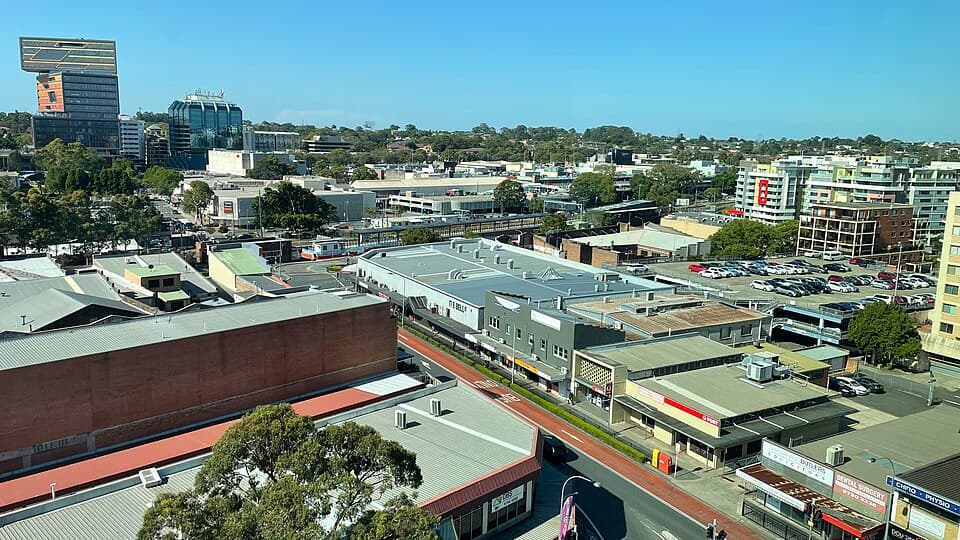
Bump dropped a baby into Bankstown and did not explain itself
Stan's teen pregnancy comedy set in Western Sydney treats its multicultural cast as furniture rather than subject matter, and that is the most radical thing about it.
Stan made a great Australian road comedy and told nobody
Dylan River directed all eight episodes of a stolen-taxi comedy set in the 1980s outback, and it went out on Stan with roughly the fanfare of a software update.