Boy Swallows Universe soundtracks Brisbane in the 1980s with precision and one deliberate lie
The needle drops are forensically accurate to 1985 Brisbane except for the one song that is not, and that exception tells you everything about what the show thinks nostalgia is for.
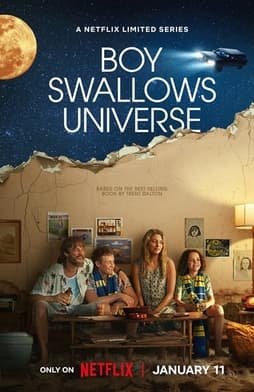
The music in Boy Swallows Universe arrives the way music arrives in memory: not as a playlist but as an atmosphere, a thickness in the air that is half sound and half temperature. The show is set in 1985, in the outer suburbs of Brisbane, and the needle drops are chosen with a specificity that borders on the forensic. These are not the greatest hits of the 1980s. These are the songs that were playing on 4KQ and Triple Zed and in the front bars of pubs in Darra and Oxley and Inala, the songs that leaked out of car windows and clock radios and the portable cassette players that teenagers carried like weapons. The distinction matters. A period soundtrack that reaches for the decade’s biggest singles tells you what the era sounded like to a marketer. A period soundtrack that reaches for the songs that were actually in the room tells you what the era felt like to the people living in it.
The show’s music supervision, led by Jemma Burns, operates with this principle consistently. The Australian pub-rock selections are impeccable: Cold Chisel, The Angels, Midnight Oil in their pre-fame incarnation, INXS before Kick turned them into an international product. These are bands that in 1985 were still playing RSL clubs and university bars and the kind of venues where the carpet stuck to your shoes and the PA was a suggestion rather than a system. The songs are placed not as commentary but as furniture. They occupy the space the way a couch occupies a room: present, functional, shaping the dimensions of the scene without demanding attention. A Cold Chisel track plays on a car radio during a driving scene and nobody in the car reacts to it, because in 1985 in Brisbane Cold Chisel on the radio was not an event. It was the weather.
The sub-bass of the suburbs
Beneath the needle drops, the show’s original score, composed by Antony Partos, performs a different function entirely. Where the songs anchor the picture in a specific time and place, the score exists outside time. It is atmospheric, textural, built from sustained synthesiser pads and processed strings that hover beneath the dialogue like groundwater. The attack is slow. The decay is indefinite. The score does not resolve; it pools.
This is a smart decision because the show contains at least three different registers, the crime narrative, the childhood narrative, and the magical-realist narrative, and each demands a different sonic treatment. The needle drops handle the first two: the pub rock and the radio pop situate us in a world of concrete driveways and fibro houses and the specific violence that circulates through working-class communities when the drug economy intersects with domestic life. The score handles the third. When Eli sees words traced in the air by his brother August, when the red phone rings with messages from a future that may or may not be literal, the score shifts into a register that is neither realistic nor fantastical but suspended, held in the space between what happened and what Eli believes happened. The synthesiser textures become warmer, rounder, less defined. The harmonic movement slows to near-stasis. The sound tells you that you have left the world of pubs and car radios and entered a world governed by a different set of laws, and it does so without spectacle, without a shift in volume, without any of the orchestral signalling that usually accompanies the transition from realism to something else.
INXS and the sound of leaving
The use of INXS is worth isolating because it carries a weight that the other needle drops do not. In 1985, INXS were on the verge. Listen Like Thieves had just been released; Kick was two years away; Michael Hutchence was still a local phenomenon rather than an international one. The show places early INXS tracks at moments of transition, scenes where characters are about to move from one state to another, and the choice is loaded with a knowledge that the characters themselves do not possess. We know what happened to INXS. We know what happened to Hutchence. The songs carry a future the characters cannot see, and this dramatic irony is not played for sentimentality but for tension. The music sounds like possibility. It sounds like the specific late-night energy of a city that has not yet become what it is going to become. Brisbane in 1985 was a city under Joh Bjelke-Petersen, corrupt, repressive, subtropical, bored. The music promised that something else was coming, and the promise was true, but the something else was not what anyone expected.
The deliberate lie
There is one needle drop in the show that does not belong to 1985. I will not name the track because the discovery is part of the experience, but it is a song released several years after the period the show is set in, placed in a scene of emotional climax with full awareness that it is anachronistic. The show does not flag the error. It does not wink at the audience. It simply plays the wrong song at the right moment and trusts that the emotional logic will override the chronological logic.
This is a statement about what the show thinks nostalgia is for. The forensic accuracy of the other needle drops establishes a contract with the audience: we are in 1985, these are the sounds of 1985, trust us. The single anachronism breaks that contract deliberately, and the break tells you that the show’s real subject is not 1985 but the act of remembering 1985, which is a process that does not respect chronology. Memory borrows from the future. Memory inserts songs that were not playing yet into rooms where they could not have been heard. Memory is accurate in its textures and dishonest in its details, and the show’s one deliberate lie is an acknowledgment that the soundtrack is not a historical document but an emotional one, shaped by everything Eli learned after the fact, coloured by knowledge he did not have at the time.
What the music holds together
The relationship between the needle drops and the score is the relationship between the show’s two impulses: to be specific and to be strange. The songs are specific. They pin the story to a place and a moment with a precision that resists generalisation. The score is strange. It lifts the story out of its period trappings and into a register where time folds, where a ringing phone can carry a message from the future, where a boy’s silence can spell words in the air. Neither element would work without the other. The songs without the score would produce a period drama, competent and contained. The score without the songs would produce something unmoored, atmospheric but locationless. Together they build a Brisbane that is both real and remembered, both documented and dreamed, and the tension between those two states is the sound the show is actually making, beneath the pub rock, beneath the synths, beneath everything. It is the sound of a place being held in mind by someone who left it and cannot stop listening back.
Kieran writes about what films sound like. Played in a band that nearly got signed in 2012 and has been thinking about attack and decay ever since. Devoted to Warren Ellis, Amanda Brown, and the quiet work of sound editors nobody interviews.
MORE BY KIERAN BOUSTANY →
The Deadloch soundtrack freezes the crime scene and then plays indie rock over it
The needle drops are cold, the score is colder, and the temperature is the joke.
Baz Luhrmann uses music the way other directors use architecture
The soundtrack is not accompaniment; it is the load-bearing wall of every scene Luhrmann builds.
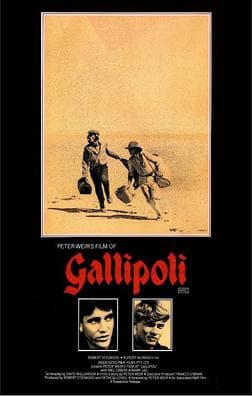
Gallipoli and the two pieces of music that are not Australian
Peter Weir's 1981 war film has no composed score to speak of. It has a French synthesiser record and a baroque lament, and between them they say everything the picture needs.