Australian sound designers do the work nobody hears and that is the whole point
The best sound work in Australian film is designed to be invisible, which makes it the hardest craft to praise and the easiest to overlook.
There is a scene in Relic where Emily Mortimer’s character enters a house that has been empty for days. You hear the house before you see much of it. The creak of a floorboard that is slightly too resonant. The hum of a fridge that sounds like it is running on its last season of compressor life. A dripping tap, not rhythmic, not stylised into a horror cue, just dripping the way taps drip in houses where nobody has tightened the washer. Every one of these sounds was placed there by a human being sitting at a desk with headphones on, and the highest compliment anyone can pay that human being is to say they did not notice.
This is the condition of sound design in Australian cinema. The work is superb. The recognition is minimal. The craft exists in a permanent state of professional paradox: the better it is done, the less visible it becomes, and the less visible it becomes, the harder it is to celebrate. The AACTA Awards hand out a trophy for Best Sound each year, and the acceptance speeches are given to a room that has already started thinking about Best Picture.
The invisible architecture
Sound design in film is divided into layers that the audience is not meant to distinguish. Dialogue editing: the process of cleaning, smoothing, and occasionally replacing every spoken word so that it sounds as though it was captured perfectly on set, even when it was not. Foley: the reproduction of physical sounds, footsteps, fabric movement, the clink of a glass set down on a table, performed in a studio by artists who watch the picture and move in sync with it. Atmospheres: the ambient beds that tell your ear where you are before your eye has fully resolved the image. And the mix itself, the Atmos or 5.1 or stereo balance that determines how all of these elements sit in relation to each other and to the score.
Australian post-production houses have been doing this work at a global standard for decades. Soundfirm, founded in Melbourne in 1977, has mixed everything from Mad Max: Fury Road to Hacksaw Ridge to Lion. Spectrum Films in Sydney has handled sound for The Babadook, Animal Kingdom, and a long list of international co-productions. These facilities compete with London and Los Angeles on technical capability, and they do it with smaller teams and tighter budgets, which is either a testament to efficiency or an indictment of how the industry values the discipline, depending on who you ask.
The recent films
The sound work in recent Australian productions has been consistently extraordinary in its refusal to draw attention to itself. Nitram, Justin Kurzel’s film about the events preceding the Port Arthur massacre, uses sound to establish the mundane textures of suburban Hobart: lawnmowers, television sets, the particular acoustic quality of a fibro house. The sound team, led by Robert Mackenzie, builds a world that is oppressively ordinary, and the ordinariness is the point. When the film’s final act arrives, the sound does not escalate into spectacle. It remains grounded in the real, and the gap between the banality of the soundscape and the horror of what is occurring within it is where the film finds its most devastating register.
The Nightingale, Jennifer Kent’s second feature, required a different discipline entirely. The Tasmanian wilderness of the 1820s has no recorded reference. The sound team had to build a colonial soundscape from research and imagination: the specific birdcalls of old-growth Tasmanian forest, the acoustics of convict-era structures, the difference in sonic texture between cleared land and dense bush. The result is a film that sounds historical without sounding like a period piece, a distinction that is easier to feel than to articulate.
Talk to Me, the Philippou brothers’ horror debut, uses sound design as a primary scare mechanism. The possession sequences are built on layered vocal processing and subharmonic bass that operates below the threshold of conscious hearing. You feel the sound in your sternum before you register it as sound, and the foley in the domestic scenes, the clatter of a kitchen, the thud of a body against furniture, is deliberately rough-edged, unpolished in a way that makes the horror feel proximate rather than cinematic. The sound team understood that the film’s power came from making the supernatural feel like it was happening in a real house, and they built their mix accordingly.
Why it stays invisible
The reason sound design remains the least discussed technical discipline is not neglect, exactly. It is structural. Critics do not have the vocabulary for it. Audiences do not have the frame of reference. A cinematographer’s work is visible; you can point at a shot and say “that is beautiful” and everyone knows what you mean. A sound designer’s work is felt, processed below the level of language, and the difficulty of translating that felt experience into critical praise means that the craft review tends to default to a single adjective: “immersive.” Which is true and also useless, the way calling a meal “tasty” is true and also useless.
The foley artists, the dialogue editors, the re-recording mixers who sit in dark rooms for weeks calibrating the relationship between a footstep and a score cue: these are people whose professional ambition is to be inaudible, to do work so precise that it disappears into the experience of watching a film. They succeed constantly, across dozens of Australian productions every year, and the success is its own erasure. The room has already moved on to Best Picture. The tap keeps dripping. Nobody tightened the washer, and nobody was supposed to notice, and that is the whole point.
Kieran writes about what films sound like. Played in a band that nearly got signed in 2012 and has been thinking about attack and decay ever since. Devoted to Warren Ellis, Amanda Brown, and the quiet work of sound editors nobody interviews.
MORE BY KIERAN BOUSTANY →
Every Australian film has a sound and most of them go unheard
This column has spent six years listening to what Australian cinema sounds like, and the answer keeps changing.
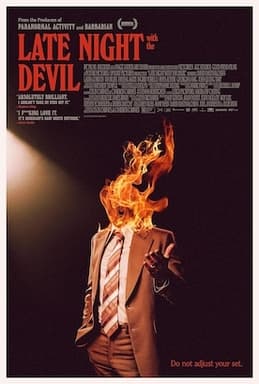
Late Night with the Devil designed its horror in the hiss of a live broadcast
The sound design recreates 1977 television so precisely that the horror arrives in the frequencies you forgot existed.
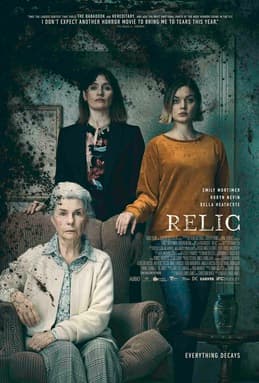
Relic lets the house do the talking
The house in Relic creaks, drips, and breathes on a frequency that sits just below the one you can name.