Every Australian true-crime adaptation asks permission from the audience and not from the dead
We keep making films about real violence and calling it necessary, and the question of who benefits has not been answered.
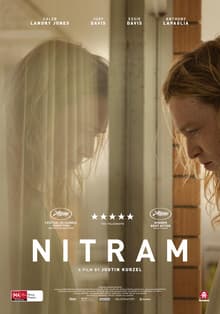
I watched Nitram in a cinema in Newtown on a Tuesday afternoon, surrounded by maybe fifteen other people, all of us sitting in the particular silence that means nobody is sure whether they are doing the right thing by being there. The film had already generated its controversy. Tasmanian politicians had condemned it. Survivors and victims’ families had asked, some publicly and some through lawyers, for it not to be made. The Tasmanian government refused to support the production. And here I was, buying a ticket, sitting in the dark, watching Caleb Landry Jones inhabit a version of a man whose name the state of Tasmania has spent decades trying not to say. I want to be clear about what I felt, because I think the feeling is the point: I thought the film was extraordinary, and I was not sure I should have been allowed to see it.
This is the problem. Not whether Nitram is good. It is good. Justin Kurzel directed it with the same controlled dread he brought to Snowtown, the camera always slightly too close, the colour always slightly wrong, the sound design tuned to a frequency that makes your shoulders climb toward your ears. Shaun Grant’s screenplay refuses spectacle. The violence, when it comes, is handled with a restraint that borders on refusal, and for this the film was praised, and the praise was deserved. But “restraint” is a formal quality. It describes what the filmmakers chose not to show. It does not answer the question of whether the film should exist.
The permission nobody gave
What I mean is this. Nitram takes the worst thing that ever happened to Tasmania and converts it into a narrative about one man’s disintegration. The conversion is skilful. The conversion is also, by its nature, a simplification. A mass killing becomes a character study. Thirty-five deaths become the context for a performance. The victims’ suffering is present in the film only as an absence, as the thing the film keeps off screen, and this formal choice has been called respectful, sensitive, necessary. I wonder whether “necessary” is doing a lot of work in that sentence.
Necessary for whom? The Tasmanian community did not ask for the film. Port Arthur survivors did not ask for the film. Walter Mikac, who lost his wife and two young daughters, spoke publicly against it. The people who wanted the film were filmmakers and audiences and festival programmers and critics, which is to say, the people who benefit from the film’s existence are the people who made it and the people who consumed it. I am one of those people. I cannot pretend otherwise. I sat in a cinema and watched a fictionalised version of the worst day of other people’s lives and I found it well-made and I went home and I am not sure what that makes me.
The Snowtown precedent
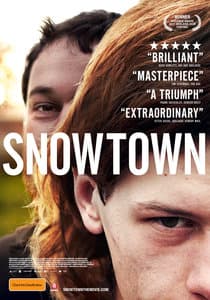
This is not new territory for Australian cinema. Snowtown, which Kurzel directed in 2011, performed a similar operation on a different set of real deaths. The bodies-in-barrels murders were adapted into a film that was praised for its unflinching commitment to showing poverty, abuse, and manipulation in Adelaide’s northern suburbs. The word “unflinching” appeared in nearly every review. Reviewers loved that word. It let them praise the film’s brutality as a form of honesty, as though flinching were a failure of moral courage rather than a reasonable human response to watching someone get tortured.
I think Snowtown is a more defensible film than Nitram, though I am not sure why I think that. Maybe it is because the victims of the Snowtown murders were themselves marginalised, and the film’s attention to their world felt like it was restoring something that had been taken, a specificity, a social reality, that the tabloid coverage had flattened. Maybe it is because Snowtown is less interested in the killer than Nitram is. Daniel Henshall’s John Bunting is a presence in the film, a gravity, but the film belongs to Jamie, the teenager drawn into Bunting’s orbit, and Jamie’s story is about complicity, about how ordinary people become participants in extraordinary violence. That feels like a story worth telling. It feels like a story that belongs to the living.
But I notice I am doing the thing. I am performing the critical operation where you distinguish between the good true-crime adaptation and the bad one, the responsible and the irresponsible, the film that earns its violence and the one that exploits it, and I am not sure this distinction holds up. Both films take real suffering and turn it into art. Both films make money. Both films advance careers. The quality of the filmmaking does not change the fundamental transaction, which is that somebody’s worst experience becomes somebody else’s cultural product.
The Stranger and the shape of consent
The Stranger complicates this further. Thomas M. Wright’s 2022 film is based on the real undercover investigation that led to the conviction of a man for the murder of Daniel Morcombe, a thirteen-year-old boy who disappeared from a bus stop on the Sunshine Coast in 2003. The film does not name Daniel Morcombe. It does not depict his death. It barely mentions the victim at all. Instead it follows the undercover operative, played by Joel Edgerton, as he befriends the suspect and slowly draws a confession from him over months of performed intimacy.
Wright has talked about consent. He consulted with the Morcombe family. Bruce and Denise Morcombe, Daniel’s parents, reportedly supported the film’s production, or at least did not oppose it. This matters. It changes the calculus. A film made with the family’s knowledge and, if not blessing, at least acquiescence, occupies different ethical ground than a film made over the objections of the bereaved. But I keep getting stuck on the word “consent” in this context, because the person whose consent matters most is the person who cannot give it. Daniel Morcombe is dead. He was thirteen. He does not get a say in whether his murder becomes a film, however tasteful, however oblique, however much the filmmakers insist on looking away from the act itself.
Catching Milat and the television problem
Catching Milat, the 2015 telemovie, is the version of this genre that nobody defends, which is precisely why it is useful to think about. It is a conventional police procedural that takes the investigation of Ivan Milat’s backpacker murders and shapes it into something with act breaks and dramatic confrontations and a resolution that feels, against all evidence, satisfying. The victims appear in the film as photographs, as case files, as the absent centre around which the male detectives organise their determination and their marriages and their professional rivalries. It is exploitative in the way that television is often exploitative, by making the exceptional ordinary, by domesticating atrocity into narrative rhythm.
And here is the thing I cannot quite resolve. When I say Catching Milat is exploitative and Nitram is not, or is less so, I am making an aesthetic judgement, not a moral one. I am saying that one film handles its material with more formal intelligence than the other. I am saying that Kurzel’s compositions are more considered than a telemovie’s coverage. I am saying that restraint is better than spectacle. But the families of the dead do not care about composition. They do not experience the difference between a prestige film and a telemovie as meaningful. Their grief is not mitigated by better cinematography.
What I cannot answer
I keep watching these films. I keep finding them important, well-crafted, necessary, and I keep tripping over that last word. Necessary to whom, and for what. Necessary because they tell us something about violence that we did not already know? I do not think they do. We know that killers are human. We know that communities are damaged by mass violence. We know that the criminal justice system is imperfect. These are not revelations. Necessary because they are well-made? That is circular. A well-made film about a real atrocity is necessary because it is well-made, which means any real atrocity becomes fair material as long as the director is talented enough.
I do not have an answer. What I have is a discomfort that I think is worth sitting with, because the alternative is the critical consensus that has settled over Australian true-crime cinema like a weighted blanket: these films are difficult, they are important, they are necessary, and we should all be grateful that our filmmakers have the courage to make them. I am not grateful. I am implicated. Every ticket I buy, every review I read, every conversation I have about whether Nitram is better than Snowtown is a conversation that takes place in a room where the dead are not present and cannot speak. The films ask permission from the audience. The audience always says yes. The dead are not consulted, and the living, the survivors, the families, the communities, are consulted only when their consent is convenient. I watched these films and I found them well-made and I am still not sure that is enough.

Mara writes essays. She came to film writing from a decade of literary criticism and still reaches, sometimes, for a novel before she reaches for a shot list. She lives in the inner north of Melbourne and does not explain which city that is.
MORE BY MARA DENG →
Australian cinema keeps building cults because the country keeps producing them
From The Family to The Clearing, Australian screen culture returns to cults because the conditions that produce them never quite go away.
2021 was the year Australian cinema got serious and the audience looked away
Four of the year's most significant Australian films dealt in violence, guilt, grief, and landscape, and the domestic audience chose to watch something else.
Strictly Ballroom is a film about who is allowed to teach the steps
Baz Luhrmann's 1992 comedy is sold as a story about dance. It is also a story about an Australian champion who has to be taught his own steps by a Spanish-Australian family in their own house.