Thomas M. Wright built The Stranger out of silence
Wright's procedural gives Joel Edgerton nothing to do except wait, and then makes you understand why that matters.
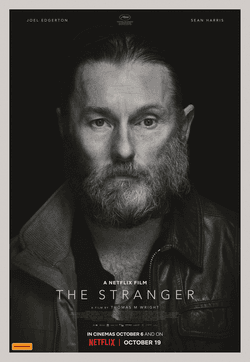
There is a scene roughly forty minutes into The Stranger where Joel Edgerton’s character, an undercover operative known only as Mark, sits in a motel room and does nothing. He sits on the edge of the bed. He looks at the wall. The camera holds. The scene carries no information in the conventional sense; no plot advances, no character is revealed through dialogue, and no external event interrupts the stillness. What the scene communicates is weight: the accumulated psychic cost of pretending to be someone you are not, of maintaining a false intimacy with a man you believe has killed a child, of waiting for a confession that may never arrive. Thomas M. Wright built his entire film out of moments like this, and the result is one of the most unsettling procedurals Australian cinema has produced.
The Stranger (2022) is based on Kate Kyriacou’s book The Sting, which chronicles the covert police operation that led to the arrest and conviction of Brett Peter Cowan for the 2003 murder of thirteen-year-old Daniel Morcombe on the Sunshine Coast. The case consumed Queensland for nearly a decade; the investigation involved hundreds of officers, multiple false leads, and an elaborate undercover operation in which police constructed a fictitious criminal organisation to lure Cowan into a position of trust where he might confess. Wright’s adaptation strips nearly all of this apparatus away. He is not interested in the procedural as a machine of revelation. He is interested in what it costs the people inside it.
The refusal of genre satisfaction
Wright, who is also an actor (he appeared in Warwick Thornton’s Sweet Country and David Michod’s Romulus, My Father), had directed one feature before this, the little-seen Acute Misfortune (2018), a portrait of the painter Adam Cullen. That film shared with The Stranger an interest in proximity to difficult men, and a formal patience that trusted the audience to sit with discomfort rather than be guided through it. But where Acute Misfortune was ragged and occasionally chaotic, The Stranger is controlled to the point of austerity. Every frame is deliberate. Every silence is measured.
The film’s central relationship is between Mark and Henry (Steve Mouzakis), the suspect, whom Wright renames and reshapes into a figure of pathetic neediness. Henry is desperate for belonging, for friendship, for the approval of the criminal fraternity Mark pretends to represent. He is also, the film gradually makes clear, a man capable of monstrous violence. Wright never sensationalises this; he lets Henry’s monstrousness seep through the cracks of his ordinary desperation, so that the audience is placed in a position uncomfortably close to Mark’s own. You are watching a man you suspect is guilty, and you are also watching a man who is lonely, frightened and eager to please. The two things coexist, and Wright will not separate them for your comfort.
Edgerton and the performance of nothing
Joel Edgerton’s performance in The Stranger is a study in what happens when an actor removes every tool the profession typically relies on. Mark does not explain himself. He does not have outbursts. He does not betray his inner state through gesture or tic. He is, by professional necessity, a blank surface, and Edgerton plays him as exactly that: a man who has made himself into an instrument of institutional purpose and is slowly being hollowed out by the effort. The performance recalls the work Philip Seymour Hoffman did in late-career intelligence roles, the sense of a person maintaining composure at enormous internal cost, but Edgerton goes further. There are scenes in which his face communicates nothing at all, and the nothing is precisely the point.
This is a risky strategy for a film that needs to hold an audience for two hours. Wright bets that if you strip the procedural of its satisfactions (the breakthrough, the clever interrogation, the moment of triumph) and leave only the encounter between two men in rooms, one of them lying about everything, the tension will not dissipate but intensify. He is correct, though the picture asks more of its audience than most Australian films are willing to. The pacing is glacial. The colour palette is drained. Sam Petty’s score drifts through scenes like weather, present but never insistent. Wright is building a film that operates on the register of dread rather than suspense, and dread, unlike suspense, does not require events to sustain itself.
The lineage of Australian true crime
Australian cinema has produced a small but remarkable body of true-crime films, and The Stranger takes its place alongside Snowtown (2011) and Animal Kingdom (2010) as a picture that uses the genre’s conventions against themselves. Justin Kurzel’s Snowtown was interested in the social ecology of violence, the way poverty and isolation and damaged masculinity create conditions in which murder becomes almost bureaucratic; David Michod’s Animal Kingdom was interested in the family as criminal enterprise, the gravitational pull of loyalty and fear. Wright’s contribution to this lineage is different in kind. He is not interested in the perpetrator’s psychology or the community’s complicity. He is interested in the toll of the investigation itself, the moral and psychological cost of the state’s response to violence.
This is a subtle but important distinction. Most true-crime narratives, whether on screen or on the page, derive their energy from proximity to the criminal act. They want to understand why someone did what they did, or how they were caught, or what the crime reveals about the society in which it occurred. The Stranger is not indifferent to these questions, but it places them at the periphery. The murder itself is never shown. The victim is never named in the film (Wright made this choice deliberately, out of respect for the Morcombe family). The confession, when it finally comes, is filmed in a way that denies the audience the catharsis of resolution; it is mumbled, partial, and shot in darkness. Wright treats the confession not as a climax but as one more burden Mark must carry.
What the picture withholds
The formal austerity of The Stranger extends to its treatment of information. Wright withholds context that a more conventional procedural would provide in the first act. The audience is not told, initially, what crime is being investigated, who Mark really is, or how the undercover operation works. You are dropped into the middle of a process and expected to assemble your understanding as you go. This is disorienting by design. Wright wants you to experience something of the operative’s own confusion, the sense of being inside a structure whose full shape you cannot see, performing actions whose consequences you cannot predict.
The film’s final act is devastating not because of what happens but because of what does not. There is no courtroom triumph, no embrace between officers, no scene in which the family receives closure. The picture ends with Mark alone, undone, staring into a middle distance that offers nothing. It is an ending that refuses every consolation the genre traditionally provides, and it is the right ending for a film that has spent two hours arguing that justice, even when it arrives, does not repair what was broken.
The Stranger is a difficult film. It is also a necessary one. Wright has made a picture that respects its audience enough to deny them comfort, and respects its subject enough to deny them spectacle. In a national cinema that has often struggled with the tension between commercial viability and moral seriousness, that is no small achievement. The film asks you to sit in the silence and understand what it contains. Most people will find it hard. That is the point.

Bronte writes long-form criticism of Australian cinema and the international art films that feed into it. She was on the ground at Cannes in 2019 and has not entirely forgiven the festival for 2020. Patient with slow films; impatient with tidy ones.
MORE BY BRONTE HAUGHEY →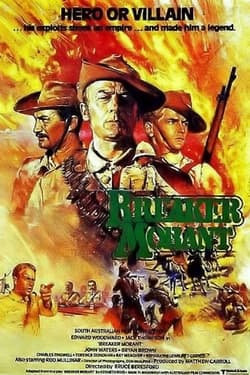
Breaker Morant and the country that adopted its scapegoat
Bruce Beresford's 1980 courtroom drama made an English-born soldier into an Australian martyr, and the picture's argument about empire has outlived its historical certainties.
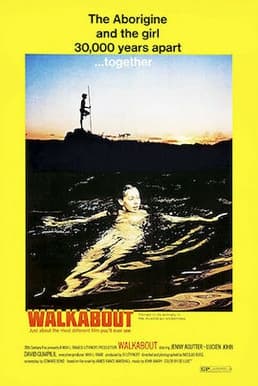
Walkabout is a British film about a country it never claims
Nicolas Roeg's 1971 picture is claimed as an Australian classic, though it was made by a Londoner, financed by two Americans and sold by 20th Century Fox. Its best argument is how little it pretends otherwise.
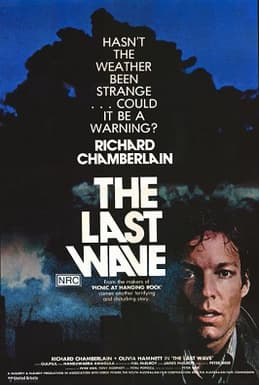
The Last Wave and the rain Sydney could not explain
Peter Weir's 1977 film puts a corporate lawyer in a drowned city and asks what a settler place owes to the ground and weather beneath it.