The Office Australia works because Felicity Ward is not playing a version of anybody else
Ward's Hannah Howard is not David Brent, not Michael Scott, and not a blend of both; she is a new species of terrible boss, and the show is better for the invention.
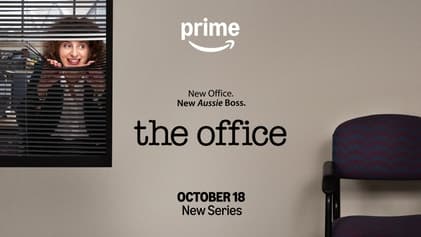
The remake trap goes like this: you take a show that worked in one country, you change the accents and the geography, you keep the structure, and you hope that the new cast can find something in the material that the original cast did not already exhaust. Most remakes fail this test. The British Office was perfect. The American Office spent one season being a pale copy and then six seasons being its own thing (and then two seasons being nothing in particular). The pattern suggests that the only way to remake The Office is to stop remaking it and start making something else.
The Office Australia does this, and the reason it works is Felicity Ward.
Hannah Howard is not David Brent
This is the essential point and it needs to be made clearly because every review of this show will begin with the comparison and the comparison is a trap. David Brent (Ricky Gervais) was a man whose delusion was total and whose sadness was visible only to the audience. Michael Scott (Steve Carell) was a man whose delusion was performative and whose sadness was visible to everyone, including himself. Both characters functioned as cringe engines, and both shows derived their comedy from the gap between how the boss saw themselves and how everyone else saw them.
Hannah Howard is different. Ward plays her as a woman who is genuinely competent in certain specific ways and genuinely catastrophic in others, and the show does not ask you to cringe at her incompetence because her incompetence is not the joke. The joke is that Hannah is extremely good at her job in ways that make her terrible at being a human being in an office. She can close a deal while simultaneously destroying a colleague’s confidence, and she does not notice the destruction because she is focused on the deal.
This is a smarter construction than it might seem. Brent and Scott were funny because they were bad at their jobs. Hannah is funny because she is good at her job and bad at everything surrounding it. The comedy comes from a different place, and the different place gives the show room.
The Locklan problem and the ensemble
The show is set in a packaging company called Flinley Craddick, based in the fictional Sydney suburb of Locklan. The setting is deliberately anonymous in the way that all Office settings are deliberately anonymous: it could be any suburb with an industrial park and a food court. The mundanity is the point. The show is not interested in Sydney as a city. It is interested in the particular quality of fluorescent light that hits a grey carpet tile at 2pm on a Wednesday, and in the people who have agreed to spend their lives under that light.
The ensemble is strong. Edith Poor plays Lizze, the receptionist, and brings a dry watchfulness that anchors the talking-head segments. Steen Raskopoulos is doing something very precise as the affable middle-manager type whose friendliness is genuine but also strategic, and the show is smart enough to let both readings coexist. Josh Thomson plays the straight man, and the straight man in an Office show is the hardest role because the straight man must be boring enough to be realistic and interesting enough to be watchable, and Thomson finds the line.
The wider ensemble fills out the desks with the specificity that the format demands. There is the quiet one, the loud one, the one who takes the kitchen too seriously, the one who is looking for another job. These are types, and the show knows they are types, and the skill is in the detail work that makes each type feel specific to this office rather than imported from the format bible.
The Australian workplace comedy tradition
Here is what the international reviews will not know: Australia has been making workplace comedies for decades, and the best of them are better than most of what the rest of the world has produced in the genre. Frontline (1994-1997) is the gold standard, a show about a current affairs programme that was so accurate in its satire that real current affairs presenters reportedly could not tell whether they were being mocked or documented. The Games (1998-2000) applied the same approach to the Sydney Olympics organising committee. Utopia (2014-present) does it to infrastructure planning. Fisk (2021-present) does it to a suburban law firm.
The common thread is a commitment to observational accuracy that borders on documentary. These shows work because they understand the specific rhythms of Australian workplaces: the meetings that exist to schedule other meetings, the passive aggression disguised as mateship, the particular way that hierarchy operates in a culture that claims to be egalitarian. The comedy comes from recognition, not exaggeration.
The Office Australia sits within this tradition, which is both its strength and its complication. The Office format is built on exaggeration. The talking heads, the cringe comedy, the boss who is worse than any real boss could be. The Australian workplace comedy tradition is built on accuracy. The tension between these two modes is visible throughout the first season, and the show resolves it unevenly. When it leans toward accuracy (the break room conversations, the parking lot politics, the specific misery of a team-building exercise), it is sharp. When it leans toward the format’s demand for cringe (Hannah’s more extreme moments, the romantic subplot that the format requires), it is competent but less distinctive.
Whether the format can hold
The Office format has a structural problem that every version eventually encounters: the talking-head confessional creates an intimacy with the audience that the workplace setting cannot sustain across multiple seasons. We learn too much about these characters too quickly. The format accelerates emotional revelation in a way that leaves the show nowhere to go after two or three seasons. The British Office understood this and stopped at two seasons and a special. The American Office did not understand this and ran for nine seasons, during which the format was stretched until it lost its shape.
The Office Australia has been renewed for a second season, and the question is whether Ward’s version of the boss character has enough depth to sustain additional episodes without the show needing to soften her (the Michael Scott trajectory) or escalate her (the David Brent trajectory). The first season suggests that there is room, because Hannah Howard is not a character defined by a single joke. She is competent and destructive and unaware and occasionally, in moments that Ward plays with devastating precision, she is lonely. The loneliness is not emphasised. It is present, which is enough.
Look, I did not expect this to work. The announcement of an Australian Office felt like the kind of IP exercise that exists because a format bible says it should exist. The fact that it works is almost entirely down to Ward, who took a role that could have been an impression and made it an invention. That is rare. That is the show.
Rhys watches more television than is healthy and writes about it with a dryness that tips occasionally into cruelty. His favourite ABC drama is the one the ABC just cancelled, whichever that happens to be.
MORE BY RHYS TAVITA →
Deadloch proves that Tasmania can do noir if you let comedians write it
Two Kates built a murder mystery in a freezing Tasmanian town and staffed it entirely with people you would cross the street to avoid.

The Lost Flowers of Alice Hart cannot decide if it trusts its audience
Sigourney Weaver commits fully to the Australian accent and the Australian landscape; the scripts commit to neither.

Class of '07 locks its reunion in an apocalypse and finds the comedy in the flood
Amazon's Australian comedy traps a school reunion on a hilltop during a flood and lets the class dynamics do more damage than the water.