Deadloch proves that Tasmania can do noir if you let comedians write it
Two Kates built a murder mystery in a freezing Tasmanian town and staffed it entirely with people you would cross the street to avoid.
The pitch meeting for Deadloch must have been something. “It is a murder mystery set in a small Tasmanian town during winter. The two lead detectives hate each other. Every single resident is a potential suspect because every single resident is, in some measurable way, terrible. Also it is a comedy. Also the arts festival is still happening. Also there is a lesbian book club that functions as a shadow council.” I would have greenlit it on the book club alone, honestly.
Kate McCartney and Kate McLennan, best known for The Katering Show and Get Krack!n, have done something here that I am not sure anyone expected, including possibly themselves. They have made a genuine, structurally sound crime drama that also happens to be the funniest Australian show since Utopia started repeating its own jokes. The comedy does not undermine the mystery. The mystery does not suffocate the comedy. They coexist in the same frame, often in the same line of dialogue, and the whole thing holds together through eight episodes without either register collapsing.
The odd couple, but make it Tasmanian
The central pairing is the engine. Kate Box plays Dulcie, a local senior sergeant who has spent her entire career in Deadloch and knows every grudge, affair, and property dispute within a fifty-kilometre radius. Madeleine Sami plays Eddie, a Darwin homicide detective sent down to assist, who is chaotic, abrasive, and constitutionally incapable of reading a room. They do not like each other. The show does not rush them toward mutual respect. It lets them irritate each other for several episodes, which is braver than it sounds because the temptation to soften the dynamic for likability must have been constant.
Sami is doing extraordinary work. Eddie is not a quirky detective in the mould of every BBC procedural since Sherlock. She is a genuinely difficult person whose methods happen to produce results, and Sami plays her without a single wink to the audience. There is no moment where Eddie breaks character to let you know she is in on the joke. She is the joke, and she does not know it, and that commitment is what makes her funny rather than annoying.
Tasmania as a crime scene
The show was filmed in Fingal, a town of about 350 people in Tasmania’s northeast, and the location is doing at least thirty per cent of the work. The cold is visible in every scene. Breath hangs in the air. Actors’ noses are red. The light is that particular Tasmanian winter light where the sun shows up for about four hours and spends the rest of the day behind cloud that looks like it was sourced from a Scandinavian noir. The town is beautiful and bleak in exactly the proportions you need for a story where someone keeps turning up dead.
The fictional Deadloch is hosting an arts festival when the murders begin, and the McCartney-McLennan script uses the festival as a pressure valve. Every small-town tension, the property developers versus the heritage crowd, the blow-ins versus the locals, the council’s performance-art-adjacent cultural programming versus the pub’s desire to just have a band, gets compressed by the festival into a space where everyone is in the same room pretending to be civil. It is the most Australian thing imaginable. Murder at an arts festival in a town that did not especially want an arts festival in the first place.
The ensemble as ecosystem
What separates Deadloch from most Australian ensemble comedies is that the supporting cast are not there for colour. They are load-bearing. Nina Oyama plays a constable whose competence is inversely proportional to the attention anyone pays her. Alicia Gardiner plays a council worker whose job appears to consist entirely of managing crises she helped create. Tom Sainsbury plays a man who is suspicious for reasons the show takes its time revealing, and every scene he is in has a slight charge to it because the show has taught you to watch people carefully.
The script trusts the audience to track a dozen characters without name tags or introductory monologues. You learn who people are by watching what they do, which is how small towns actually work. You do not introduce yourself in a town of 350 people. Everyone already knows who you are and what you did at the pub in 2017.
The Mystery Road question
It is worth putting Deadloch next to Mystery Road for a second, not because they are similar shows, but because they illuminate each other’s choices. Mystery Road takes the outback crime drama and strips out everything except the silence and the landscape and the slow accumulation of truth. Deadloch takes the same genre and fills every gap with noise, argument, gossip, and a running joke about a missing cat that pays off in episode seven. Both approaches work. Both are distinctly Australian. And neither would exist on a US network, which tells you something about the specific freedoms that Australian television still has when it decides to use them.
The tonal control is the achievement. There are scenes in Deadloch that are purely funny (Eddie’s interrogation technique, which involves aggressively oversharing about her own life until the suspect talks just to make her stop). There are scenes that are purely tense (a confrontation in the final episodes that I will not spoil but that lands with genuine force). And there are scenes that are both, where you are laughing and then suddenly you are not, and the transition happens so smoothly that you cannot identify the moment the show changed gears. That is writing at a level that most drama rooms would struggle with, let alone a comedy room.
What comes next
Amazon has not confirmed a second season at the time of writing, which is either a negotiating tactic or a crime against television, and I choose to believe the former. The show ends in a way that could be final but leaves enough thread for more, which is the correct approach when you are not sure if your platform will let you come back. McCartney and McLennan have built something here that proves a thing I have always suspected: the best people to write Australian noir are comedians, because they already understand that the distance between tragedy and absurdity in this country is approximately zero.
Go watch it. It is cold and mean and very, very funny, and it has a body count and a book club, and honestly what more do you want.
Rhys watches more television than is healthy and writes about it with a dryness that tips occasionally into cruelty. His favourite ABC drama is the one the ABC just cancelled, whichever that happens to be.
MORE BY RHYS TAVITA →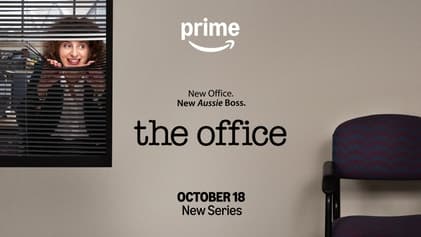
The Office Australia works because Felicity Ward is not playing a version of anybody else
Ward's Hannah Howard is not David Brent, not Michael Scott, and not a blend of both; she is a new species of terrible boss, and the show is better for the invention.
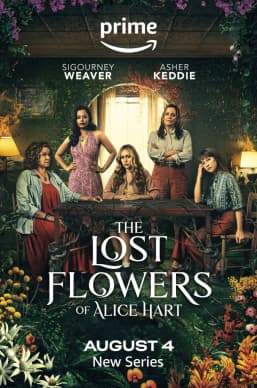
The Lost Flowers of Alice Hart cannot decide if it trusts its audience
Sigourney Weaver commits fully to the Australian accent and the Australian landscape; the scripts commit to neither.

Class of '07 locks its reunion in an apocalypse and finds the comedy in the flood
Amazon's Australian comedy traps a school reunion on a hilltop during a flood and lets the class dynamics do more damage than the water.