Shayda finds freedom in a women's refuge and does not romanticise it
Noora Niasari's debut draws from her mother's story, and the film is better for being specific rather than representative.
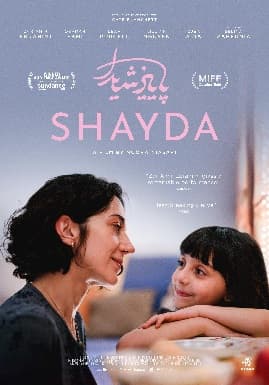
The women’s refuge in Shayda is not a sanctuary. It is not a prison either, though it has locked doors and an intercom and rules about who can enter and when. It is something more difficult to categorise: a space of conditional safety, where the condition is constant vigilance and the safety is real but porous. Noora Niasari films it as such. The rooms are clean and functional. The communal kitchen has fluorescent lighting that flattens everything. The corridors are narrow enough that you can hear a television playing two doors away. The refuge does not look like the worst place in the world and it does not look like the best. It looks like a place where women live when the alternative is worse, and Niasari’s refusal to dress it as either horror or haven is the first sign that this is a director who trusts specificity over sentiment.
Shayda (2023) premiered at the Sundance Film Festival, where it won the Audience Award in the World Cinema Dramatic Competition. The film follows Shayda (Zar Amir Ebrahimi), an Iranian woman living in an Australian women’s refuge with her young daughter, Mona (Selina Zahednia), while she pursues a divorce and custody case against her abusive husband, Hossein (Osamah Sami). Niasari has spoken openly about the autobiographical basis of the story; her own mother lived in a refuge after leaving an abusive marriage, and many of the film’s details are drawn from that experience. This grounding in lived history is not incidental to the picture’s quality. It is the source of it.
The specificity that social-issue dramas lack
Australian cinema has a long tradition of films about domestic violence, and the best of them, The Nightingale (Jennifer Kent, 2018), Hounds of Love (Ben Young, 2016) - treat the subject with the gravity it demands. But there is a category of Australian film, well-funded, well-intentioned, often featuring a strong central performance - that approaches domestic violence as a social issue to be illustrated rather than a human experience to be inhabited. These films tend toward generality. Their characters become representative: the survivor, the abuser, the system that fails them. The architecture of the problem is laid out with clarity, and the individual disappears inside it.
Shayda avoids this. Niasari’s film does not represent the immigrant experience of domestic violence. It describes one woman’s experience, with a particularity that resists abstraction at every turn. Shayda speaks Farsi to her daughter and English to the refuge staff, and the shifts between languages carry emotional weight that is never explained in dialogue. She cooks ghormeh sabzi in the communal kitchen and the smell fills the corridor and the other women notice and the scene is not about cultural difference; it is about a woman maintaining her identity through the only domestic act that is still entirely hers. She applies for a driving licence. She takes Mona to a Haft-sin table for Nowruz. She does the small, practical things that constitute the rebuilding of a life, and the film pays attention to these things because they are the substance of freedom when freedom is not a grand gesture but a series of administrative steps undertaken in a state of fear.
Ebrahimi and the work of composure
Zar Amir Ebrahimi’s performance operates on two registers simultaneously, and the tension between them is the engine of the picture. On the surface, Shayda is composed: measured in her speech, careful in her movements, attentive to the impression she makes on lawyers, social workers, and the Family Court. Beneath this composure is a woman whose nervous system is permanently activated, who flinches at sounds, who checks the locks, who scans every public space for Hossein’s face. Ebrahimi communicates this second register through the body rather than the face. The way she holds her shoulders. The way she positions herself near exits. The way she touches her daughter, frequently, lightly, as if confirming her presence.
Ebrahimi won Best Actress at Cannes the year before for Holy Spider (Ali Abbasi, 2022), playing a journalist investigating serial murders in Iran. That performance was fierce, confrontational, physically commanding. Shayda requires the opposite: a woman who has learned to make herself small, whose survival strategy is not resistance but careful, strategic compliance with systems she does not fully trust. The restraint is not passive. It is effortful, and Ebrahimi lets you see the effort, the cost of holding the composure in place, without ever breaking it for the audience’s emotional convenience.
The refuge as architecture
Niasari’s treatment of the refuge as a physical space deserves attention. She shoots it with a documentary precision that locates the contradictions of institutional care. The refuge provides safety, but safety comes with surveillance: sign-in sheets, curfews, rules about visitors, the constant presence of staff who are kind and overworked and constitutionally unable to solve the problem that brought each woman through the door. The shared spaces create a community that is real but involuntary; the women did not choose one another, and their proximities produce both solidarity and friction. There is a scene where Shayda and another resident argue over the television, and the argument is banal and also about everything, about the impossibility of maintaining autonomy in a space designed to keep you alive until you can maintain it elsewhere.
The refuge is also, in Niasari’s framing, a distinctly Australian institution, and the film registers the specific texture of Australian bureaucratic care: the forms, the waiting, the language of risk assessment and safety planning, the gap between what the system can offer and what a woman in danger actually needs. Shayda’s interactions with the Family Court are filmed with a patience that borders on the forensic. The legal proceedings are procedurally accurate and emotionally devastating, not because anyone in the system is villainous but because the system’s commitment to procedural fairness produces outcomes that feel, from the position of the woman at risk, indistinguishable from indifference.
Violence without spectacle
The film’s relationship to violence is careful and considered. Hossein is not a monster. He is charming, persuasive, capable of genuine tenderness toward his daughter, and possessed of a conviction that his authority over his family is natural and unchallengeable. Osamah Sami plays him without caricature, which makes the menace harder to locate and harder to dismiss. The violence in the marriage is referenced rather than depicted; Niasari does not need to show it because Ebrahimi’s body already carries its record. What the film does show, precisely and repeatedly, is the machinery of coercive control: the phone calls, the unexpected appearances, the use of Mona as an instrument of access, the slow erosion of every boundary Shayda attempts to establish.
This approach invites comparison with Jennifer Kent’s The Nightingale, which depicted colonial and sexual violence with an explicitness that divided audiences and critics. Kent’s position was that the violence needed to be shown in order to be felt, that looking away was itself a form of complicity. Niasari’s position is different but not contradictory: she argues, through formal choices rather than statements, that the aftermath of violence is itself sufficient evidence. You do not need to see the blow to understand the flinch. You do not need to hear the threat to recognise the hypervigilance. The body knows, and the camera can read the body.
What the autobiographical changes
The fact that Shayda is drawn from Niasari’s own family history changes what the film is able to do, though not in the way autobiography usually functions in cinema. The autobiographical element does not make the film more “authentic” in some vague, sentimental sense. What it does is anchor the details. The Nowruz celebration is not a set piece illustrating Iranian culture for an Australian audience; it is a specific memory, rendered with the emotional precision of someone who was in the room. The refuge is not a location scouted for its visual interest; it is a place that shaped the director’s childhood, and the camera knows its corners and its light and its sounds because Niasari lived with them.
This specificity is what separates Shayda from the social-issue drama it might have been. A film about domestic violence in general is a film about a problem. A film about one woman, in one refuge, navigating one legal system while cooking one particular dish and celebrating one particular new year, is a film about a life. Niasari has made the second kind of film, and the result is a debut that earns its weight not through the severity of its subject but through the precision with which it renders the ordinary texture of a life in crisis. The refuge is not a metaphor. The freedom is not a metaphor. They are places and conditions, specific and real, and the film respects them enough to describe them as they are.

Bronte writes long-form criticism of Australian cinema and the international art films that feed into it. She was on the ground at Cannes in 2019 and has not entirely forgiven the festival for 2020. Patient with slow films; impatient with tidy ones.
MORE BY BRONTE HAUGHEY →
Breaker Morant and the country that adopted its scapegoat
Bruce Beresford's 1980 courtroom drama made an English-born soldier into an Australian martyr, and the picture's argument about empire has outlived its historical certainties.
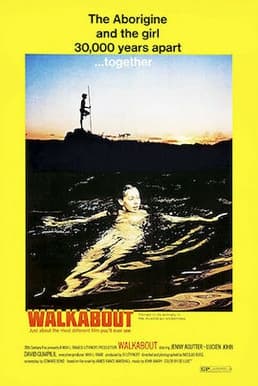
Walkabout is a British film about a country it never claims
Nicolas Roeg's 1971 picture is claimed as an Australian classic, though it was made by a Londoner, financed by two Americans and sold by 20th Century Fox. Its best argument is how little it pretends otherwise.

The Last Wave and the rain Sydney could not explain
Peter Weir's 1977 film puts a corporate lawyer in a drowned city and asks what a settler place owes to the ground and weather beneath it.