Shayda shows what migration feels like from inside the refuge and does not translate
Niasari's film is in two languages and the subtitles carry only half of what the Farsi says, and that gap is the whole subject.
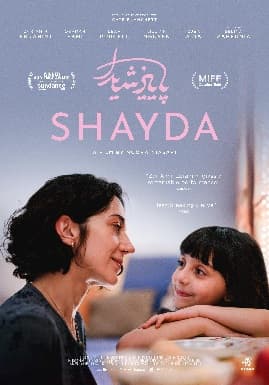
There is a moment early in Shayda where Zara Amir Ebrahimi, playing a woman who has taken her daughter to a women’s refuge in Melbourne, speaks Farsi on the phone and the subtitles give you the English and the English is correct but it is not the same. The Farsi carries something that the translation does not. A tone, a register, a way of being afraid that the English words flatten into information. I watched this scene and felt something I have felt my whole life but never seen put on screen so precisely: the experience of knowing that two languages are saying different things even when they are saying the same thing.
I want to say upfront that this is not a review. Bronte reviewed Shayda and said what needed to be said about the filmmaking, the performances, the structure. What I want to write about is something more personal, which is what it feels like to watch this film as a second-generation Australian whose parents came from somewhere else and brought a language with them that I half-speak and fully understand and can never quite hold in my hands.
Noora Niasari made Shayda from her mother’s story. Her mother left an abusive marriage in Iran and came to Australia and lived in a women’s refuge, and the film is built from that experience with the specificity that only comes from someone who was there, even if she was there as a child too young to understand what was happening. The film does not explain Iranian culture to Australian audiences. It does not provide context. It does not pause to let you catch up. If you do not know what Nowruz is, the film will not stop to tell you. You will watch a group of women and children preparing for a celebration and you will either recognise it or you will not, and either way the film keeps moving.
This is a choice. It is a deliberate refusal to translate, and I think it is the most important decision Niasari made.
The refuge as a country between countries
The women’s refuge in Shayda is a specific place, a house in suburban Melbourne with security protocols and shared bathrooms and a communal kitchen where women from different countries cook food that reminds them of home. But it is also, in the way that Niasari shoots it, a country of its own. It has borders, the fence, the locked gate, the rules about who can enter. It has citizens, the women and children who live there. It has its own economy of care, favours exchanged, resources shared, alliances formed out of proximity and need.
What struck me is that the refuge operates by the same logic as migration itself. You leave one place because it is dangerous. You arrive in another place that is safe but not yours. You live inside rules you did not write. You build a version of home from whatever materials are available, knowing that it is temporary, that the real project of belonging is still ahead of you, and that the place you left still has a claim on you that distance does not erase.
Ebrahimi’s performance lives in this tension. She is simultaneously trying to build a new life and fending off the old one, and the two efforts require different versions of herself. The woman she is in Farsi, speaking to her mother on the phone, is not the woman she is in English, speaking to the refuge worker. Both are real. Neither is complete. This is not a failure of character. It is the condition of migration.
The Nowruz scene
There is a scene late in the film where the women in the refuge celebrate Nowruz, the Persian New Year. They set a Haft-sin table. They cook. They dress up. The children are given small gifts. It is, on the surface, a scene of joy, and it is joyful, but there is a current underneath it that I found almost unbearable to watch.
Celebration in exile is a particular kind of grief. You do the thing that connects you to where you came from, and the doing of it reminds you that you are not there. The table is correct, the food is right, the rituals are observed, but the room is wrong. The room is a shared kitchen in a refuge in Melbourne, and the people around the table are not your family but other women who have also left everything. The celebration is real. The loss inside the celebration is also real. They coexist, and neither cancels the other out.
My parents did something similar when I was growing up. Not Nowruz, a different holiday, a different tradition, but the same structure of feeling. The careful preparation. The insistence on getting the details right. The way my mother would set the table exactly as her mother had set it in a house in a city I had never visited, and the look on her face while she did it, which was not sadness exactly but a kind of concentration, as though she was trying to hold two places in her mind at once and the effort of it was physical.
I watched the Nowruz scene in Shayda and I saw my mother’s face. I do not think Niasari made the scene for me. I think she made it for everyone who has watched a parent reconstruct a tradition from memory in a country that does not know what it means.
What does not translate
The subtitle question is the one I keep returning to. Shayda is a bilingual film. The characters move between Farsi and English depending on who they are speaking to and what they are saying, and the film subtitles the Farsi for English-speaking audiences. This is standard. Most bilingual films do this. But what Niasari does, whether deliberately or instinctively, is leave a gap between what the Farsi contains and what the subtitles deliver.
I do not speak Farsi. I cannot verify this through linguistic expertise. But I can hear it. There are moments where the Farsi is dense with meaning, with implication, with the weight of a relationship that has history behind it, and the subtitle gives you five words of English that convey the information but not the texture. This is not a failure of translation. It is an accurate representation of what translation does. Translation carries meaning across languages and drops feeling in the crossing.
Every bilingual household knows this. There are things your parents say in their first language that you understand in your bones and could never explain in English. Not because the English words do not exist, but because the feeling is stored in the sound of the original language, in the rhythm and pitch and breath of it, and translation changes the container and the contents change with it.
What films can carry
I have been thinking, since watching Shayda, about what films can and cannot carry across cultures. A novel can explain. An essay can argue. A song can evoke. But a film does something different. It puts you inside the sensory experience of a life you have not lived, and if it is made with enough precision, you do not understand that life so much as you feel the weight of it.
Shayda does not ask you to understand migration. It does not explain the immigration system or the domestic violence system or the cultural dynamics of Iranian-Australian families. It puts you in a house with a woman and her daughter and lets you feel what it is like to be safe and not safe at the same time, to speak two languages and mean different things in each of them, to celebrate a holiday that belongs to a country you have left and may not see again.
Australian cinema has made films about migration before. Many of them. Some of them very good. But most of them are structured as stories of arrival, of adjustment, of eventual belonging. Shayda does not offer that arc. It ends in a place of uncertainty. The refuge is temporary. The danger is not resolved. The future is unclear. And the film’s refusal to resolve these things is, I think, the most honest choice it makes, because migration does not resolve. It continues. You do not arrive and then belong. You arrive and then you spend the rest of your life arriving.
My mother has been in Australia for thirty-five years. She is Australian. She votes, she pays taxes, she complains about the traffic on Parramatta Road. She also sets a table once a year exactly the way her mother set it, and when she does, she is briefly somewhere else. Shayda is the first Australian film I have seen that understands this is not a contradiction. It is the whole experience.

Mara writes essays. She came to film writing from a decade of literary criticism and still reaches, sometimes, for a novel before she reaches for a shot list. She lives in the inner north of Melbourne and does not explain which city that is.
MORE BY MARA DENG →
Australian women on screen in 2023 were allowed to be difficult and the work was better for it
The year's strongest Australian screen work gave women permission to be angry, messy, cruel, and specific, and the camera did not flinch.
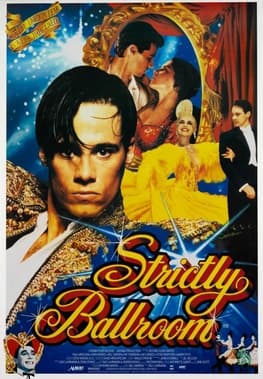
Strictly Ballroom is a film about who is allowed to teach the steps
Baz Luhrmann's 1992 comedy is sold as a story about dance. It is also a story about an Australian champion who has to be taught his own steps by a Spanish-Australian family in their own house.

Looking for Alibrandi was the first Australian story handed to me as mine
It was not my family's story. It was the shape of my family's story, put on a screen in a country that had never once bothered to hold it before.