The Australian screen industry enters 2026 with fewer commissions and more questions
Total commissions are down 22 per cent on the 2023 peak, and the local content quota has not yet made up the difference.

The numbers first. Total Australian scripted commissions across all platforms in 2025 sit at approximately 19 titles as of November, down from 24 in 2024 and 31 in 2023. The 2022 peak, when every streamer with an Australian presence was commissioning aggressively, produced 35 titles. The trajectory is a 22 per cent decline from peak to present, and the fourth quarter is unlikely to close the gap.
These figures include commissions from the five major streamers (Netflix, Stan, Disney+, Paramount+, and Amazon Prime Video), the free-to-air networks (ABC, SBS, Seven, Nine, and Ten), and the pay-TV channels that still commission original drama. They do not include unscripted, which has its own dynamics, or international co-productions where Australia is the minority partner.
Where the commissions went
The contraction is not evenly distributed. Netflix remains the most active international streamer in the Australian market, with four to five titles commissioned or in production in 2025. Stan continues to produce at a steady rate of three to four titles per year, constrained more by budget than ambition. The ABC and SBS maintain their commissioning levels through direct government funding, though SBS has signalled that its drama budget will tighten in 2026.
The declines are concentrated in two areas. Disney+ and Paramount+ have effectively ceased commissioning Australian originals, a pullback that began in 2024 and has continued through 2025. And the free-to-air commercial networks, which were already reducing their drama output before the streaming era, have cut further. Seven has no scripted drama in production. Nine has one. Ten has one, co-produced with Paramount.
The result is an industry that built capacity for a commissioning volume that no longer exists. Between 2020 and 2023, the Australian production sector expanded to service approximately 35 scripted commissions per year. It is now servicing 19. The gap is not being filled.
The local content quota, one year in
The ACMA local content framework came into effect in July 2024. It requires streaming platforms operating in Australia to spend a minimum percentage of their Australian revenue on new Australian content. The percentages vary by platform size and have been phased in gradually. The framework was designed to prevent exactly the kind of commissioning pullback that has occurred.
One year in, the framework’s impact is difficult to measure. The streamers are meeting their obligations, but the definition of “Australian content” is broad enough to include acquisitions, co-productions, and format adaptations that do not generate the same production activity as original commissions. A platform can satisfy its quota by acquiring distribution rights to an existing Australian film rather than commissioning a new series. Several have done so.
The other limitation is mathematical. The quota is a percentage of Australian revenue, and Australian revenue for most international streamers is a small fraction of their global total. Disney+‘s Australian subscriber base generates estimated annual revenue of $350 to $400 million. A 5 per cent content obligation produces $17.5 to $20 million in mandated spending. That funds one to two series. It does not replace the four to five series that Disney was commissioning at peak.
Crew employment and the pipeline problem
The production floor tells the story more clearly than the commission numbers. Crew employment in the Australian screen industry has dropped an estimated 30 per cent from the 2022-2023 peak, according to figures compiled by the Media, Entertainment and Arts Alliance. The decline is sharpest in post-production and visual effects, where two major facilities reduced headcount in the first half of 2025.
The pipeline problem is structural. Experienced crew who left the industry during the contraction do not automatically return when commissions increase. They retrain, relocate, or find work in adjacent industries (corporate video, advertising, live events) that offer more stable employment. Every contraction cycle reduces the depth of the available crew base, and recovery takes longer than the downturn.
The Location Incentive, the federal government’s primary tool for attracting international productions to Australia, remains funded at $540 million over the current forward estimates. The incentive has been effective at bringing large-scale international productions to Australian stages, but these productions employ Australian crew in below-the-line roles rather than developing Australian creative talent. A Marvel series shot at Fox Studios in Sydney generates work for Australian grips and electricians but does not develop Australian writers, directors, or showrunners.
What 2026 looks like
The honest answer is that nobody knows. The variables are too numerous and too dependent on decisions made in Los Angeles, London, and Cupertino to be predicted from Sydney. Apple TV+ has signalled interest in the Australian market but has not yet commissioned an Australian original. Amazon’s MGM acquisition has produced no visible change in its Australian commissioning strategy. Netflix’s global content spend is projected to increase in 2026, but the allocation to individual markets is determined on a title-by-title basis.
What is clear is that the 2022-2023 commissioning peak was an anomaly driven by the streaming wars, and the industry cannot plan on its return. The structural floor for Australian scripted production, based on government-funded broadcasters and the local content quota, sits at approximately 15 to 18 titles per year. That is a functional industry. It is not the industry that the sector built for.
The question for 2026 is whether the gap between capacity and demand narrows through new commissions or through further contraction of the production base. The industry would prefer the former. The trajectory suggests the latter.
Odette covers the business of Australian screen. Previously a financial journalist. Reads every Screen Australia annual report the week it drops. Short paragraphs, long memory, never misses a figure.
MORE BY ODETTE MALOUF →
84 per cent want local content. 36 per cent say it is easy to find
Screen Australia's Screen Currency 2026 report finds strong demand for Australian screen stories and a discovery problem that no amount of production funding fixes on its own.
A sports streamer now owns one of our biggest drama buyers
DAZN has completed its A$3.4 billion purchase of Foxtel, handing a sports-first global platform control of a company that has been a steady commissioner of Australian scripted drama.
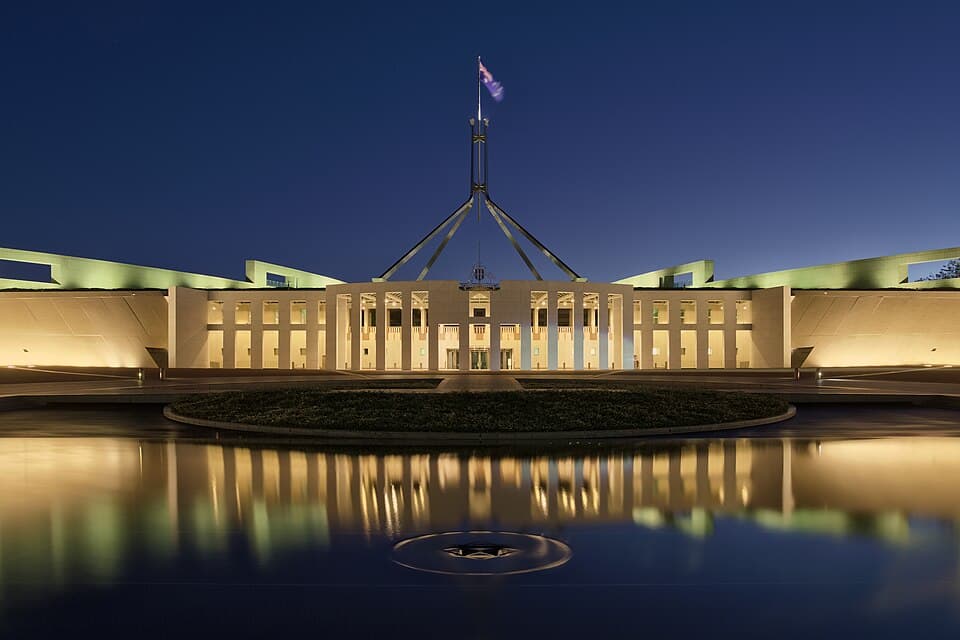
Screen Australia funded 112 development projects in 2025 and most will never be made
The development fund is the widest part of the funnel and the least visible, and the conversion rate tells the real story.